DAMBULLA

Sacred caves and timeless heritage.

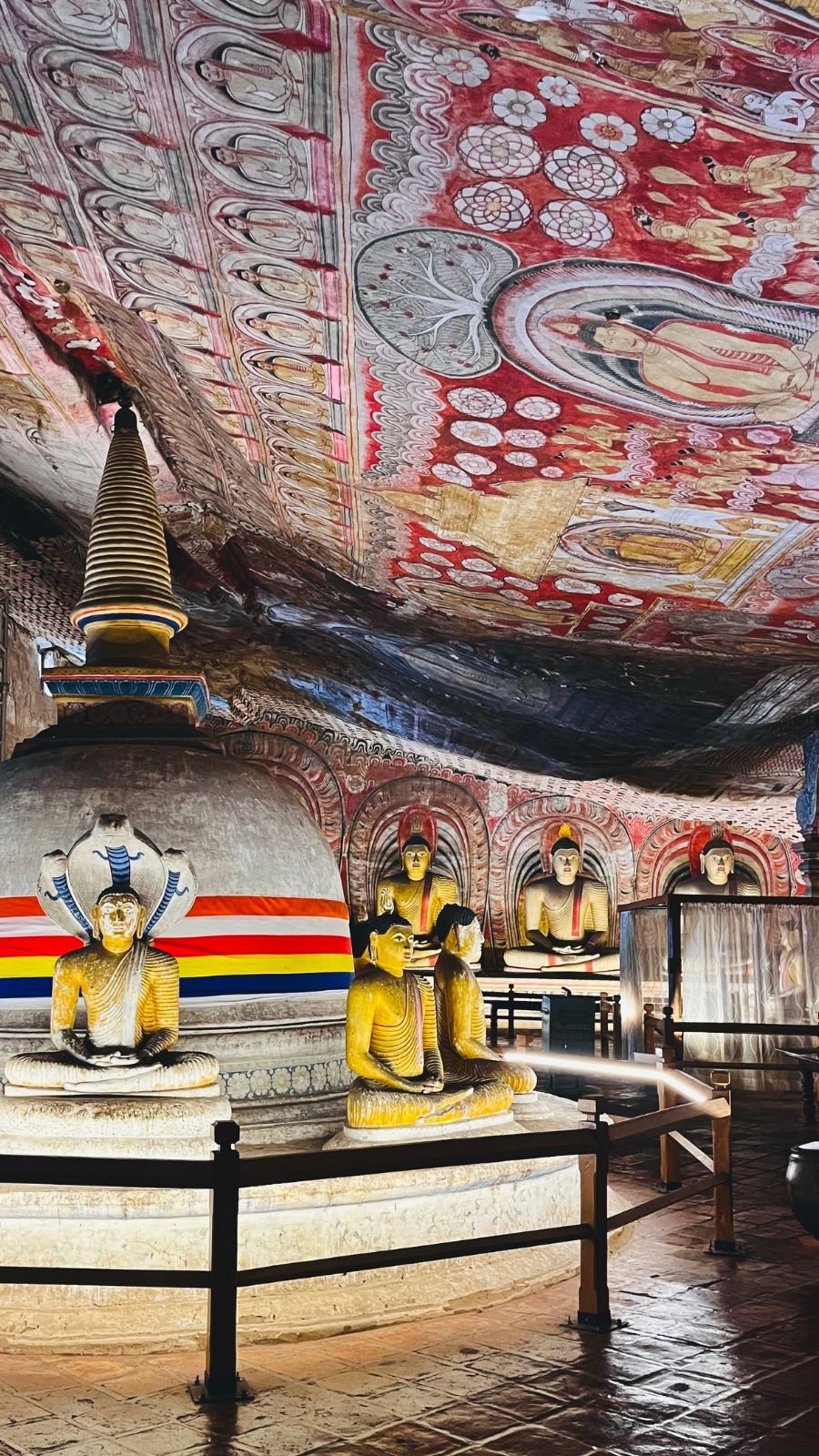
Known for its centuries-old cave temples, Dambulla blends spiritual history with striking natural beauty. The area is filled with ancient murals, Buddha statues, and peaceful surroundings, offering a calm and meaningful experience for every traveler.

Attractions

6 Must See | 7 Worth Seeing | 1 Optional

Scenery
Buddhist Temple
Active monastery with centuries of continuous worship. Features cave shrines, stupas, and sacred relics.

History
History
Origins date to 1st century BCE. Expanded by multiple kings as a major Buddhist monastery.

Hike
Hike
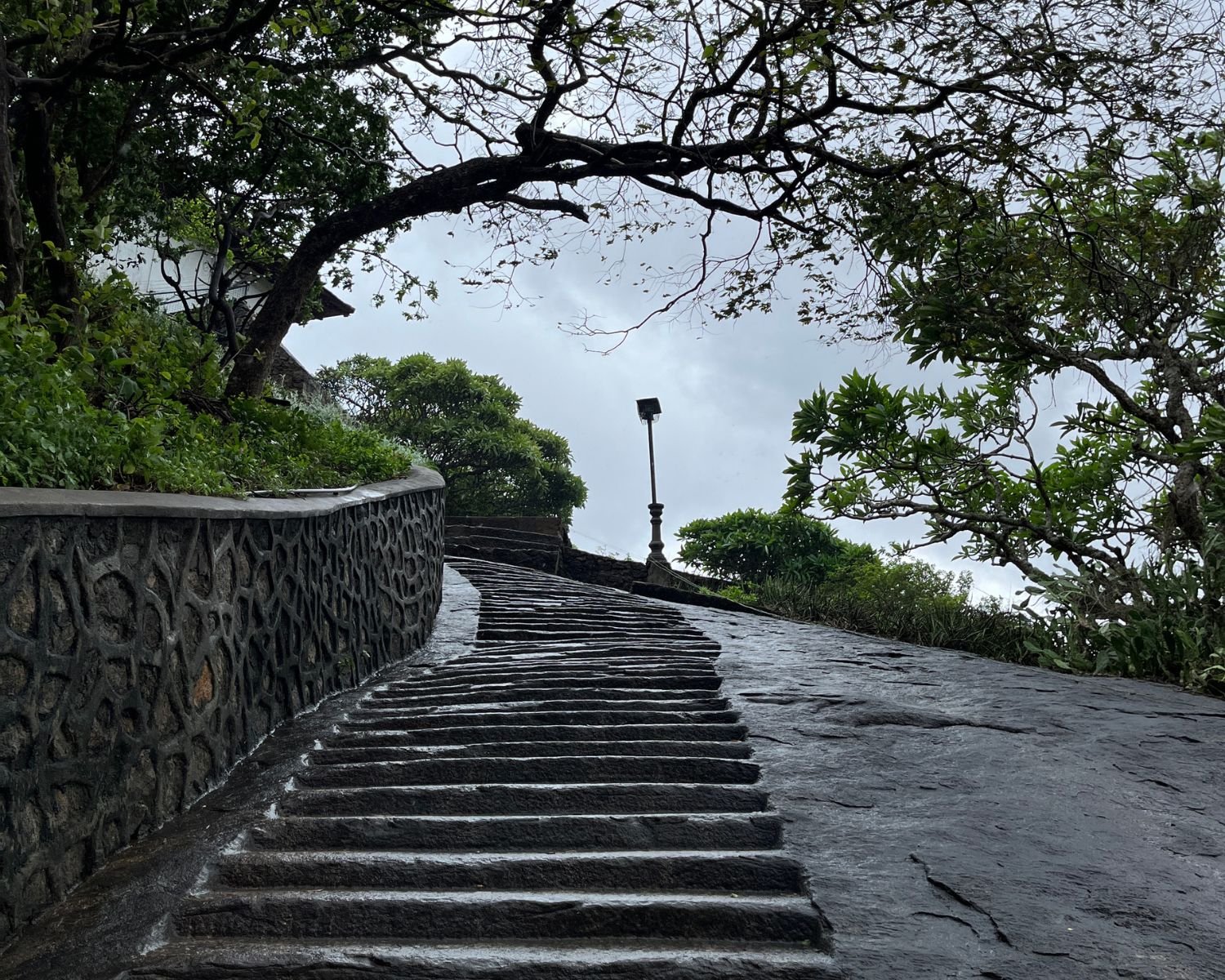
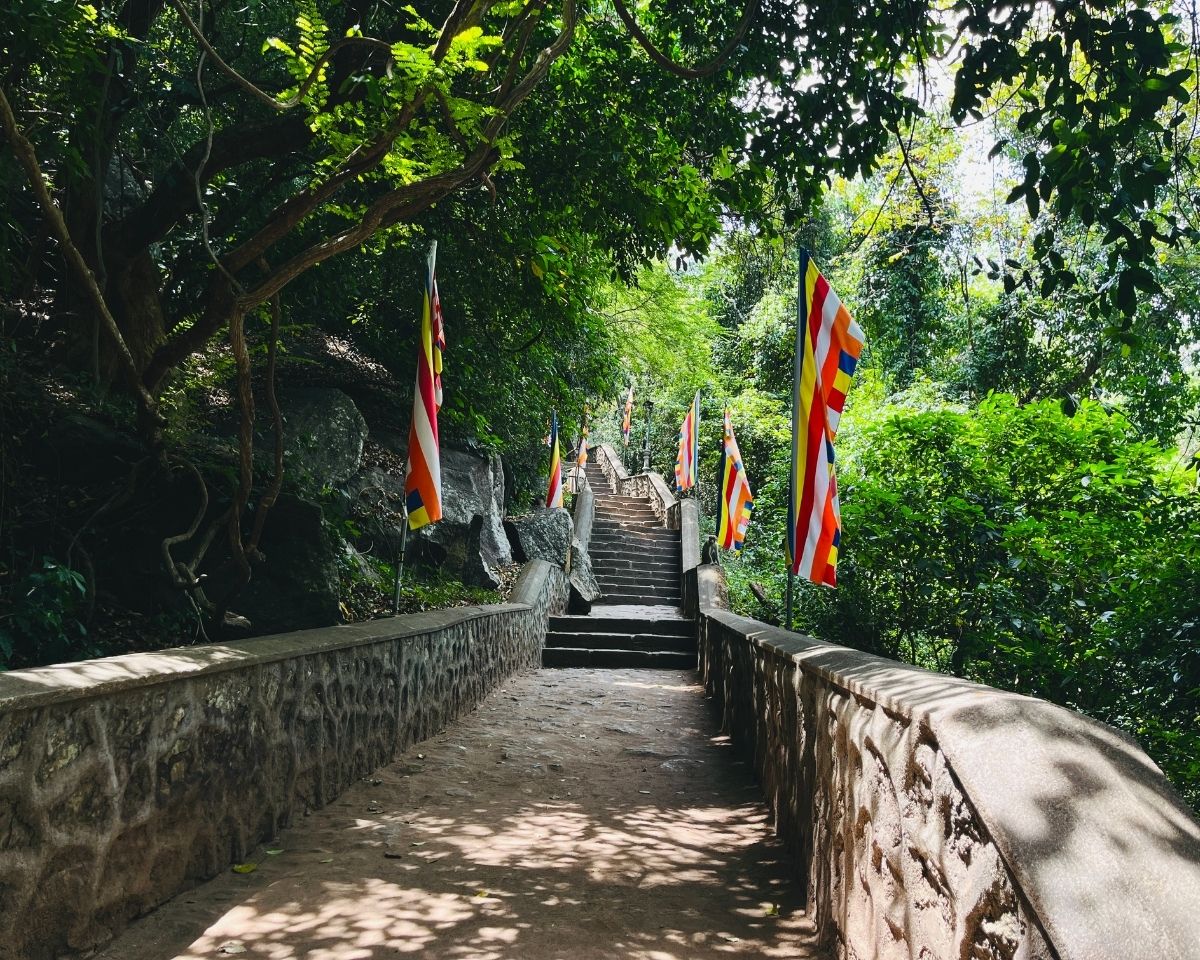
Climb includes several hundred steps. Around 15–30 minutes. Warm weather can make it feel tougher.

Art & Culture
Art & Culture
Over 150 Buddha statues and extensive cave murals covering more than 2,000 square meters.

Entrance Fee
Entrance Fee
LKR 3,000 ($9.5 USD )
Tickets at entrance
MapView on Map

! Fees are approximate and can vary based on factors such as season, group size, and additional services.

Map Icon
Location

MapView on Map
Dambulla Royal Cave Temple
Top Pick
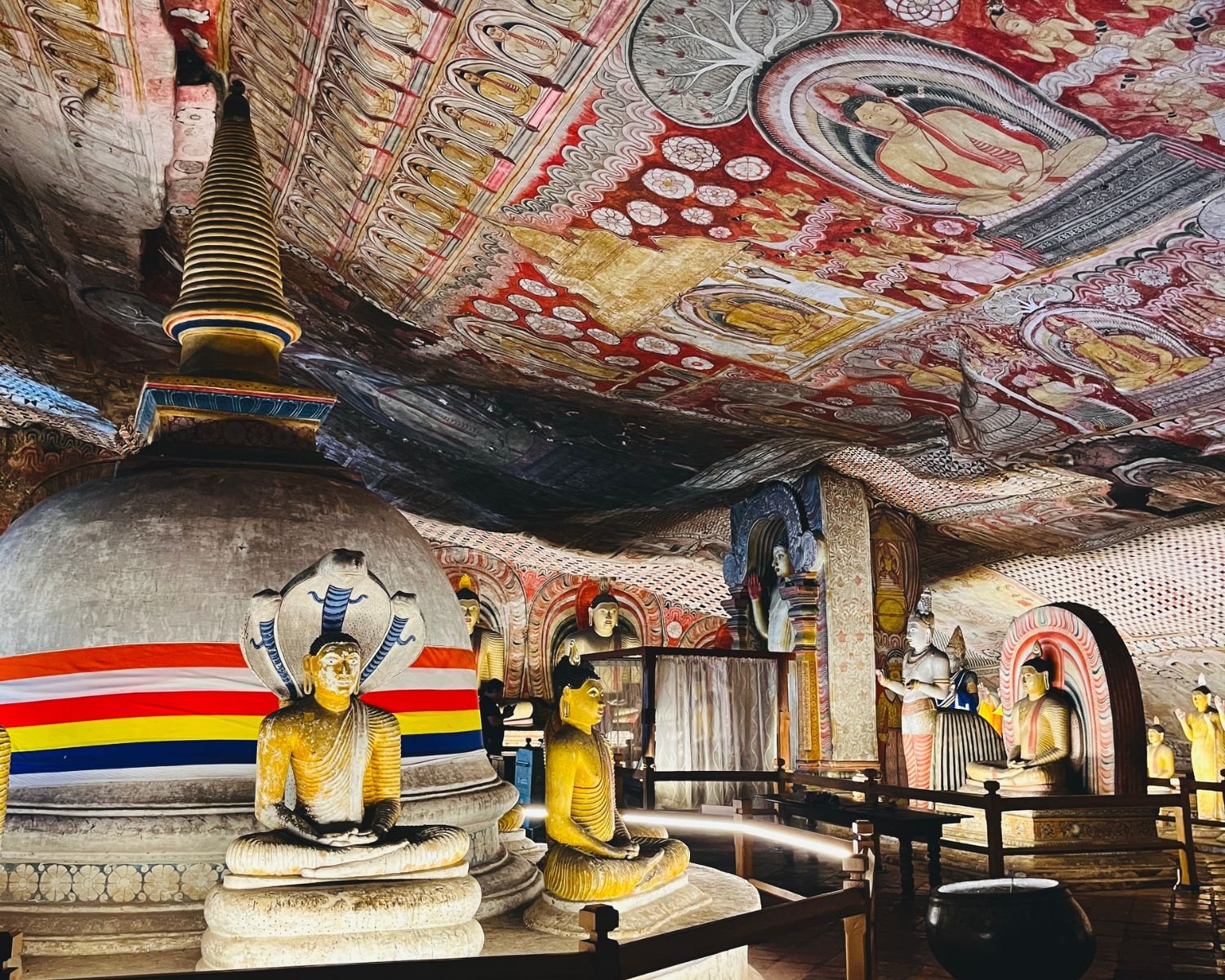
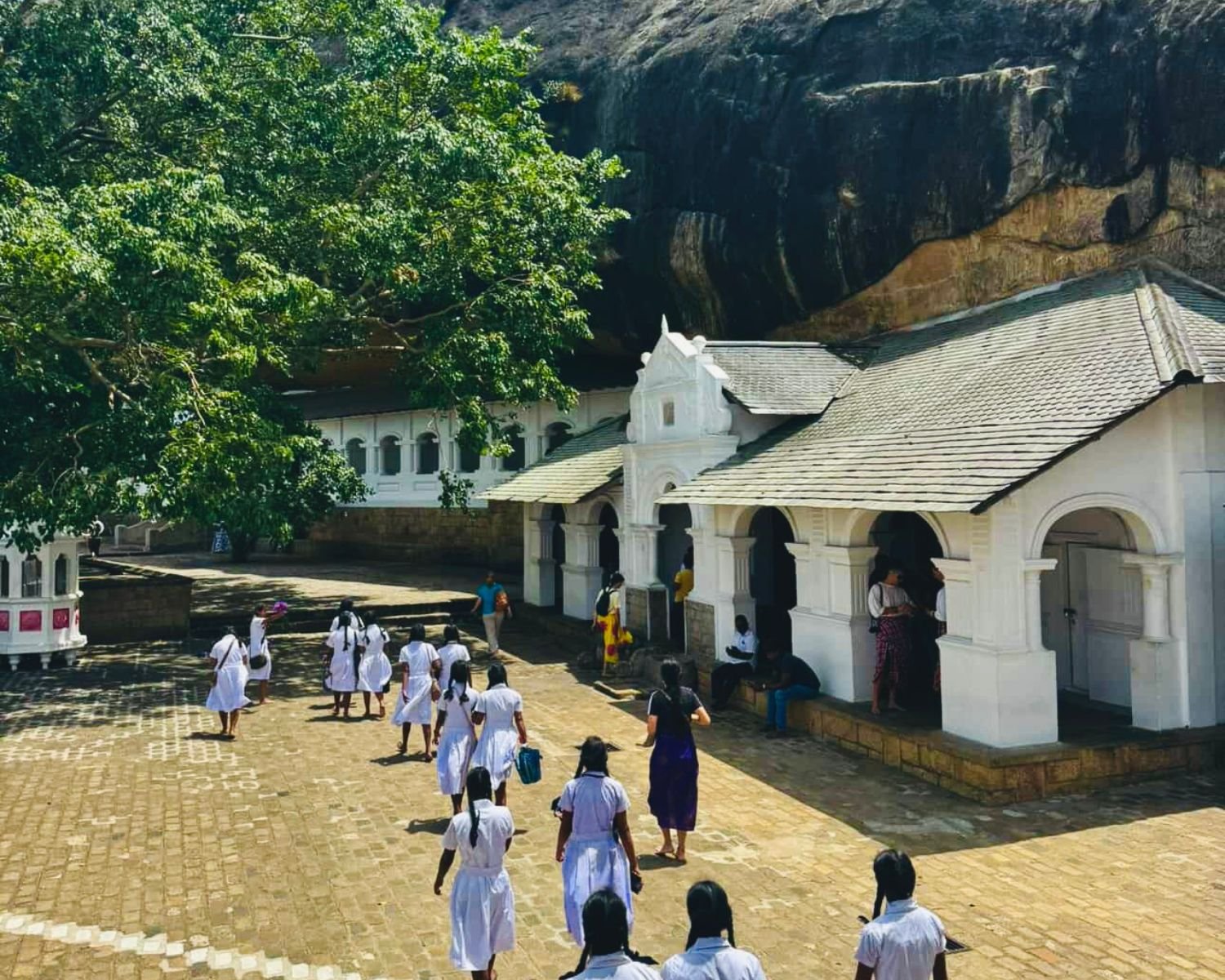
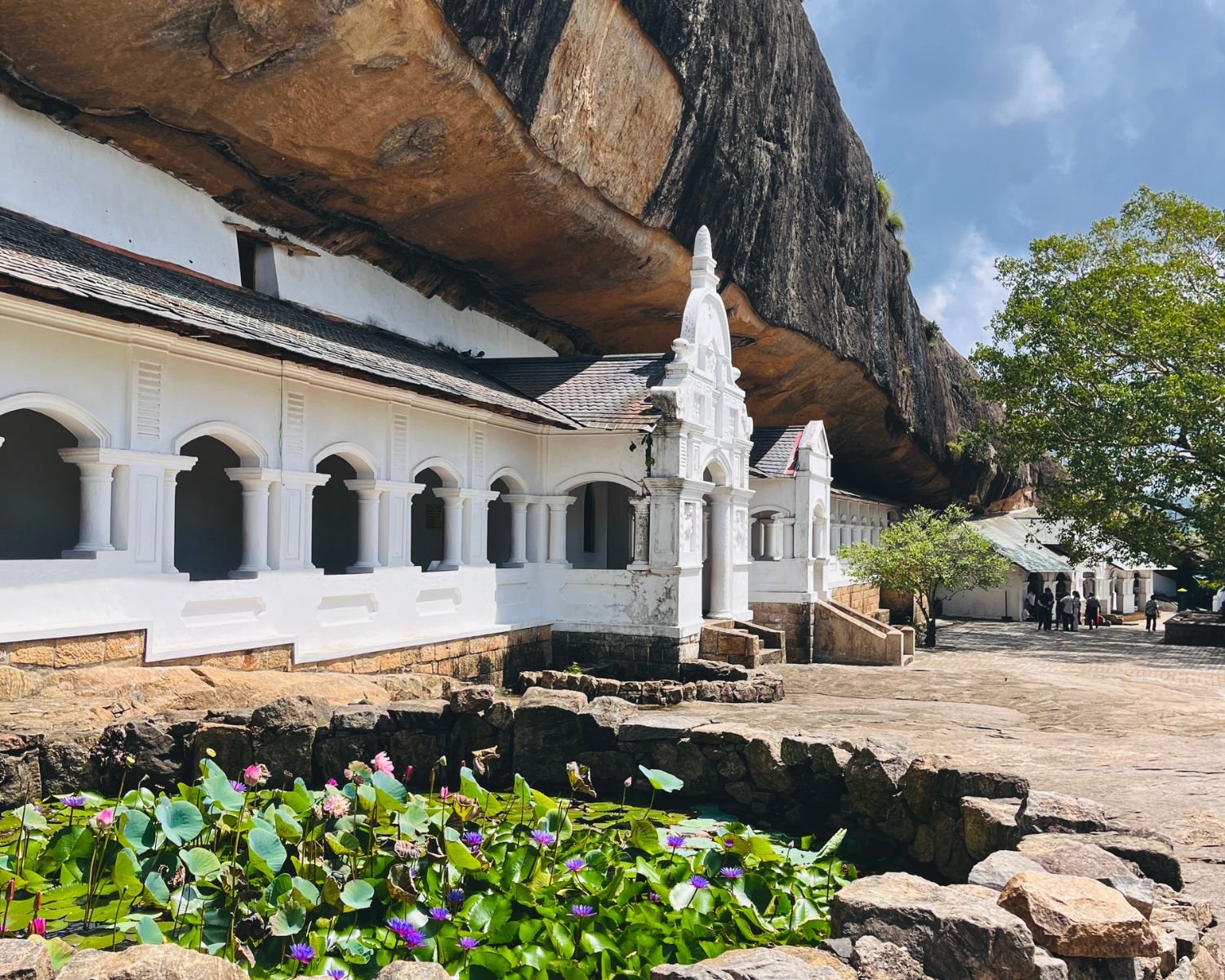
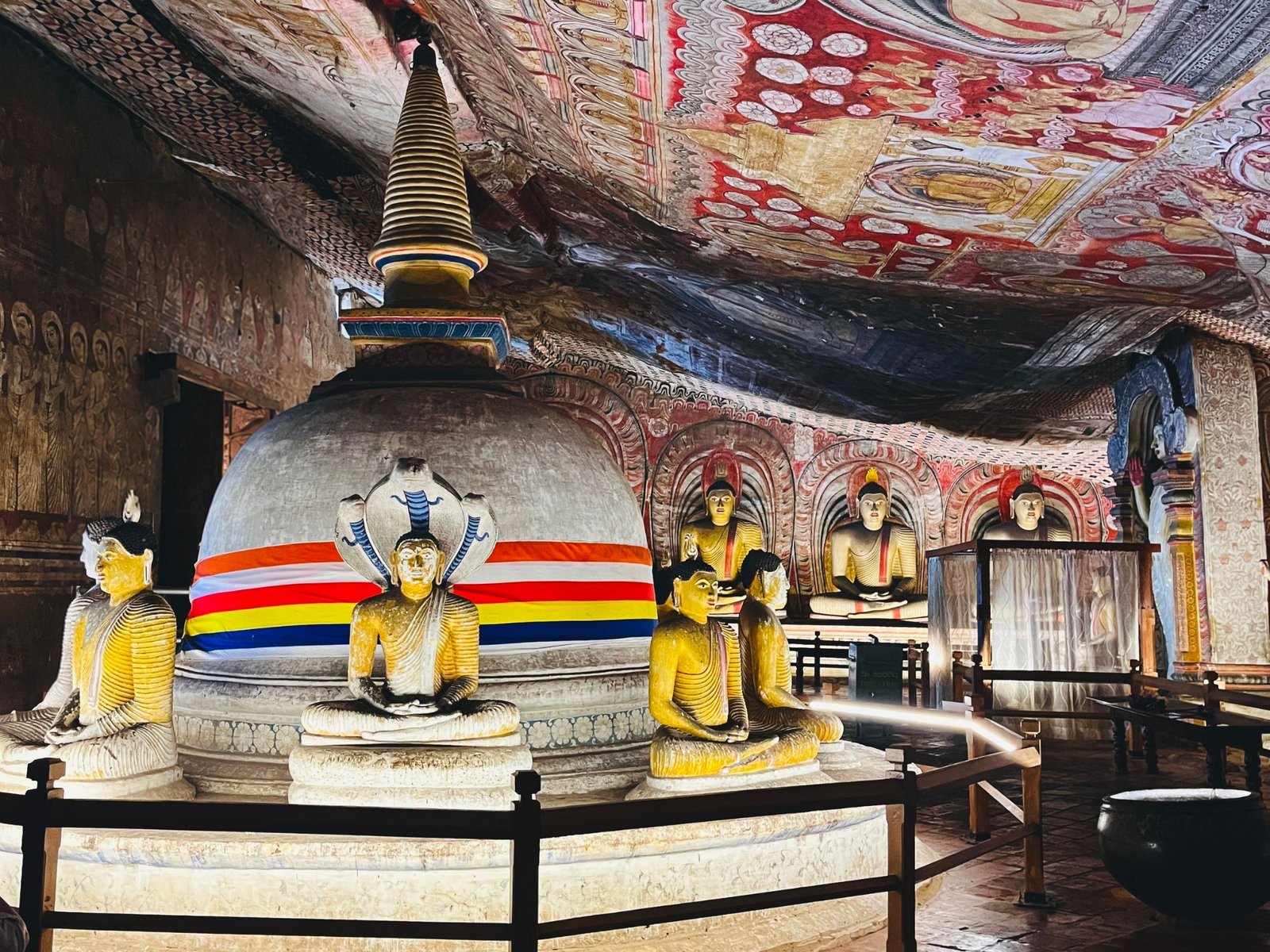
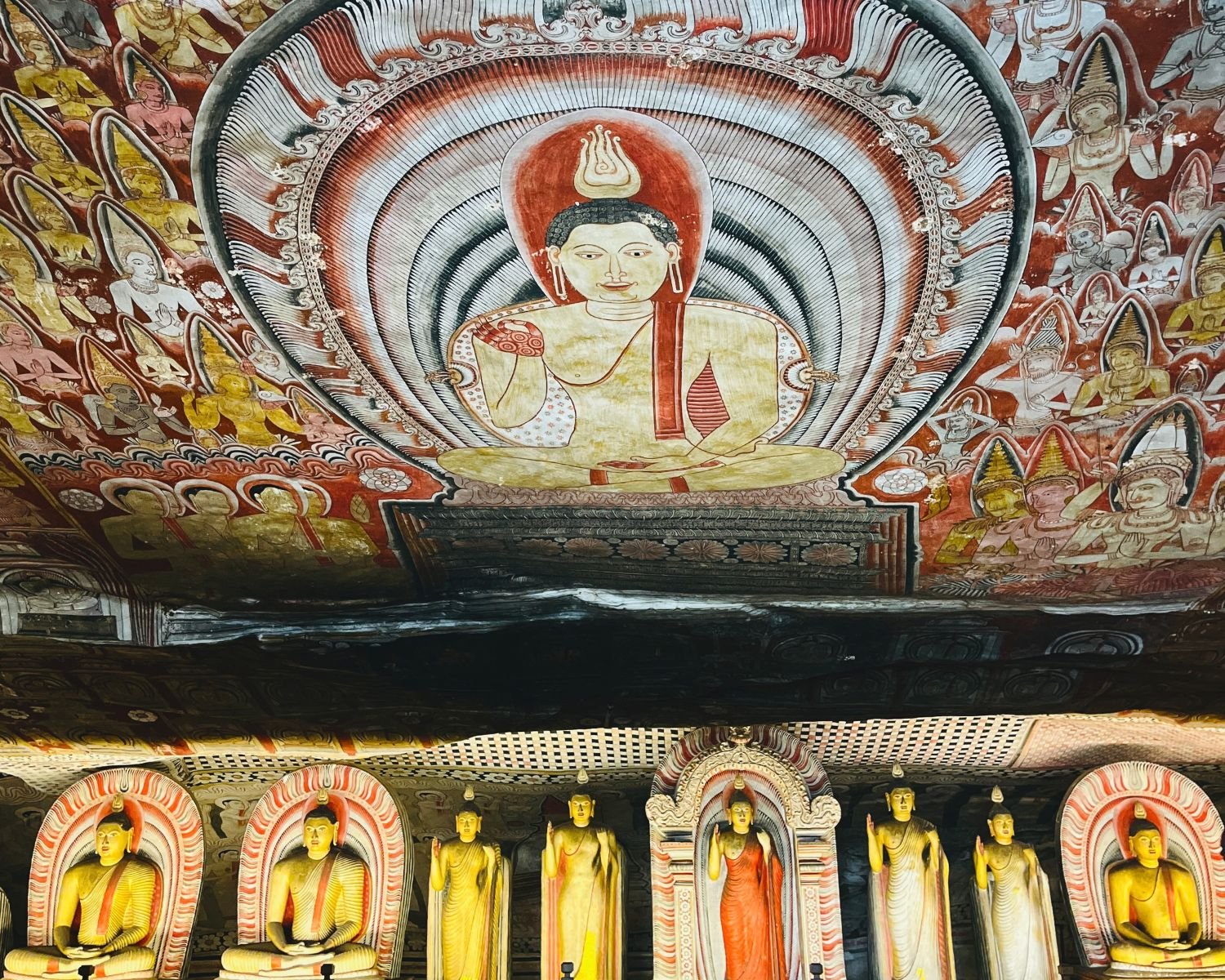
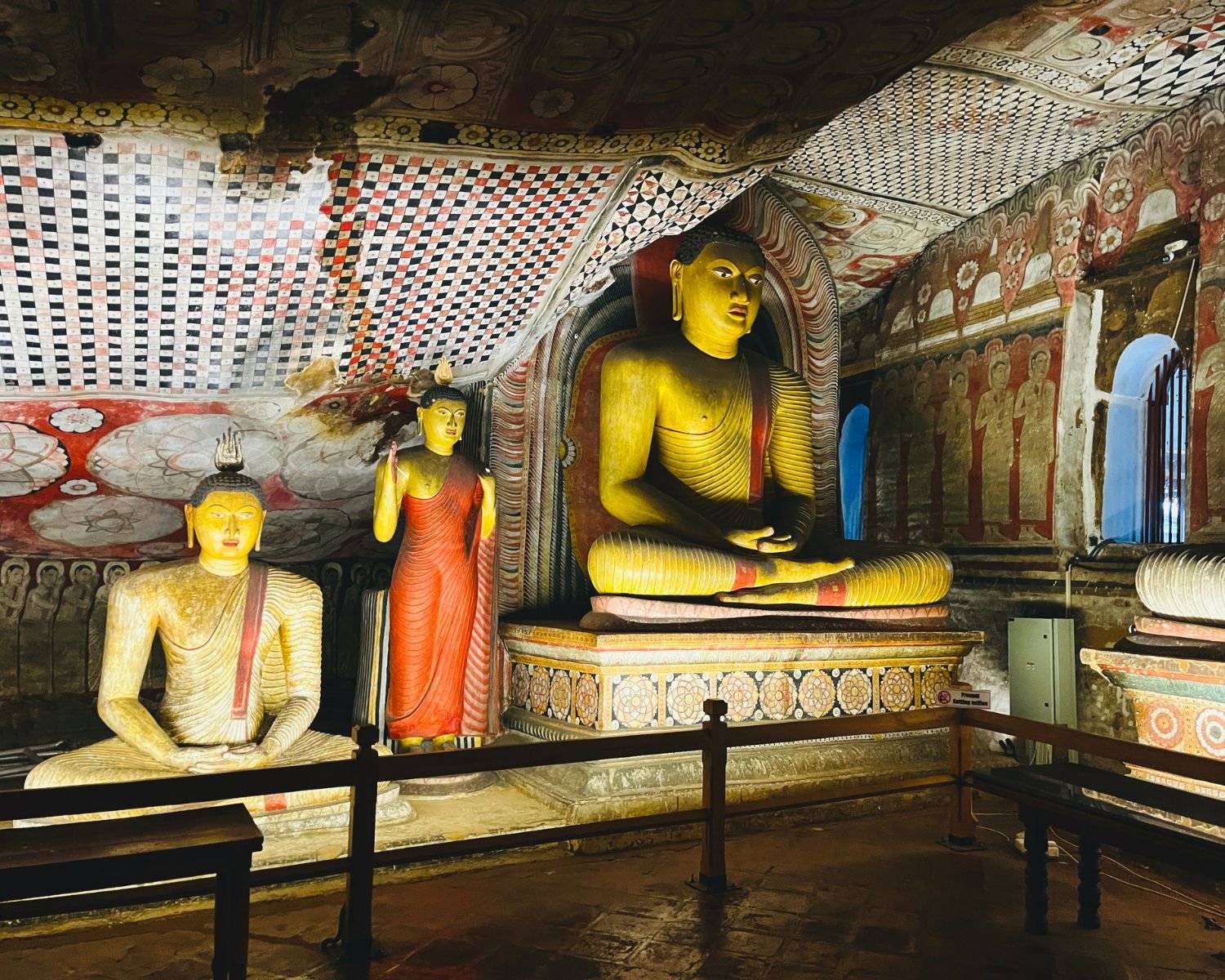
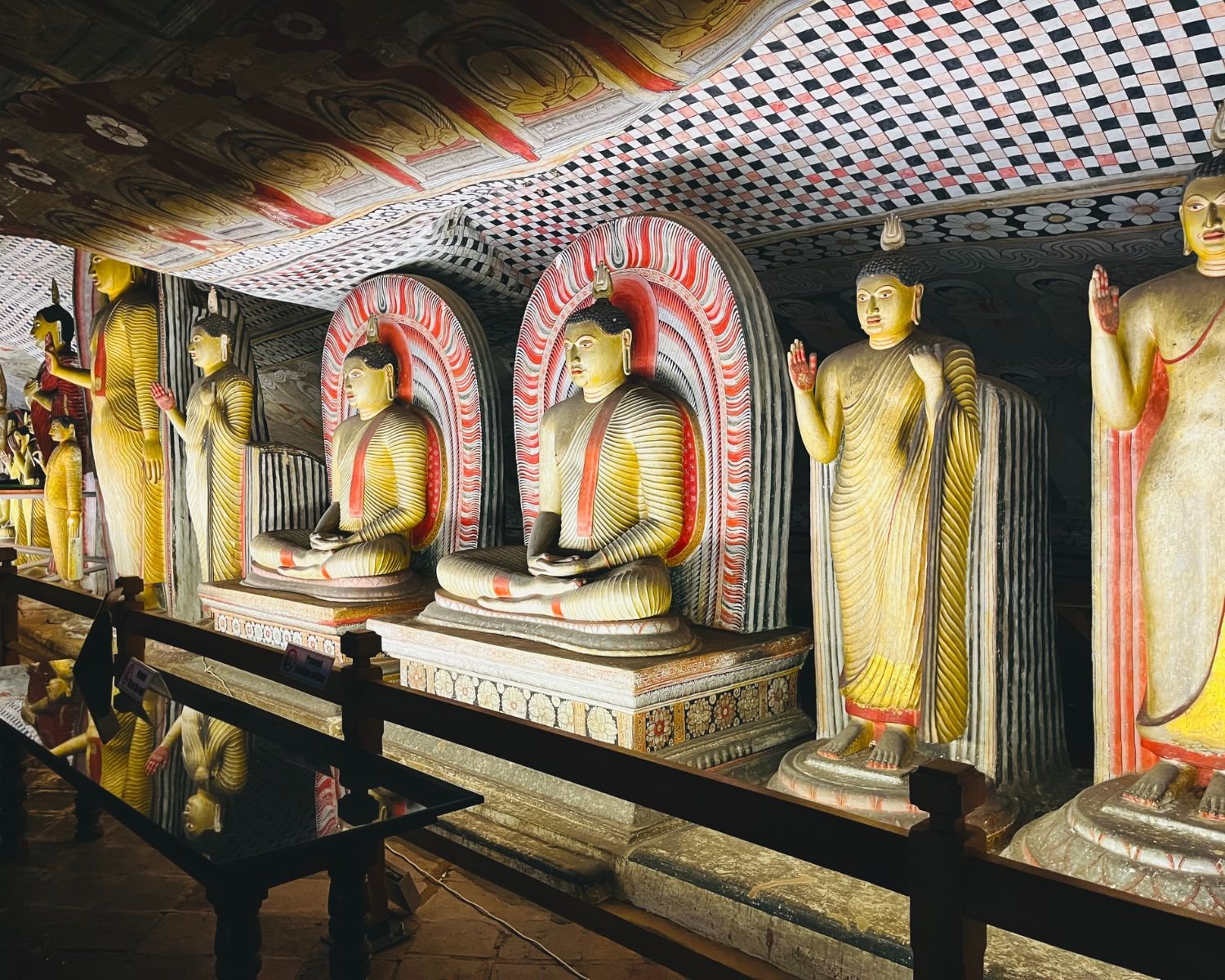
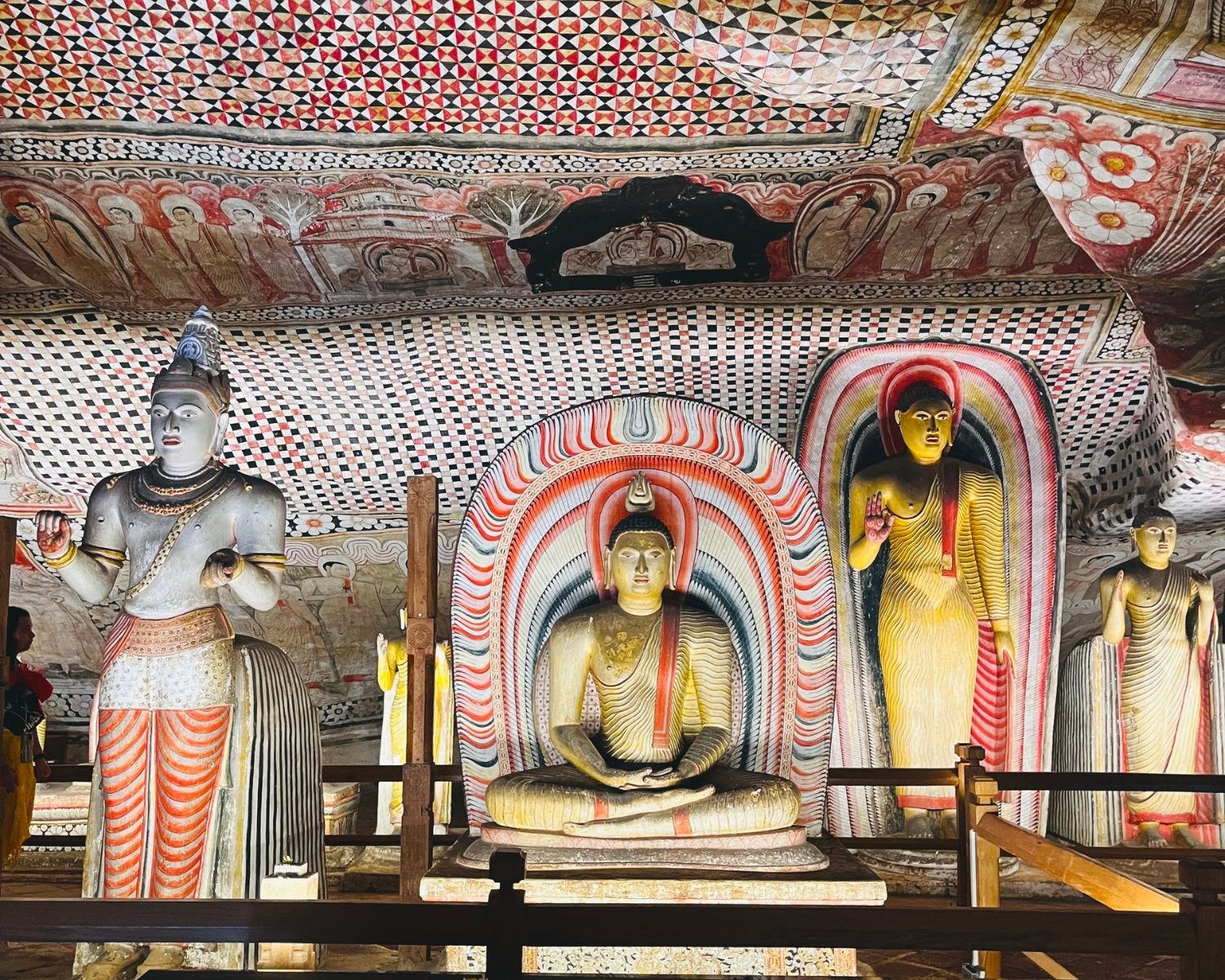
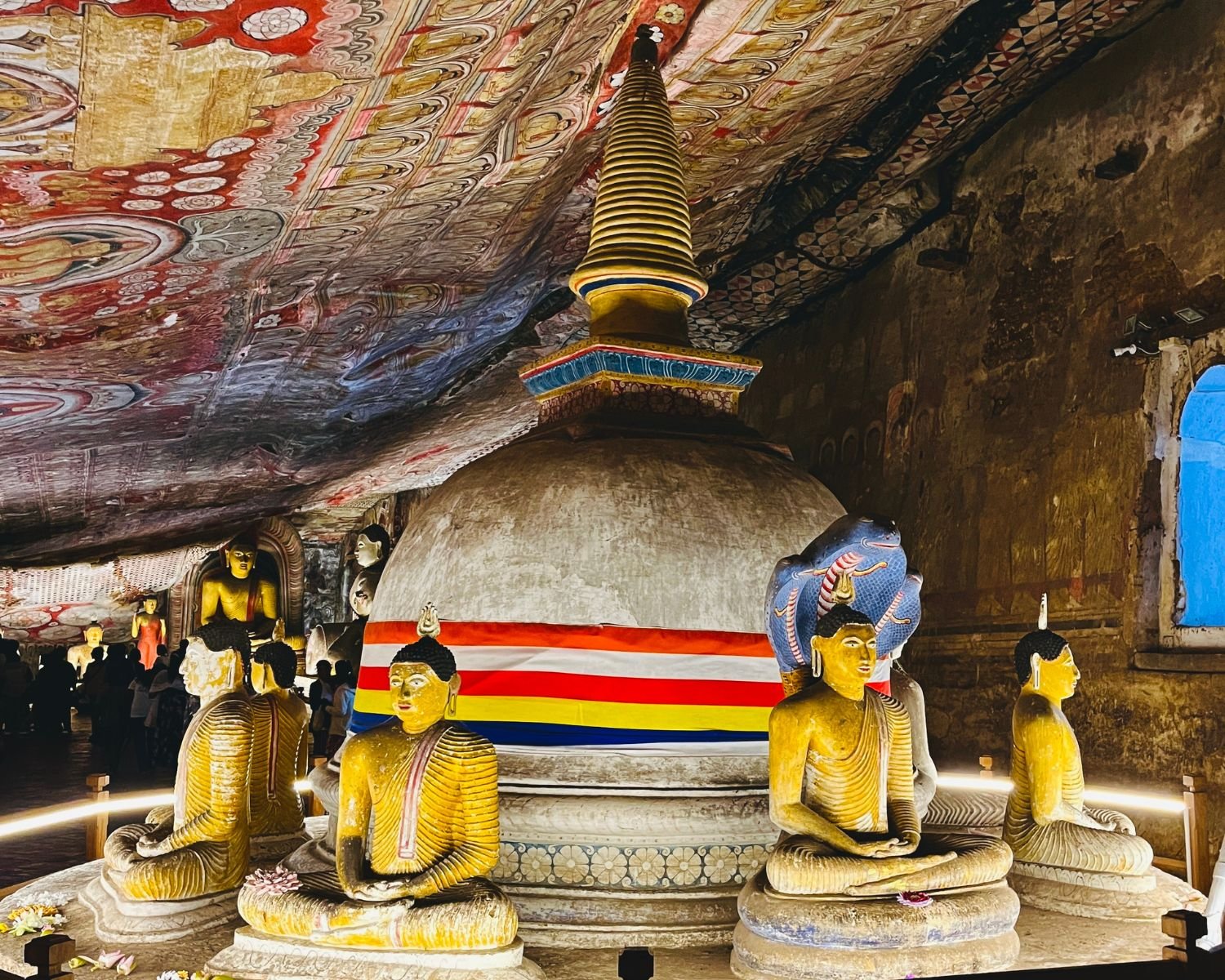
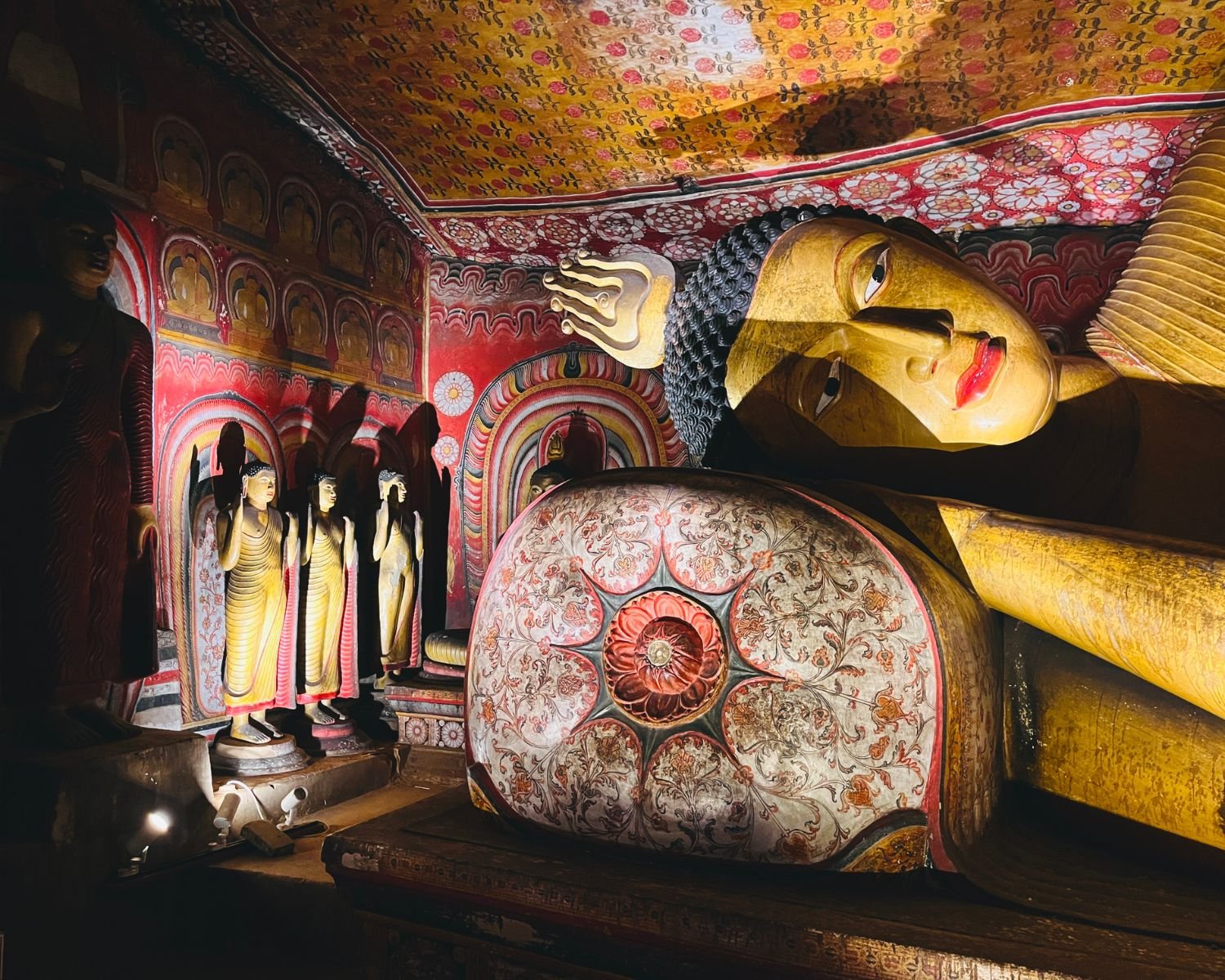
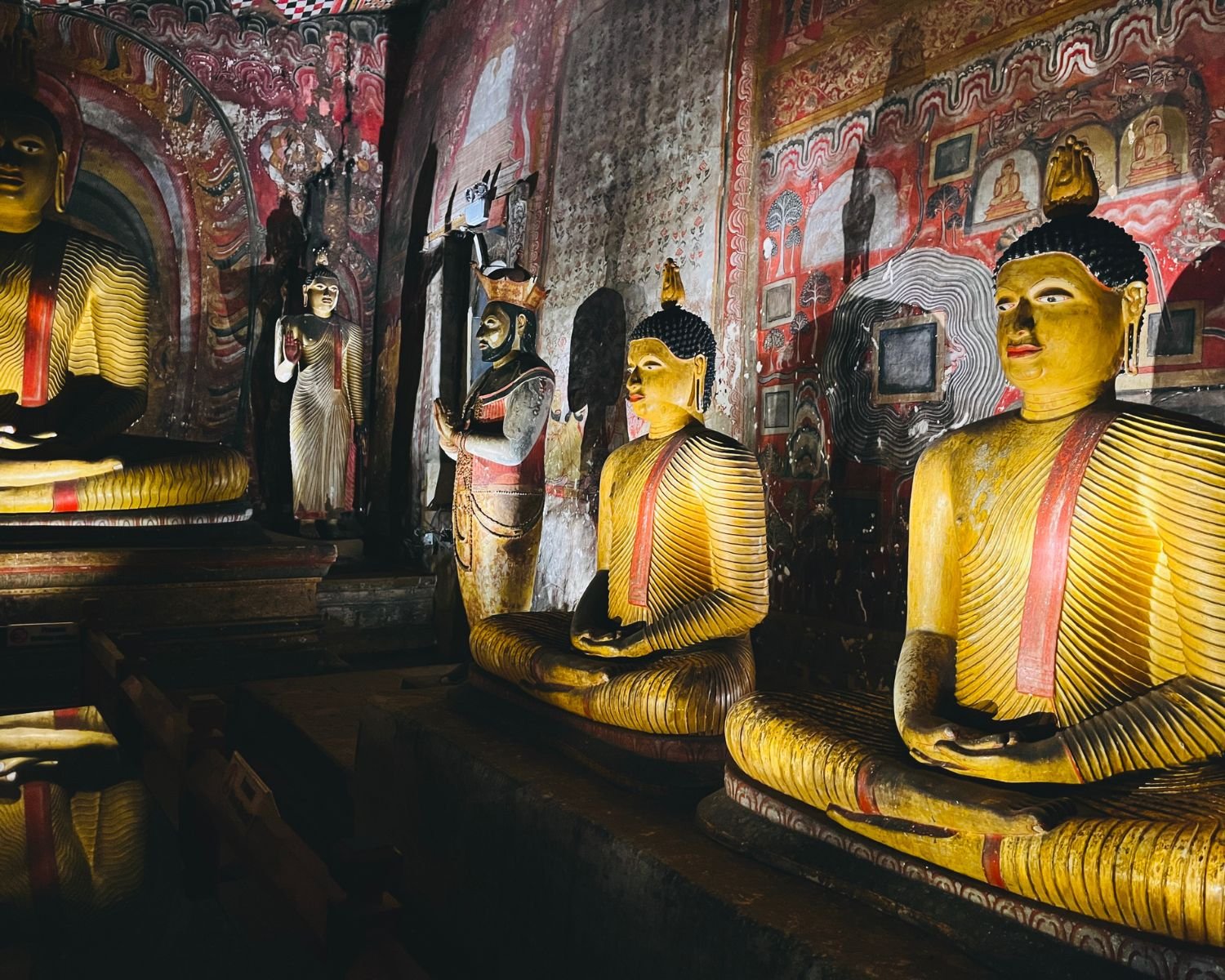
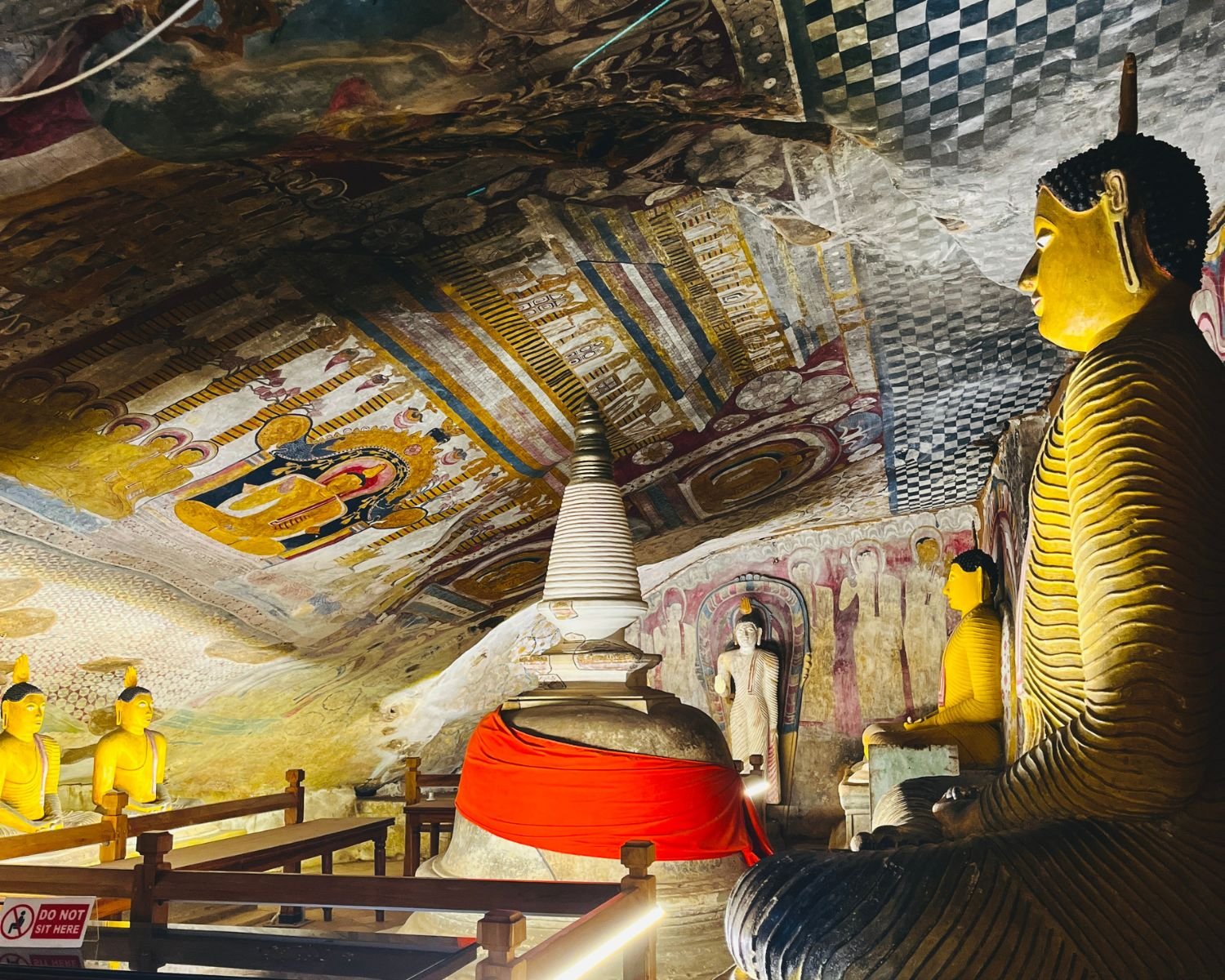
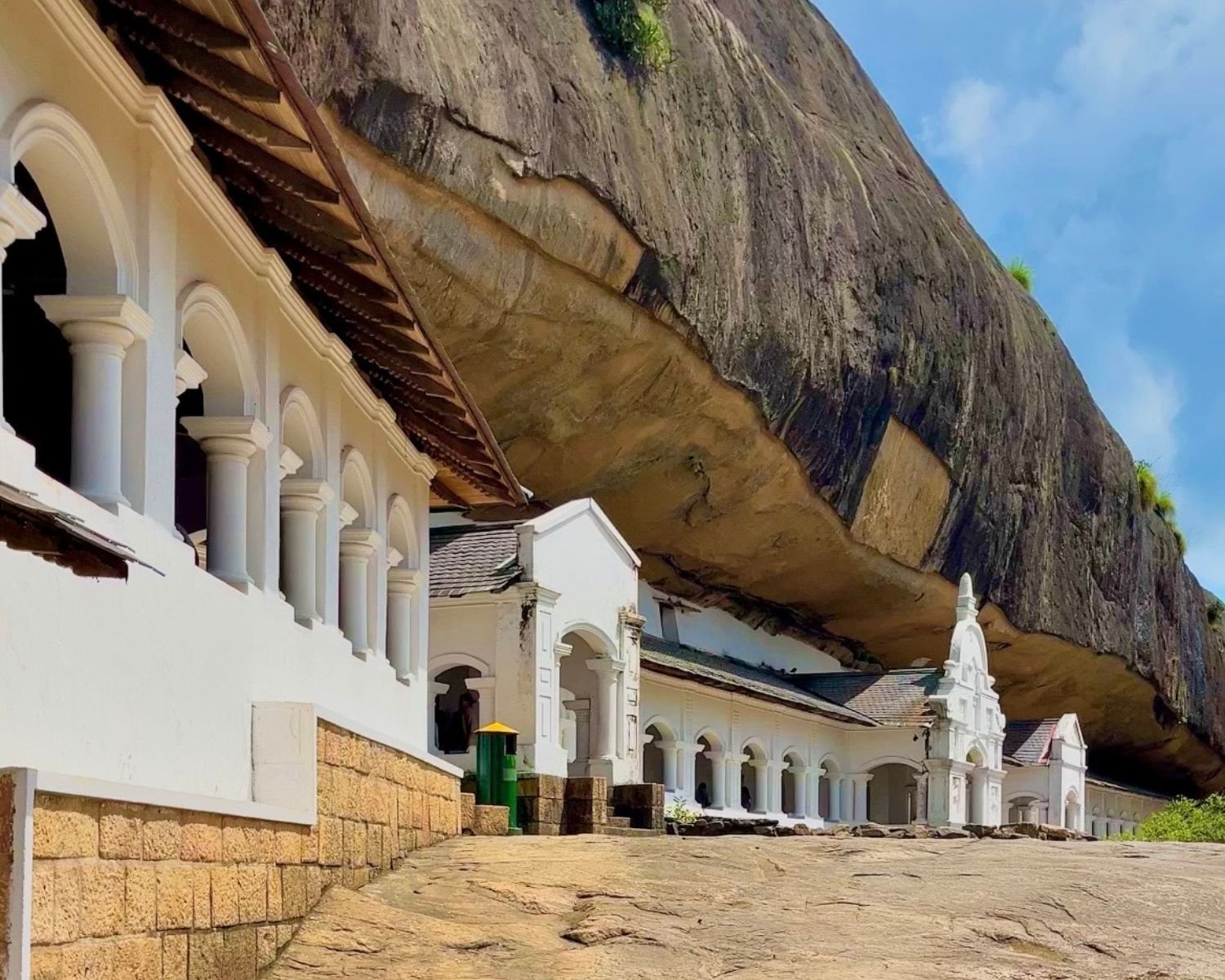
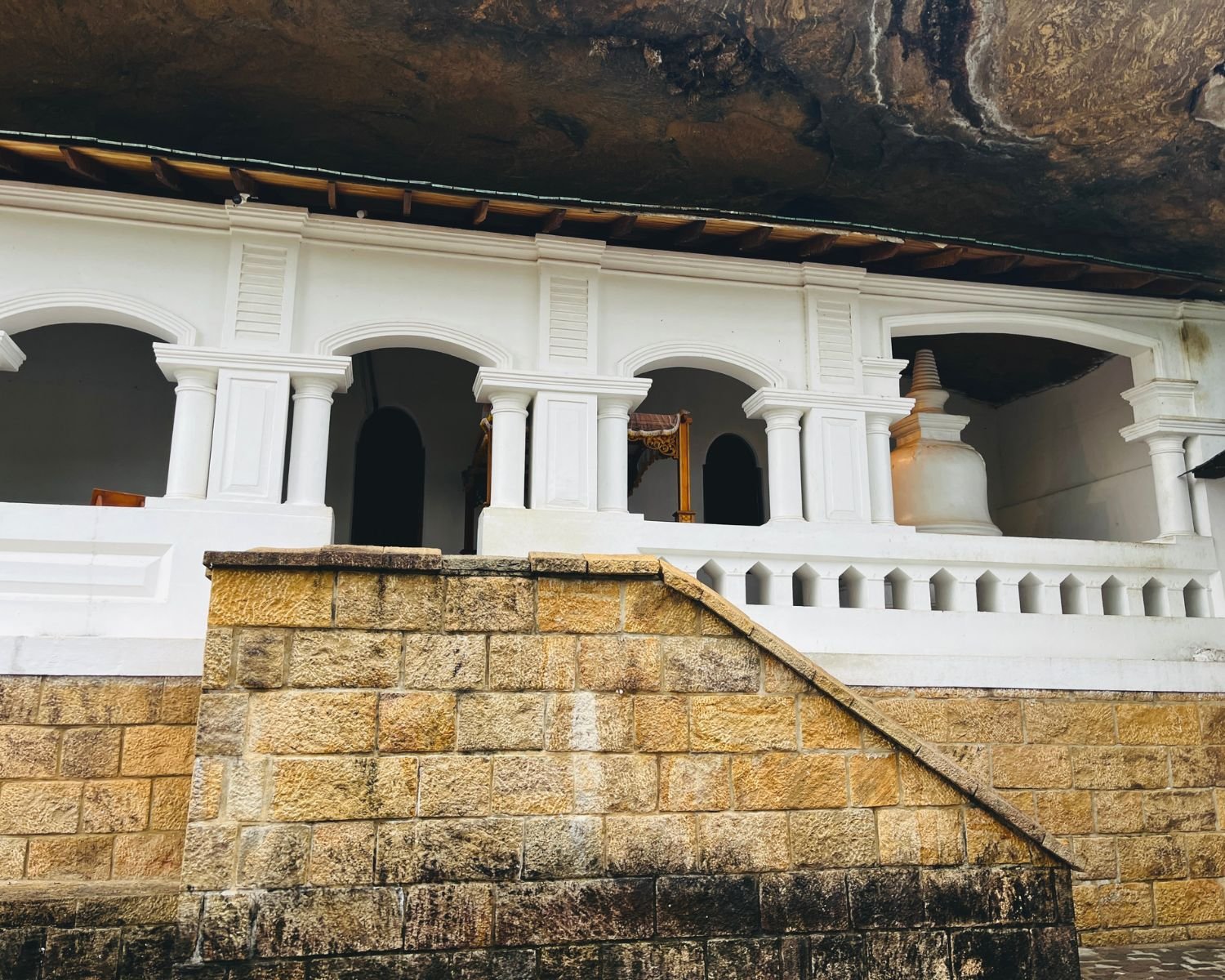
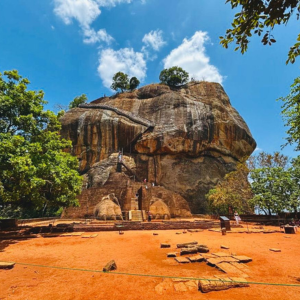
Hidden within the golden plains of Sri Lanka’s Cultural Triangle, the Dambulla Royal Cave Temple stands as one of the country’s greatest masterpieces of ancient Buddhist art and devotion. Rising from a massive rock outcrop, this sacred complex features five extraordinary cave shrines filled with statues, murals, and centuries of spiritual heritage. For over 2,000 years, monks, kings, and pilgrims have climbed its stone steps to witness a sanctuary carved directly into the living rock, preserved in incredible detail.

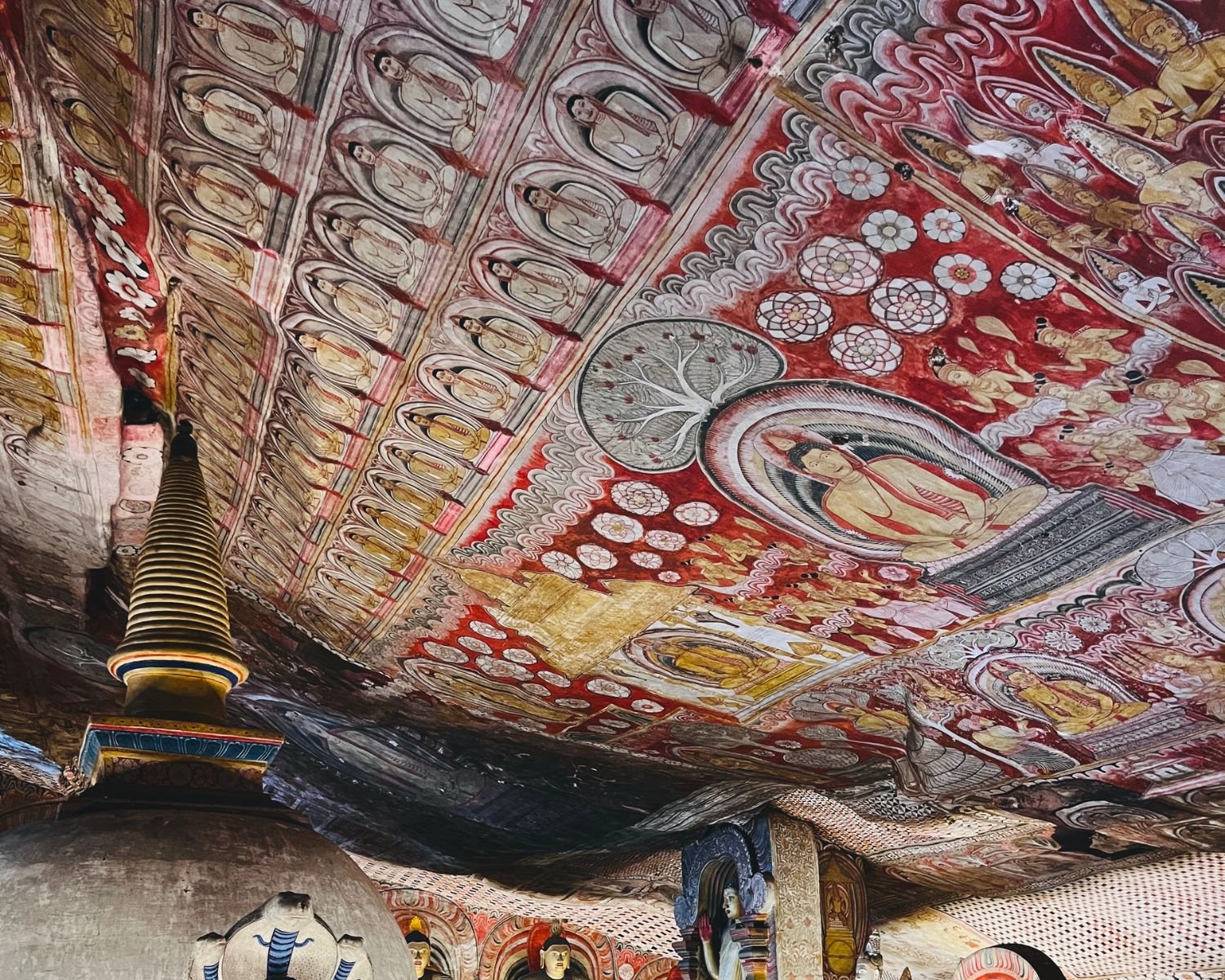
According to historical chronicles, King Valagamba sought refuge in these caves in the 1st century BCE after losing his throne. When he later reclaimed his kingdom, he transformed the caves into a grand monastery as an offering of gratitude. Over the centuries that followed, rulers expanded and decorated the chambers, covering the ceilings in vibrant paintings and filling the halls with hundreds of statues dedicated to Buddha, gods, and great kings.

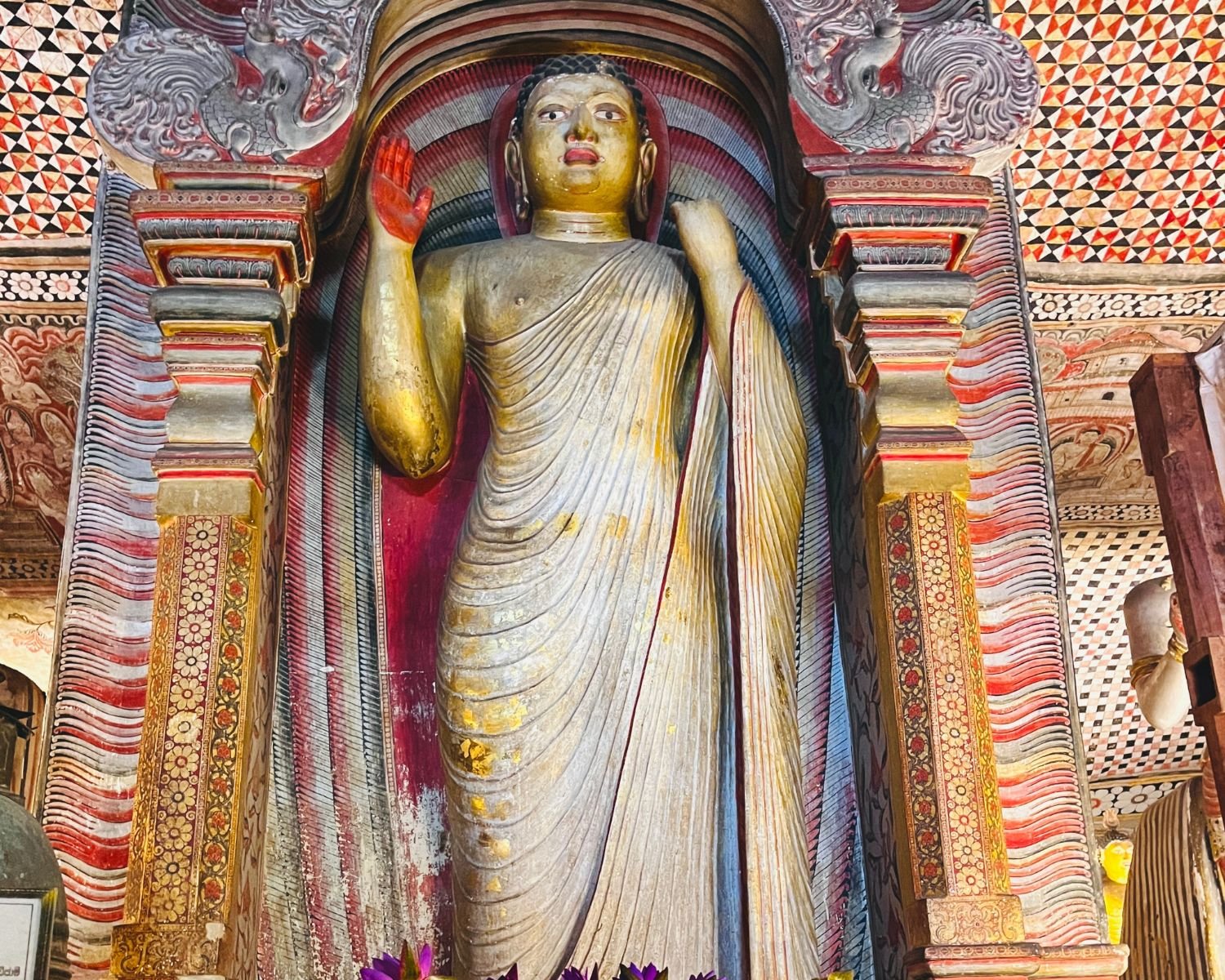
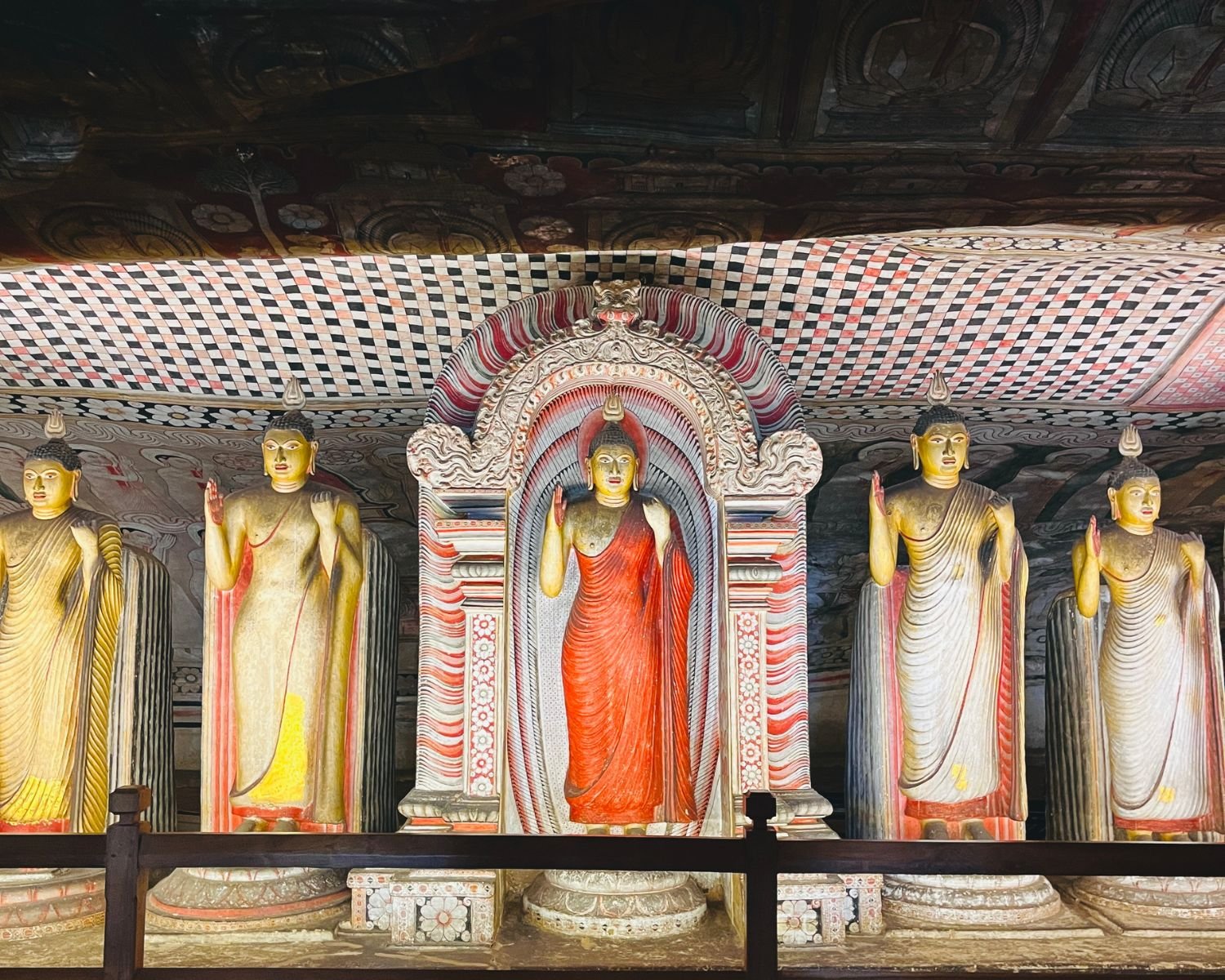
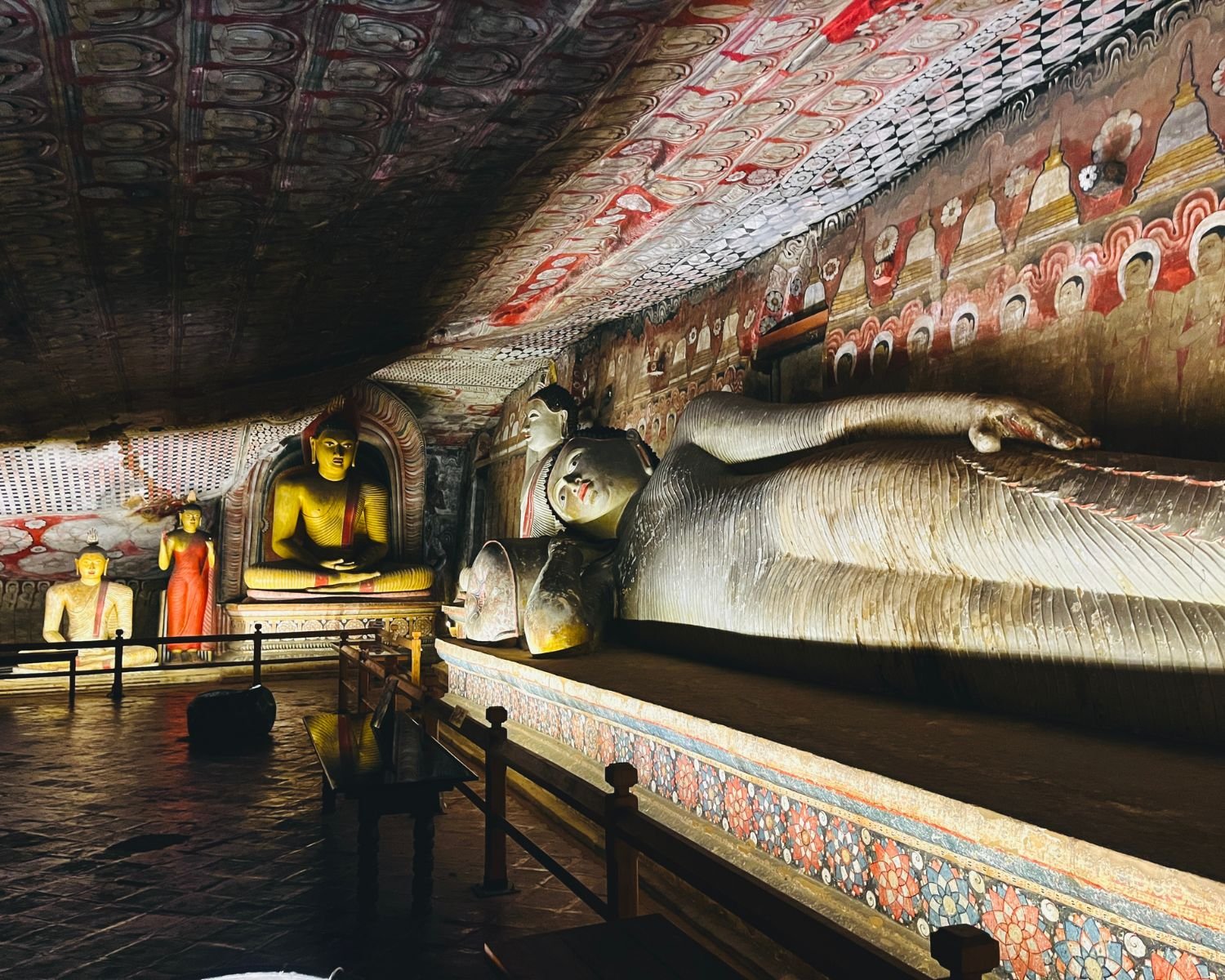
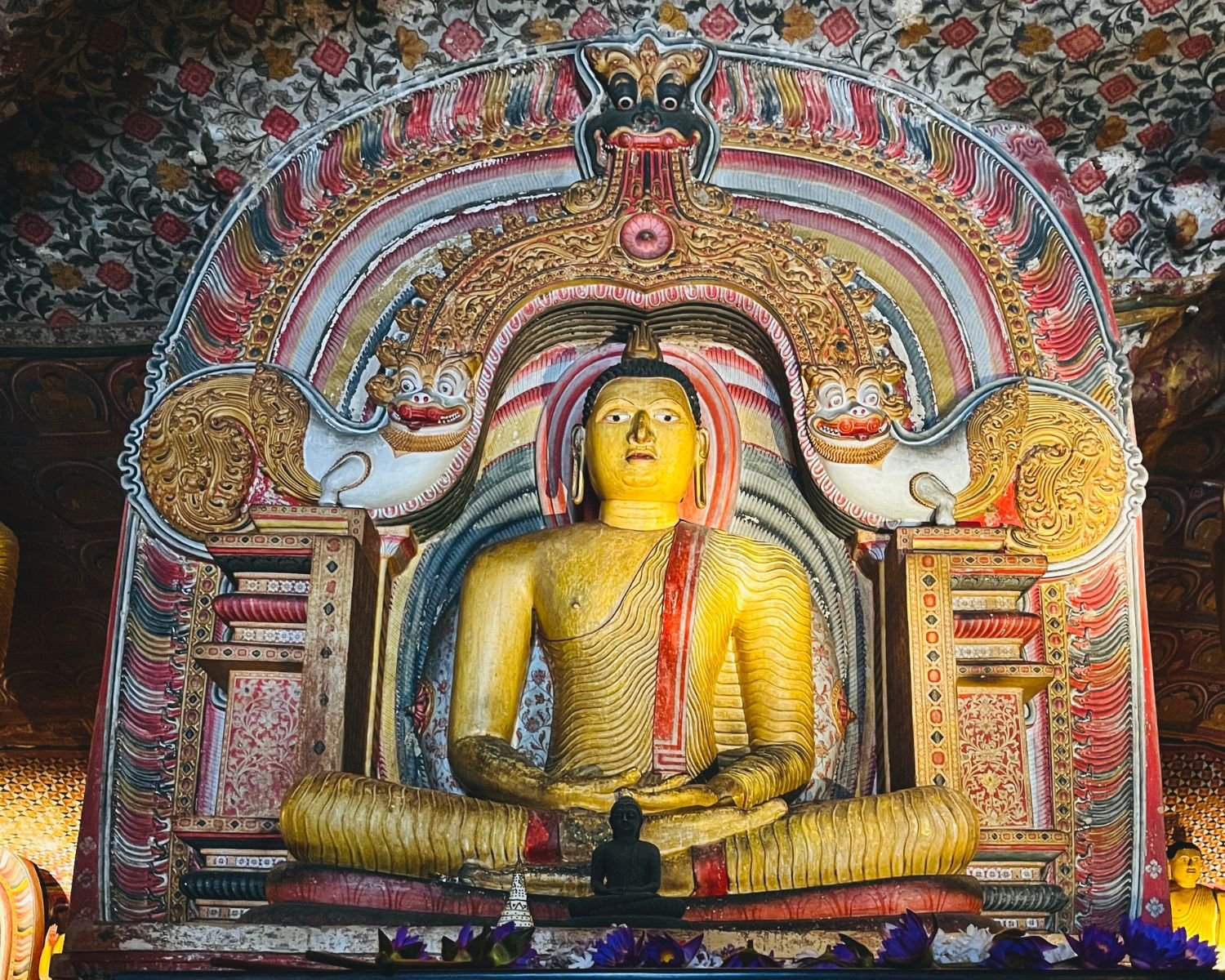
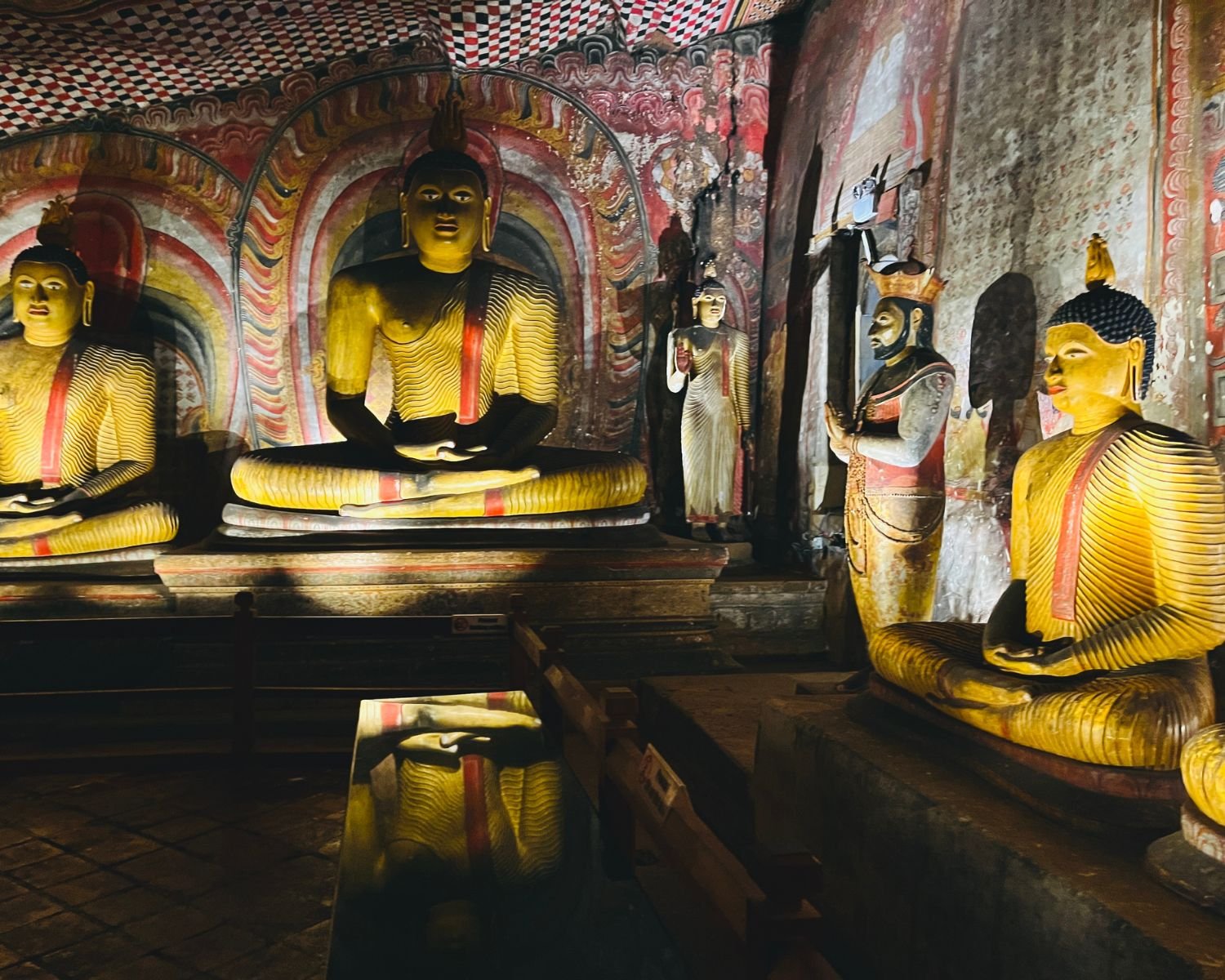
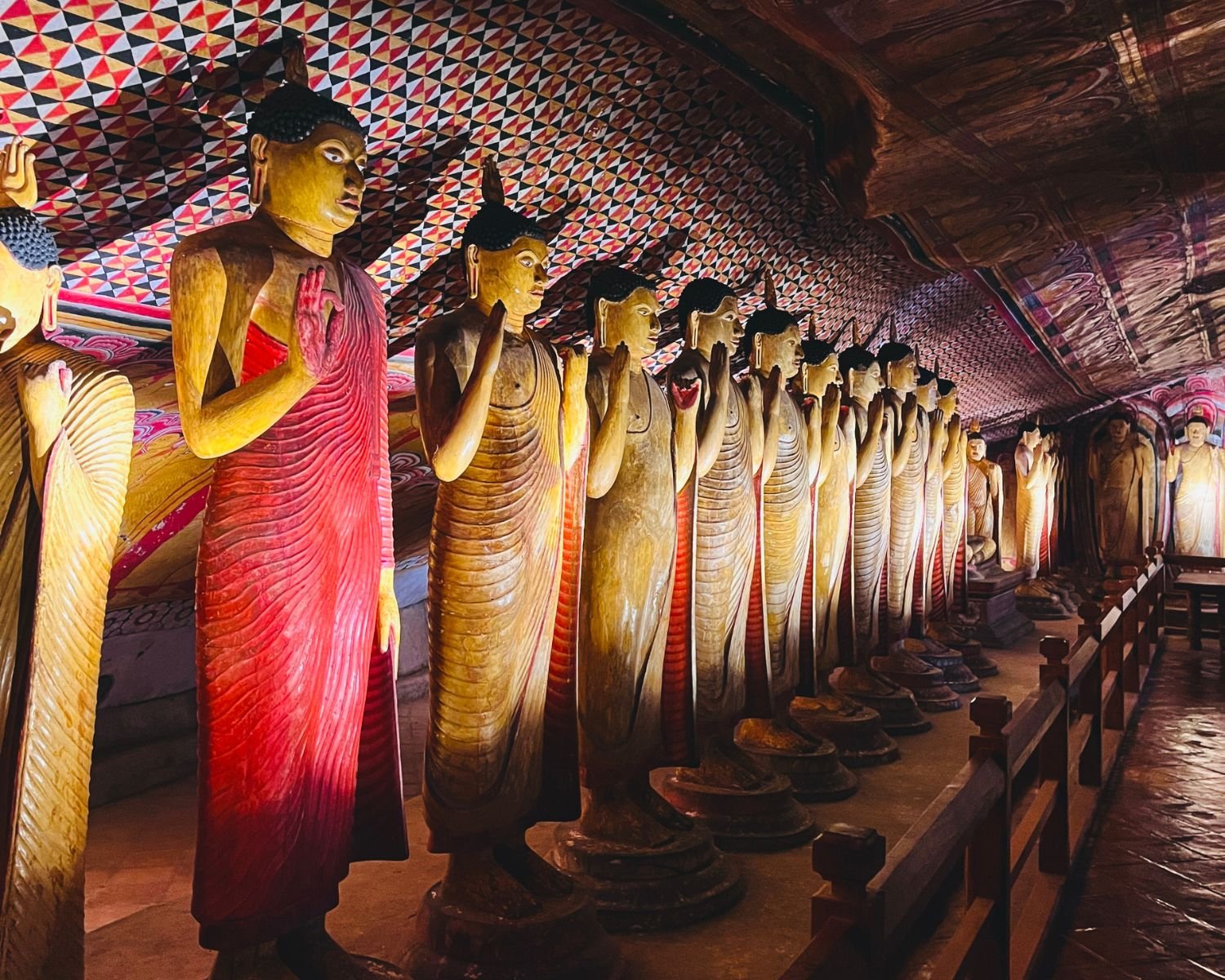
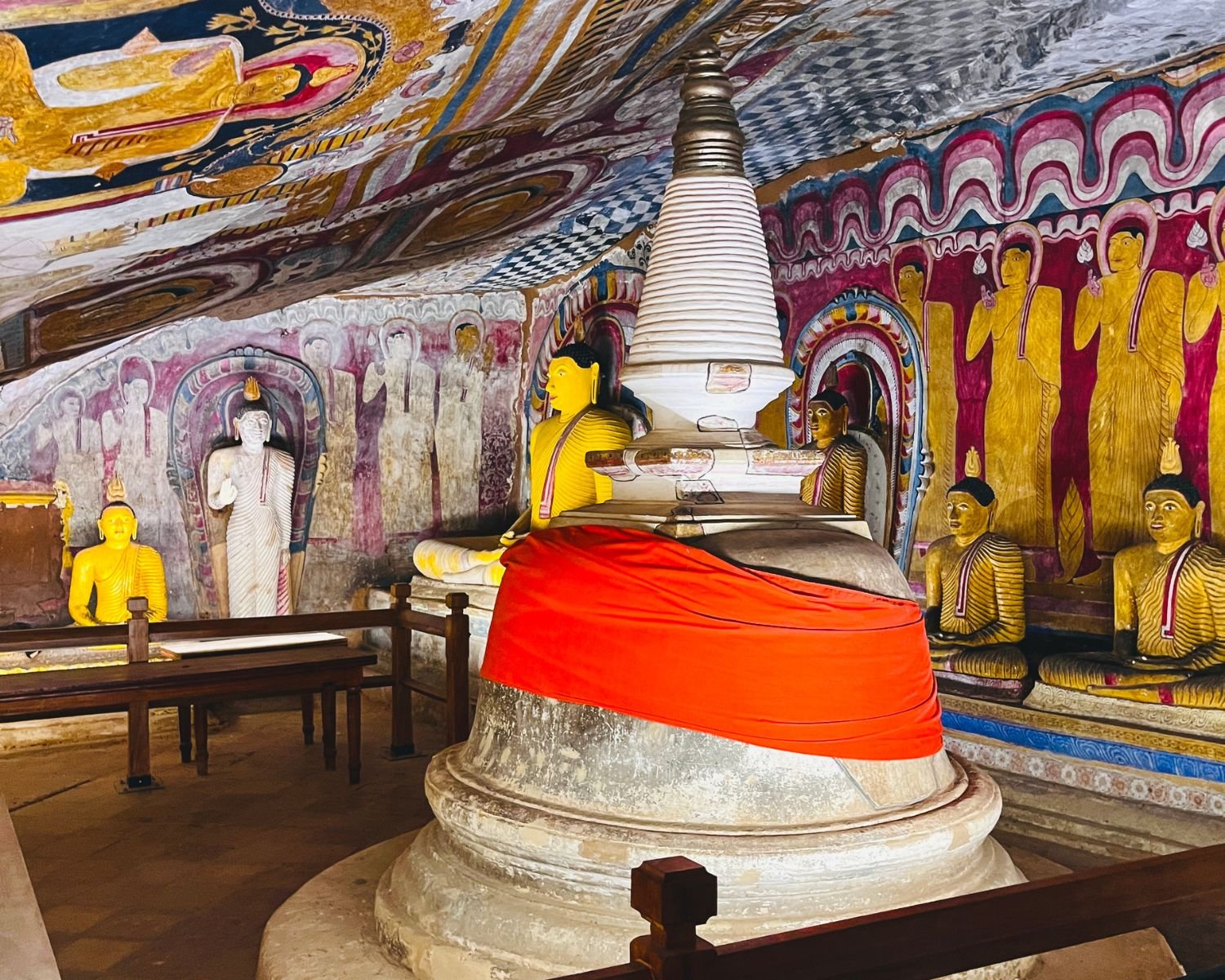
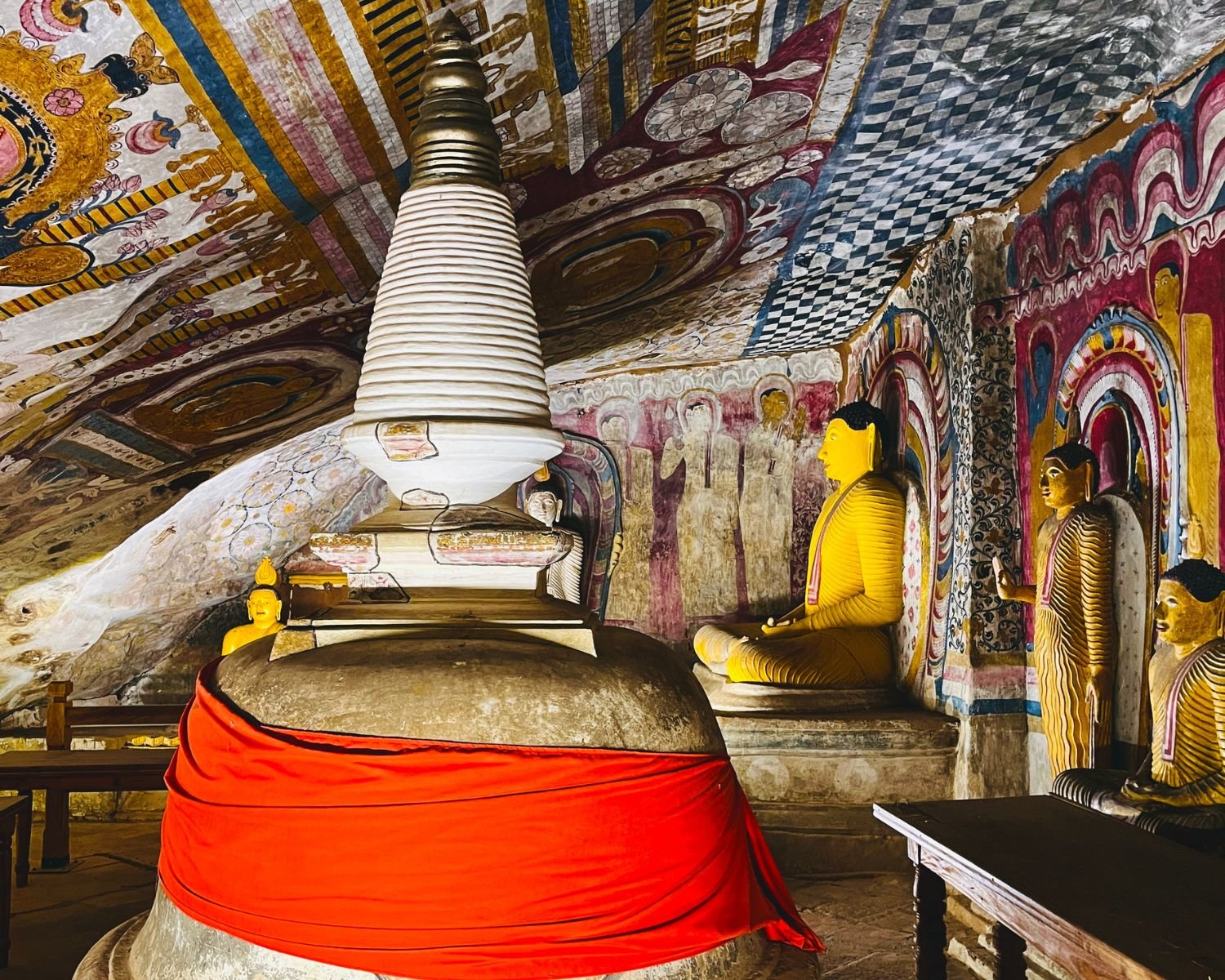
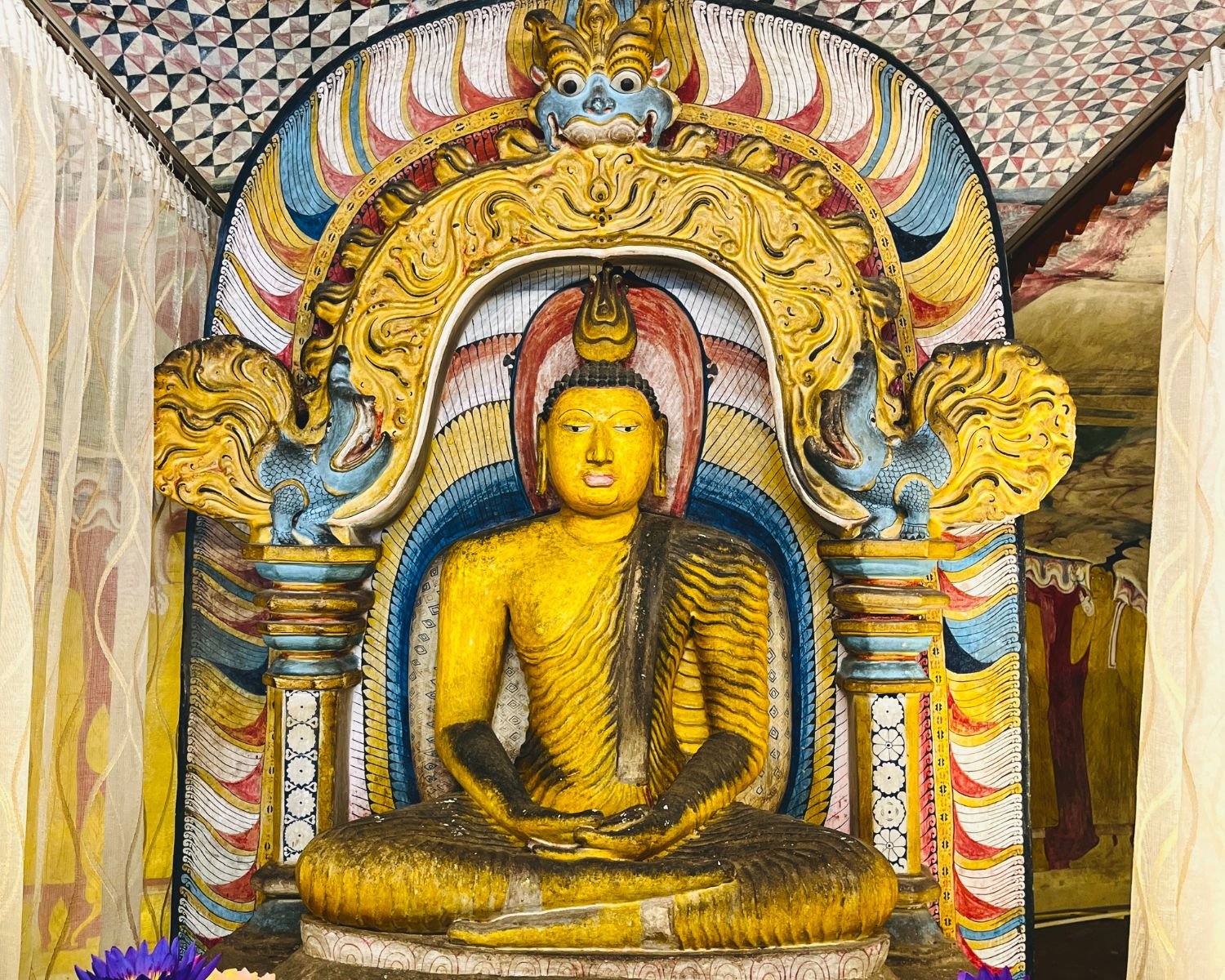
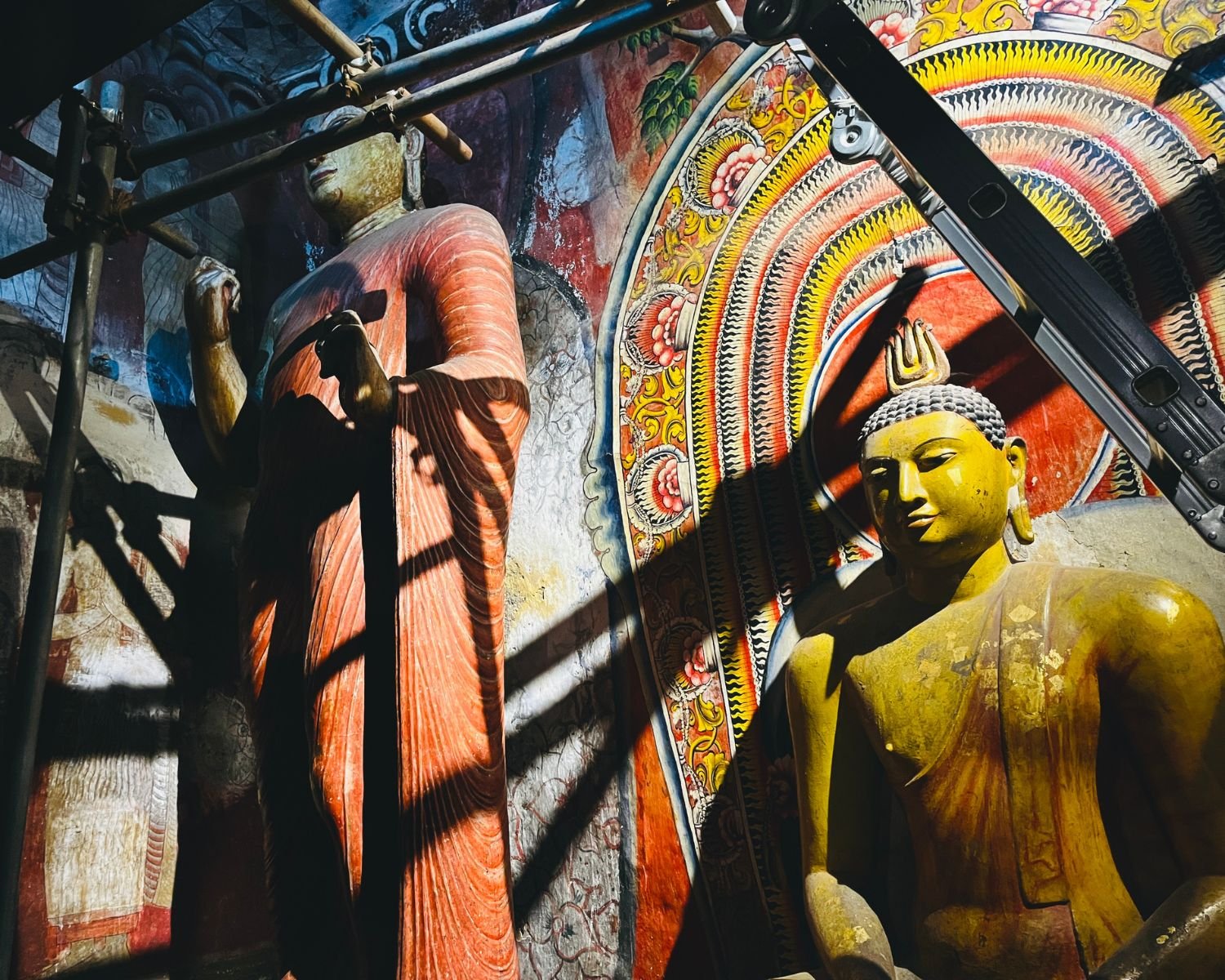
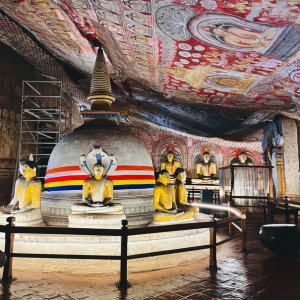
Inside the caves, visitors are met with an overwhelming display of artistry. More than 150 statues, ranging from tiny figurines to towering Buddha images carved from the rock itself, occupy the dimly lit interiors. The cave walls and ceilings are covered in over 2,000 square meters of ancient murals, depicting the life of the Buddha, historical events, and intricate floral patterns painted in rich reds, golds, and blacks. The atmosphere is serene and reverent, enhanced by the natural stone formations and faint scent of incense.

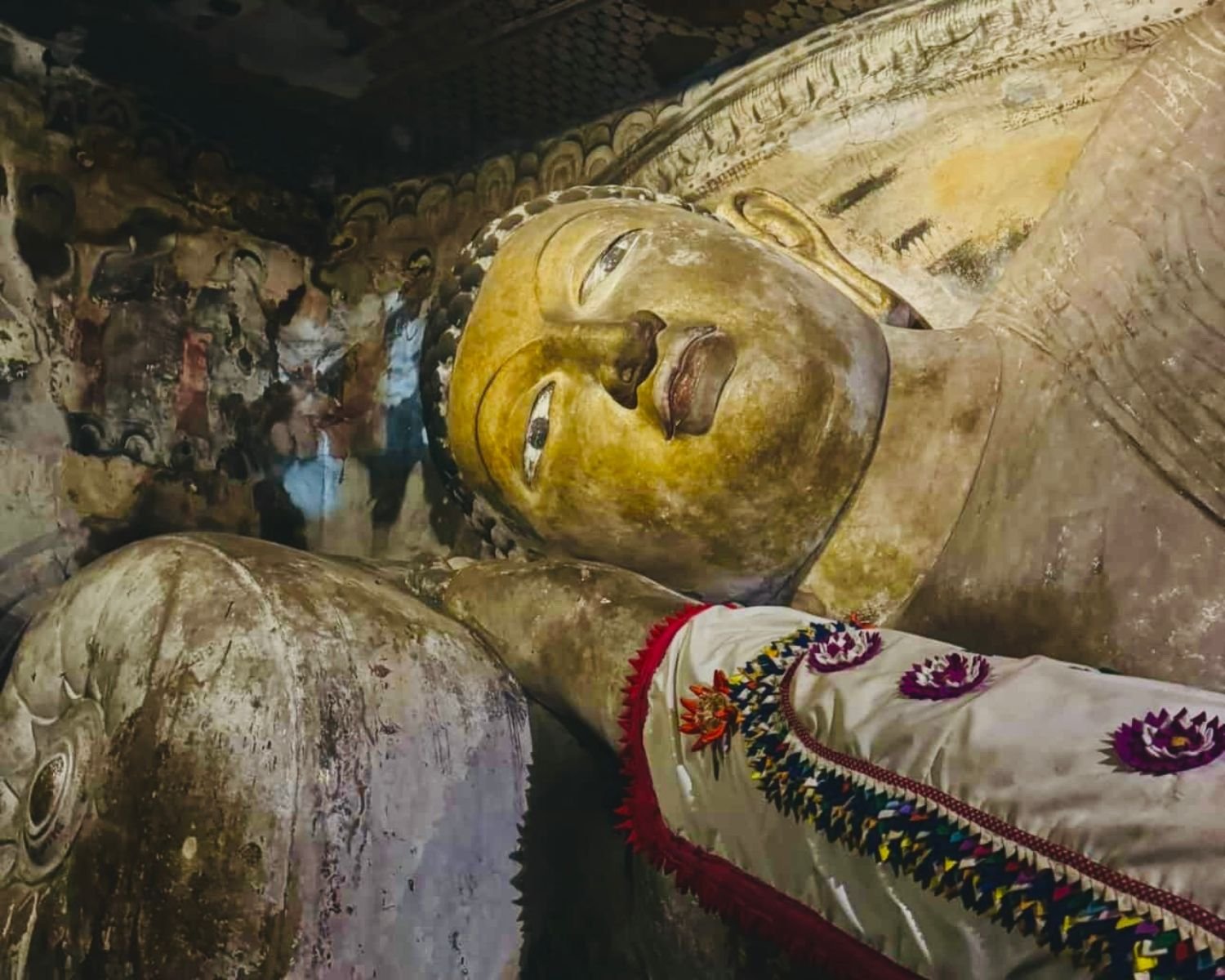
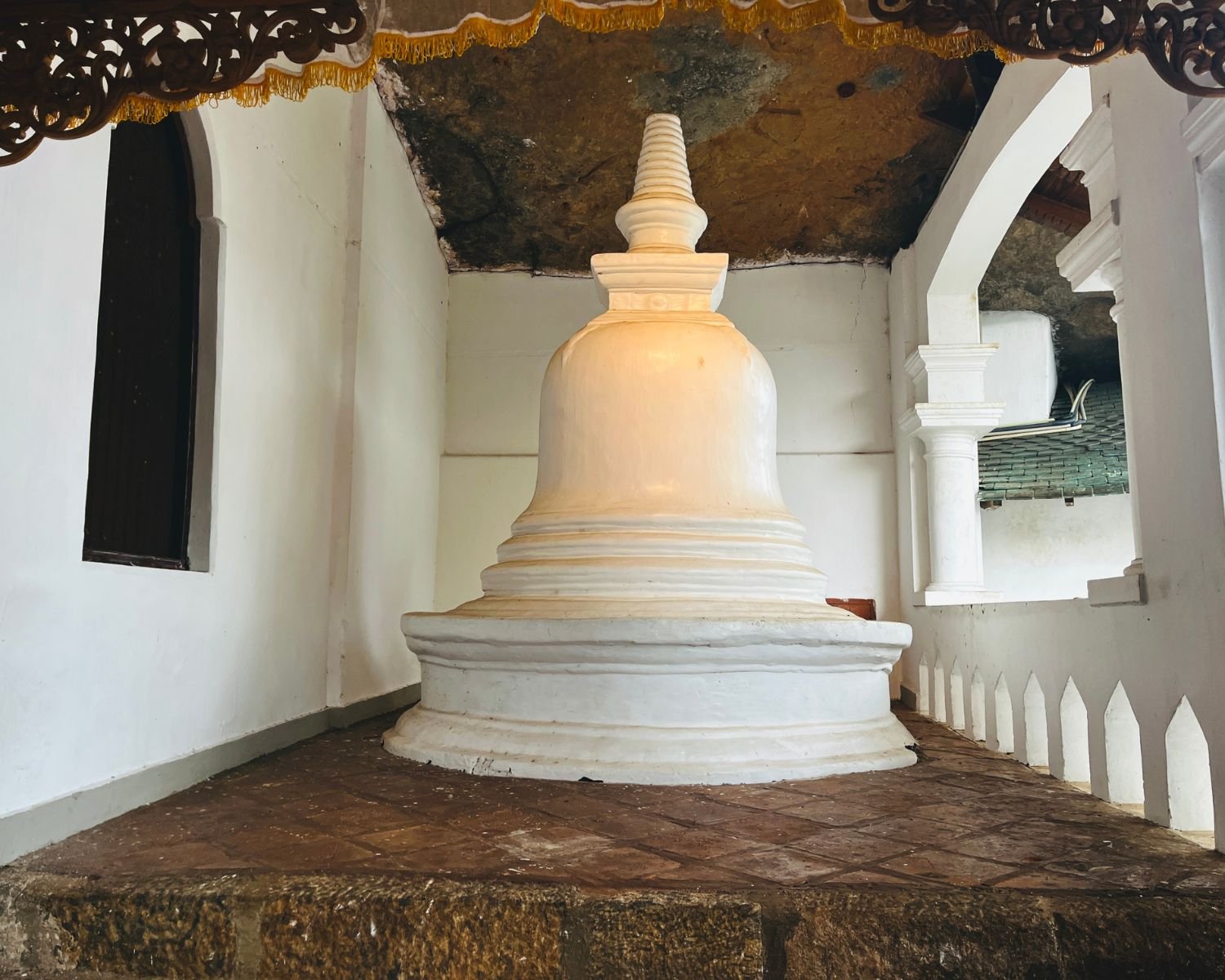
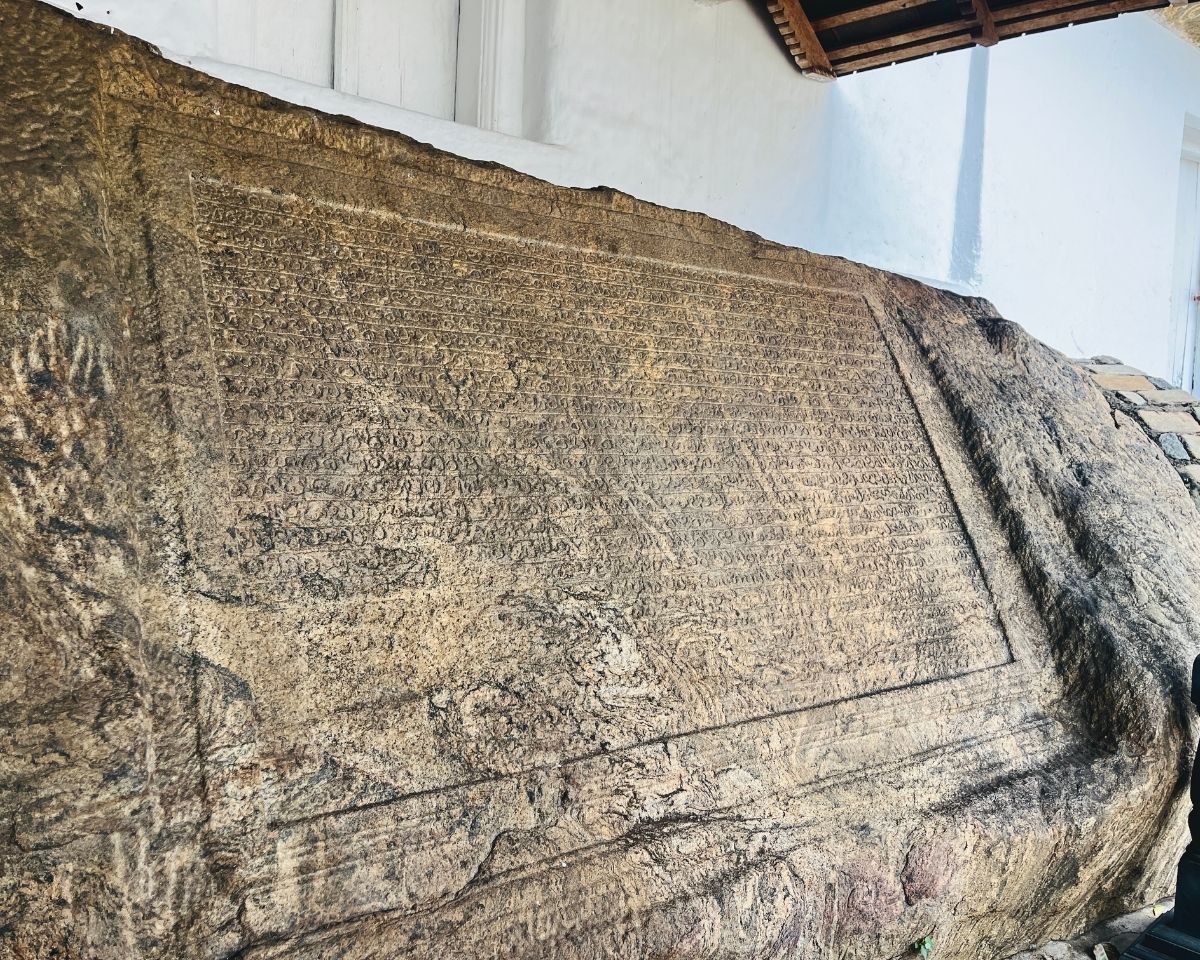
The largest chamber, known as the Great New Monastery, houses a magnificent 15 meter reclining Buddha alongside multiple seated and standing figures. Each cave has its own spiritual character, shaped by centuries of worship and artistic evolution. Small stupas, inscriptions, and offerings reveal the deep religious significance of the site.

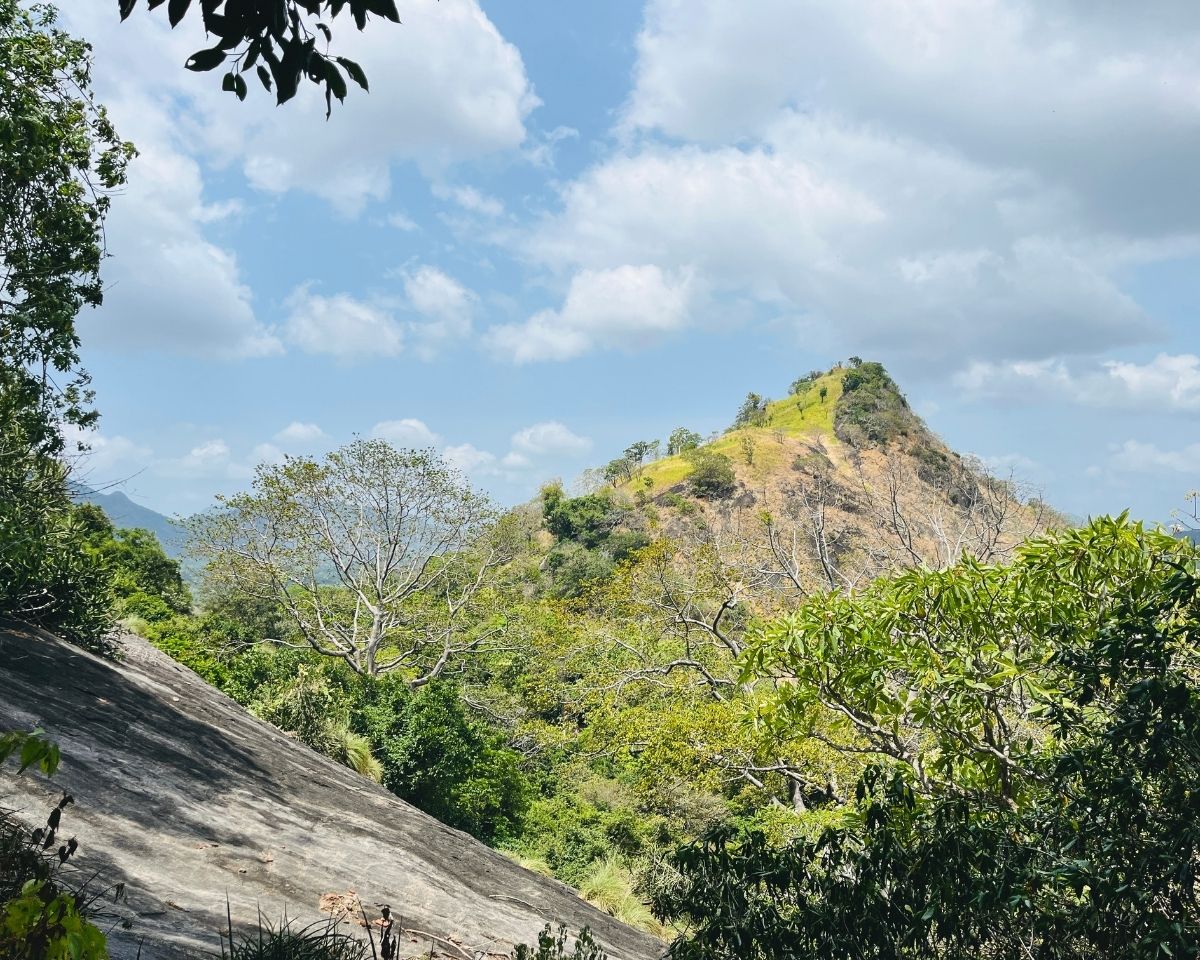
Outside, the panoramic view from the temple grounds stretches across forests, villages, and distant mountains. At the base of the rock stands the Golden Temple with its towering golden Buddha statue, marking the entrance to the sacred path that leads upward.

Recognized as a UNESCO World Heritage Site, the Dambulla Royal Cave Temple is celebrated for its exceptional preservation, artistic grandeur, and continuous monastic heritage. It is not only a place of worship but also a living archive of Sri Lanka’s Buddhist culture, where every statue, mural, and stone surface tells a story that has endured for millennia.

Visitors who walk through these ancient chambers experience a powerful connection to the spiritual and artistic soul of Sri Lanka. Dambulla is more than a temple. It is a place where history, devotion, and creativity are carved into the rock itself.
Read More
Scenery
Buddhist Temple
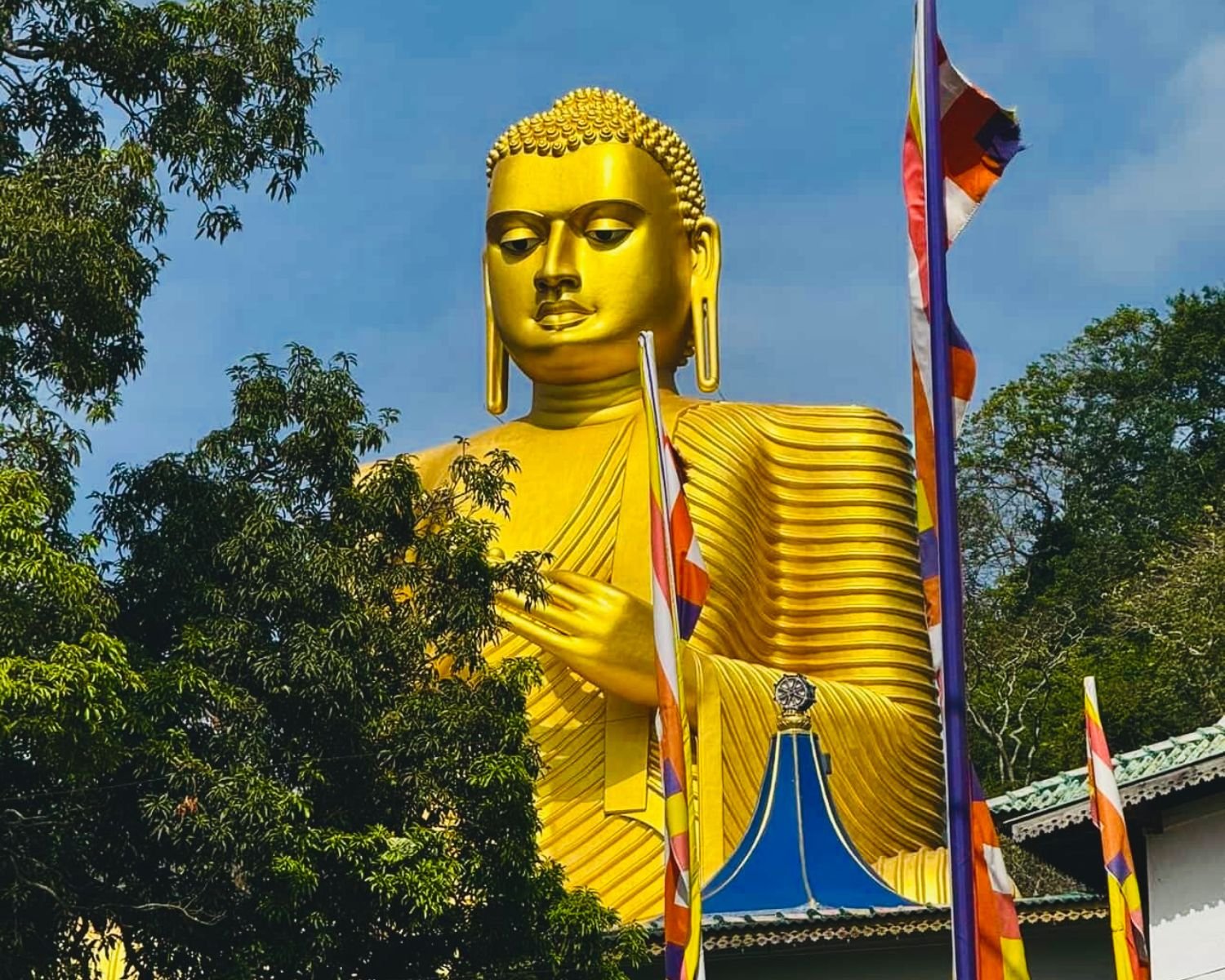
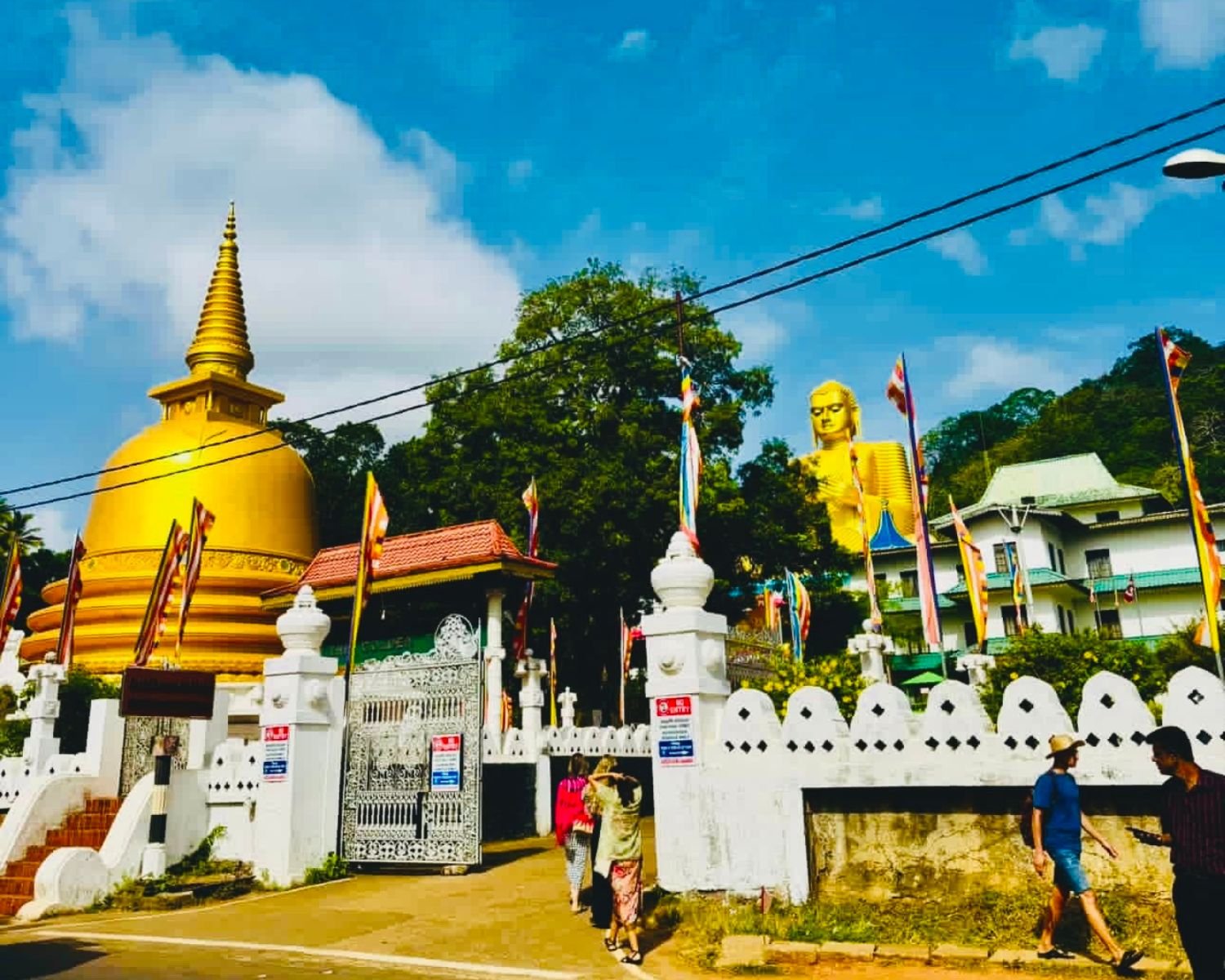
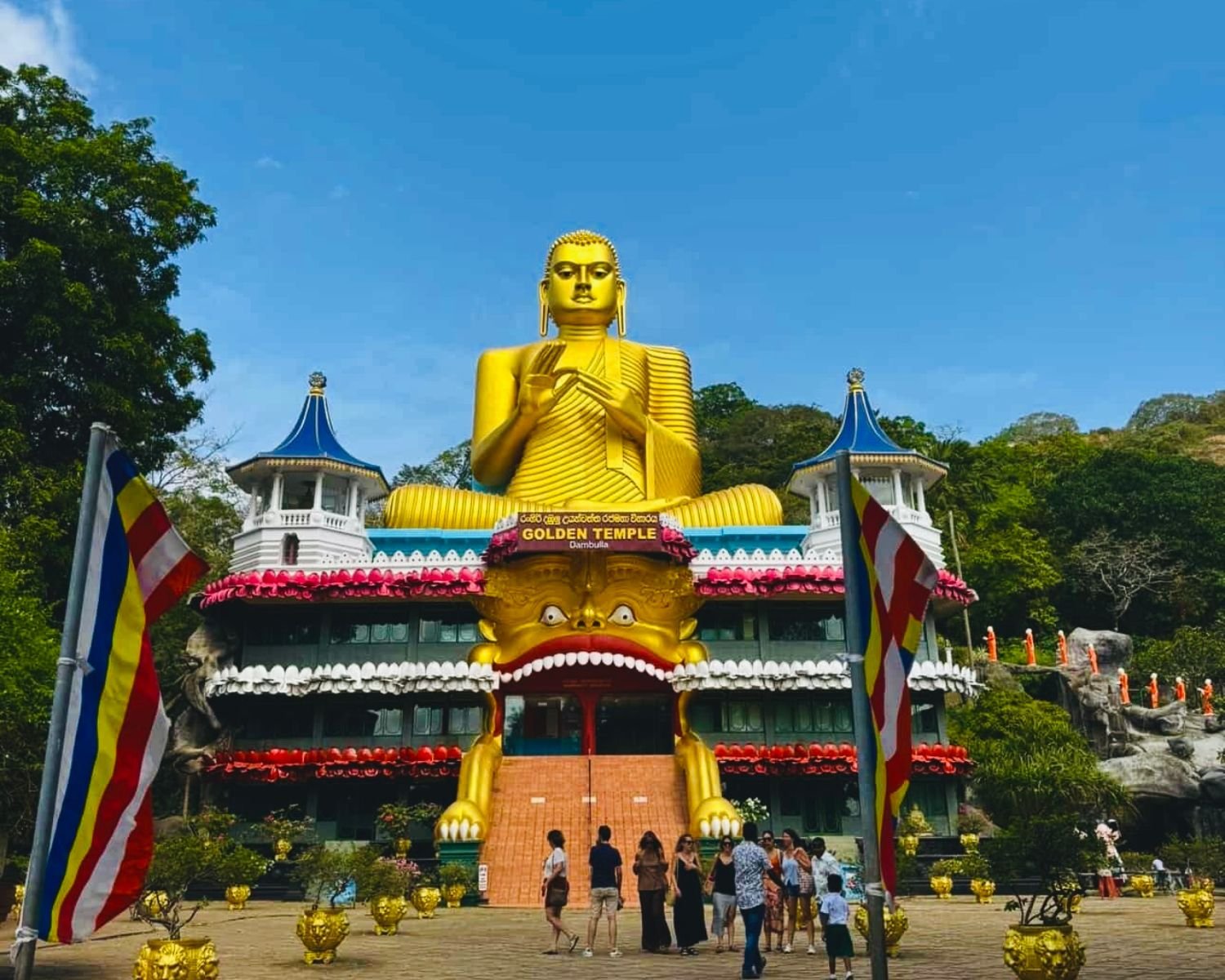
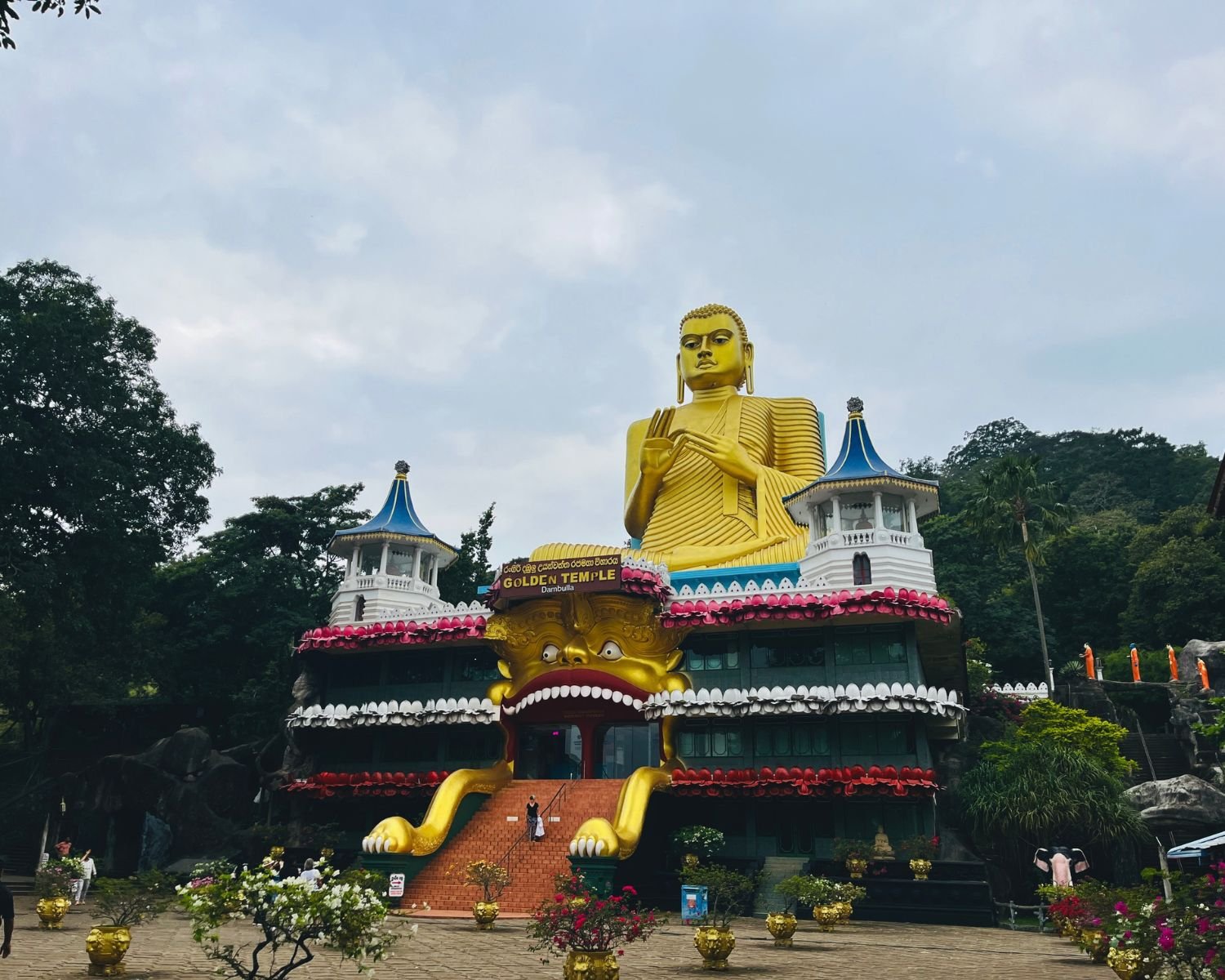
Modern monastery built in 2001, featuring the iconic 30 meter seated Golden Buddha statue, one of the largest in the world.

Scenery
Scenery
Striking views of the massive golden Buddha, the lion mouth entrance, and the rock rising behind the complex.
Art & Culture
Art & Culture
Colorful temple architecture, intricate carvings, global Buddhist displays inside the museum, and vibrant modern Buddhist artwork throughout the grounds.
Map Icon
Location

MapView on Map
Dambulla Golden Temple
Top Pick
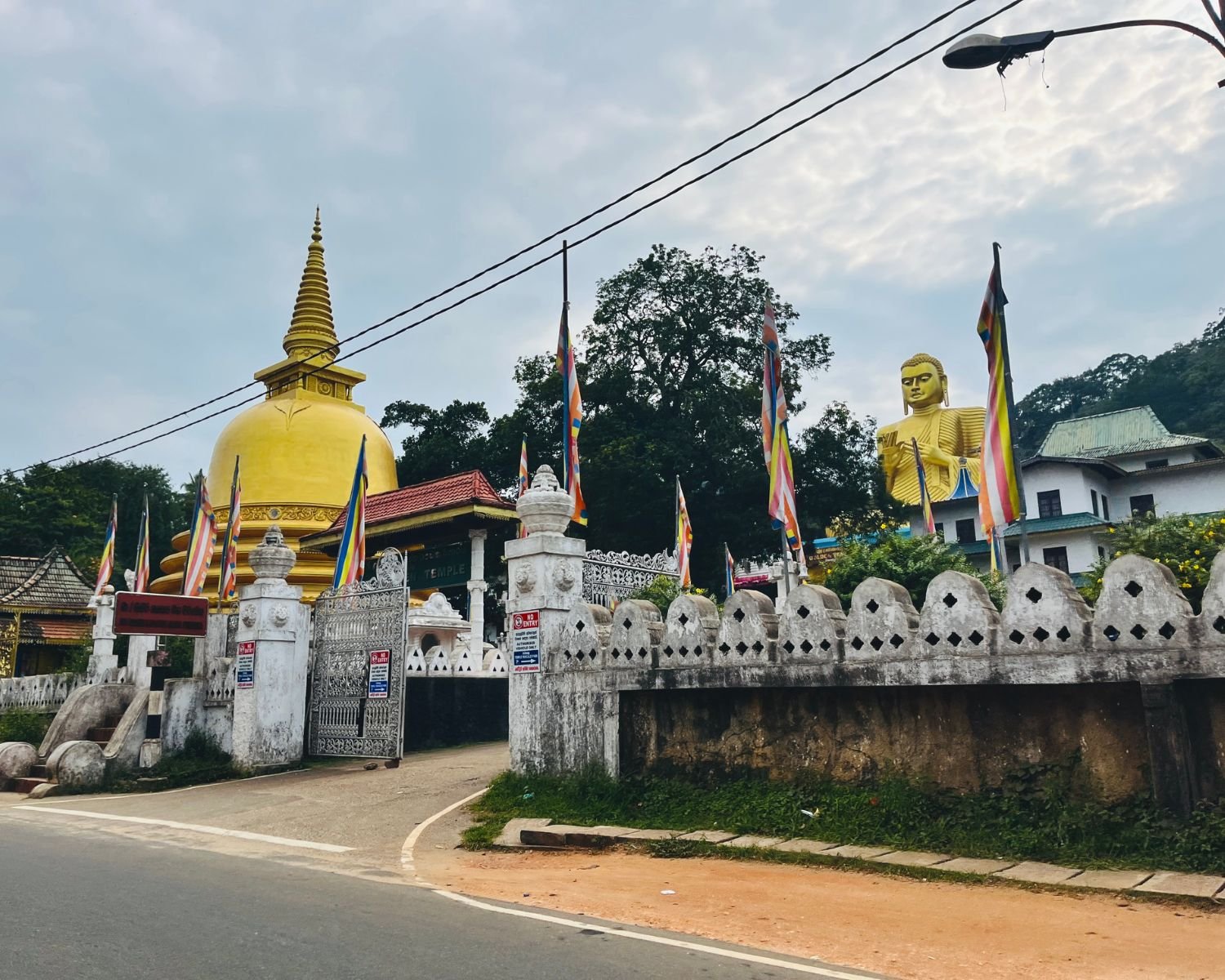
Standing at the foot of the ancient rock that houses the Dambulla Cave Temples, the Dambulla Golden Temple is one of Sri Lanka’s most striking modern Buddhist landmarks. Completed in 2001, this impressive complex features a massive golden Buddha statue seated in the Dhamma gesture, rising above the multi tiered museum and welcoming visitors to one of the island’s most sacred heritage sites.

Although newer than the historic cave monastery above, the Golden Temple serves as a vibrant spiritual gateway to the ancient complex. Its gleaming façade, ornate detailing, and symbolic architecture blend modern craftsmanship with traditional Buddhist design, creating a powerful visual contrast against the natural rock looming behind it.

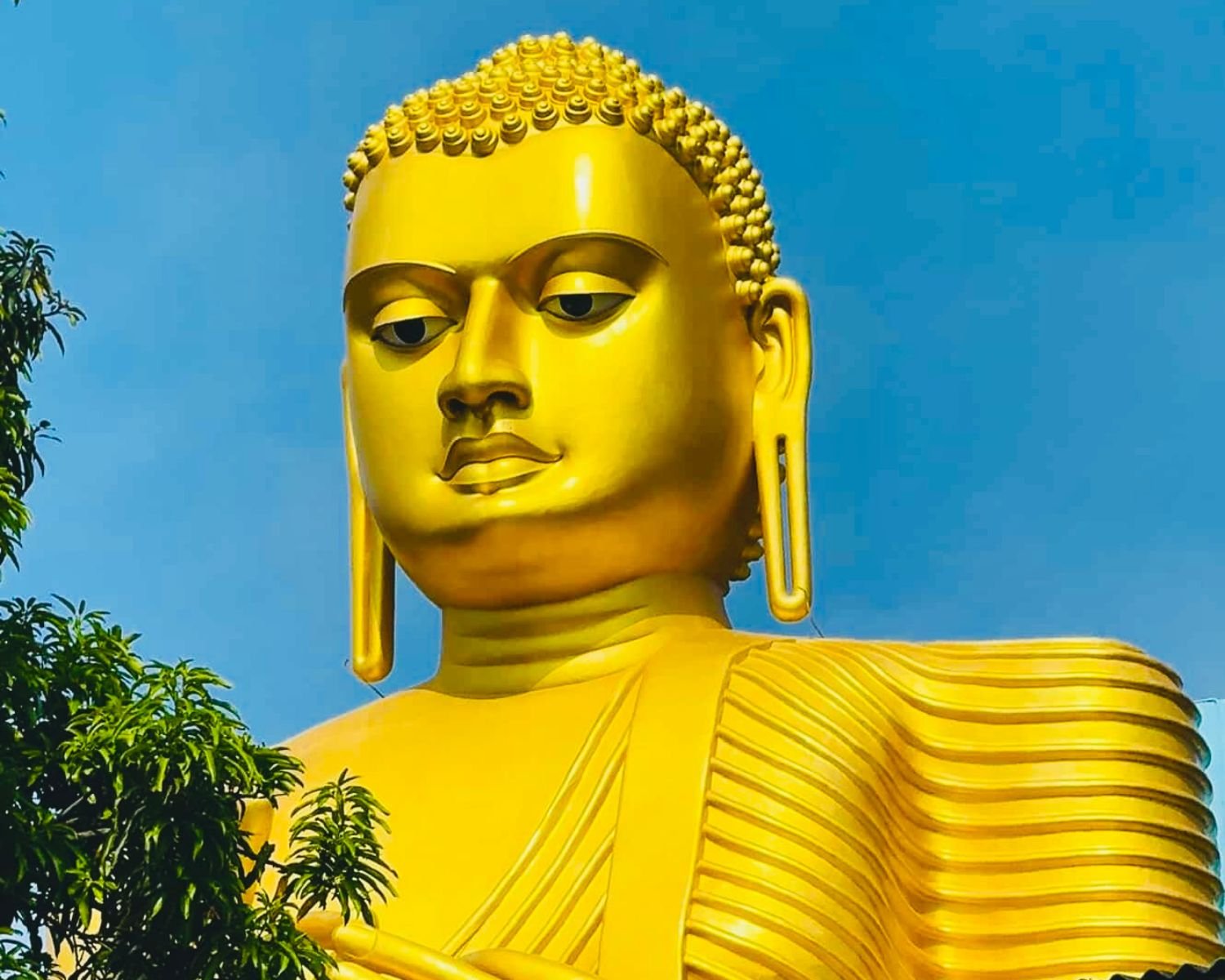
The centerpiece of the temple is the 30 meter tall Buddha statue, one of the largest seated Buddha images in the world. Covered in shimmering gold paint and visible from kilometers away, it symbolizes peace, wisdom, and compassion. Beneath it lies the Buddhist Museum, filled with statues, artifacts, cultural displays, and global Buddhist contributions that explore the spread of Buddhism across Asia.

The entrance is marked by a colorful lion mouth facade, a nod to Sri Lankan temple artistry, leading into the museum and temple grounds. Surrounding the complex are numerous smaller statues, prayer flags, and decorative carvings that showcase the vibrancy of contemporary Buddhist expression.

While the Golden Temple itself is modern, it plays an important role in the daily spiritual life of the region. Monks can often be seen walking through the grounds, chanting prayers, or conducting religious rituals. The temple remains active with devotees who bring offerings of flowers, incense, and candles.

Visitors typically pass through the Golden Temple before ascending the path to the ancient cave shrines. It serves not only as a cultural introduction but also as a beautiful reminder of how Sri Lanka continues to preserve and celebrate its Buddhist heritage across generations.
Read More
Lake
Lake
Large ancient reservoir used for irrigation and fishing. Surrounded by forest edges, marshlands, and quiet rural landscapes.
History
History
Built during the reign of King Sena II between 853 and 887 CE. Part of the Anuradhapura era hydraulic system that supported agriculture for over a thousand years.
Scenery
Scenery
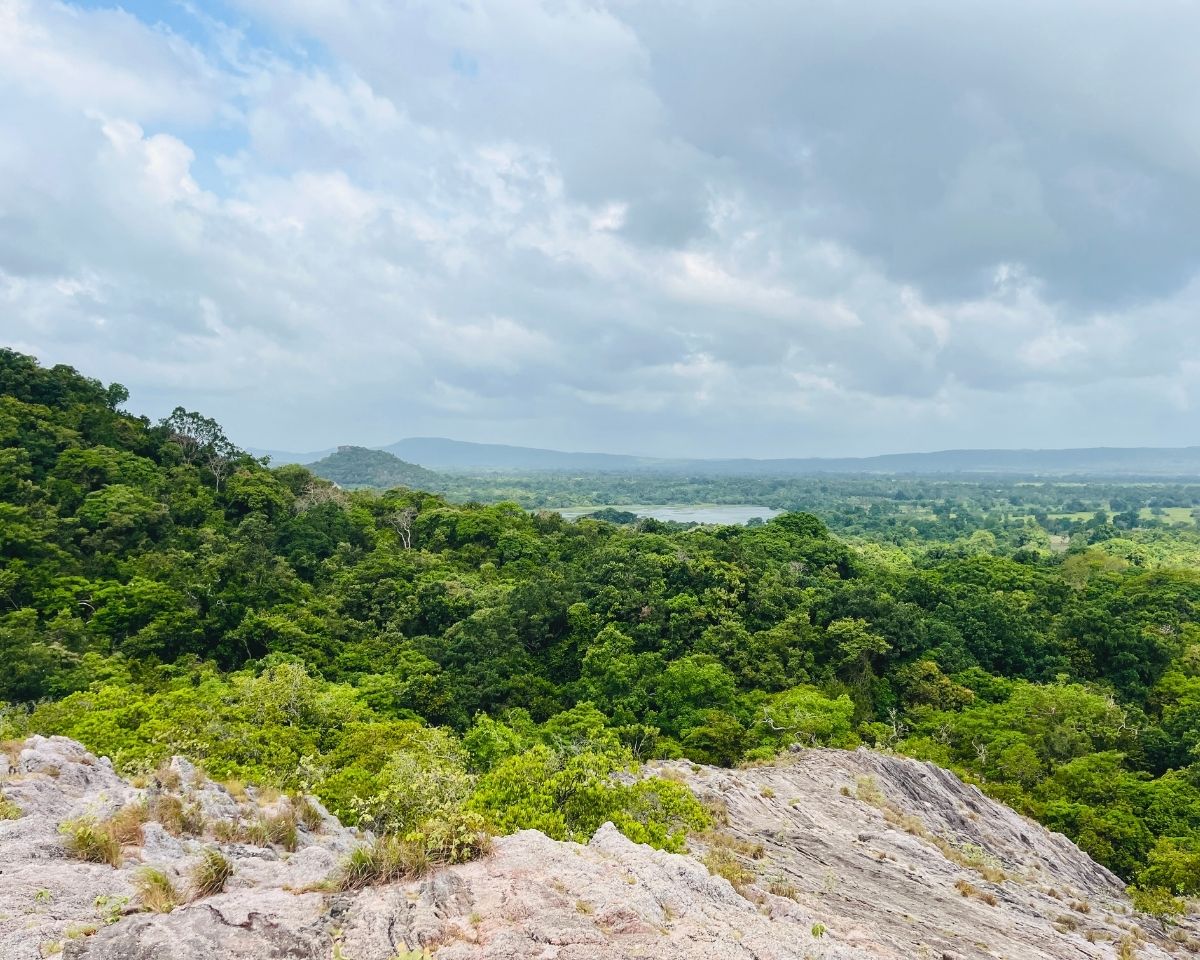
Wide open water views, distant hills, forest cover, and clear reflections at sunrise and sunset. Frequent birdlife along the shoreline.
Map Icon
Location

MapView on Map
Kandalama Reservoir
Top Pick
Kandalama Reservoir is an ancient irrigation tank built during the early Anuradhapura period, attributed to King Sena II, who reigned from 853 to 887 CE. Designed as part of Sri Lanka’s advanced hydraulic civilisation, the reservoir was constructed to store water from the Dambulla region and supply surrounding paddy fields and rural settlements. More than 1,100 years later, it still functions as an active irrigation source and remains one of the most significant lakes in the Cultural Triangle.

The reservoir sits between Dambulla and Kandalama, surrounded by forested hills and rock formations. Its long earthen bund stretches across the landscape, holding back a large body of water that supports agriculture, fishing, and local ecosystems. The tank is also connected to a network of ancient canals, demonstrating the engineering skill of the Anuradhapura era, which is known for building some of the world’s earliest large scale irrigation systems.

Today, Kandalama Reservoir is recognised both for its historical value and its natural beauty. Birdlife is abundant, especially during early morning and sunset, when herons, cormorants, egrets, and migratory birds gather along the shoreline. The area around the lake remains quiet and largely undeveloped, maintaining a natural atmosphere.

In modern times, the reservoir became internationally known through the construction of the Kandalama Hotel, designed by architect Geoffrey Bawa in the early 1990s. The hotel’s design emphasizes environmental harmony and overlooks the lake without disturbing its surroundings.

Kandalama Reservoir continues to serve local communities through irrigation and fishing, while offering travelers peaceful views and a direct connection to the region’s ancient hydraulic heritage.
Read More
Hike
Hike
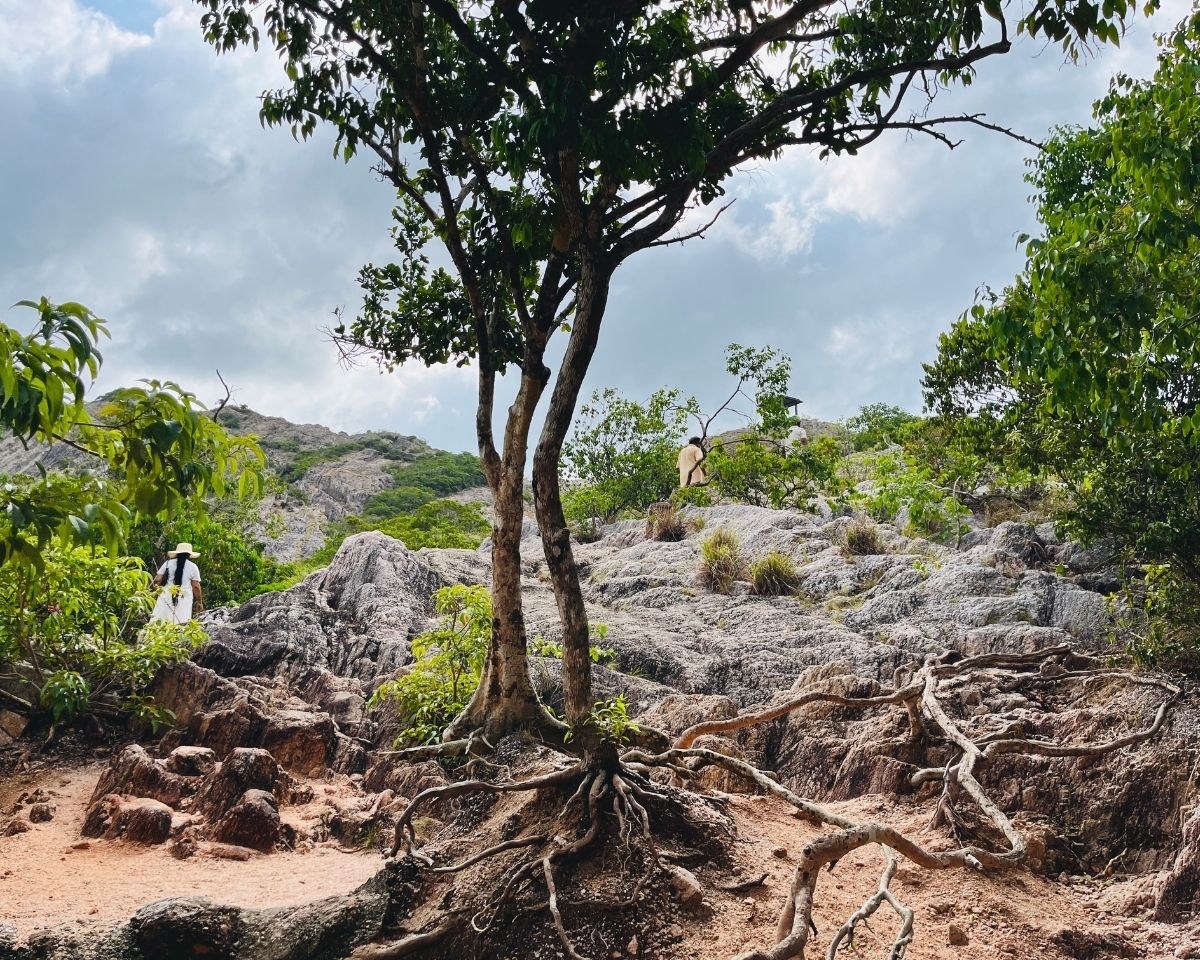
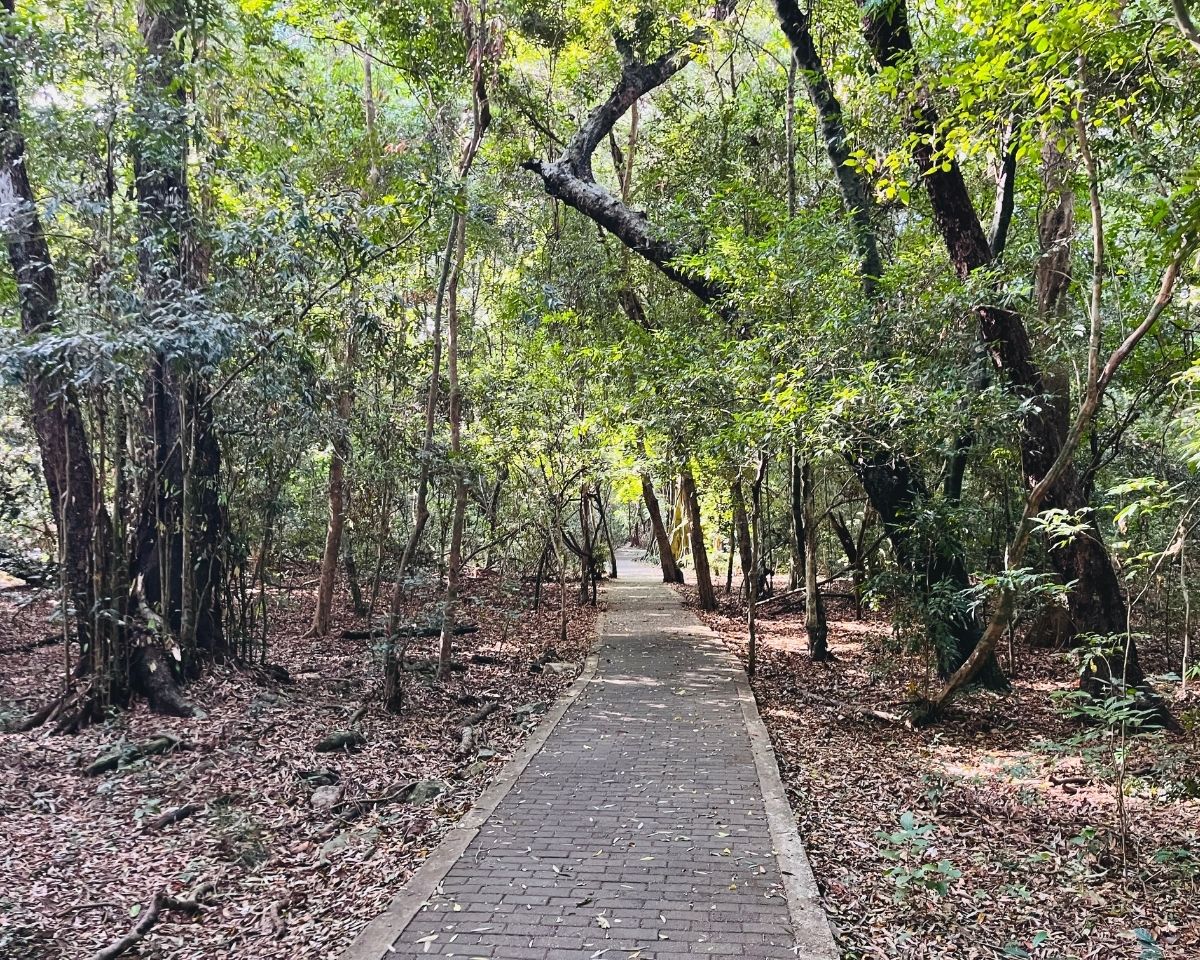
Gentle to moderate climb. About 20–40 minutes depending on pace. Path runs through ironwood forest.
History
History
One of South Asia’s largest quartz deposits, estimated at over 500 million years old. Sacred site used by ancient kings and Buddhist monks.
Scenery
Scenery
Soft pink quartz formations, ironwood forest, wide views of surrounding countryside.
Entrance Fee
Entrance Fee
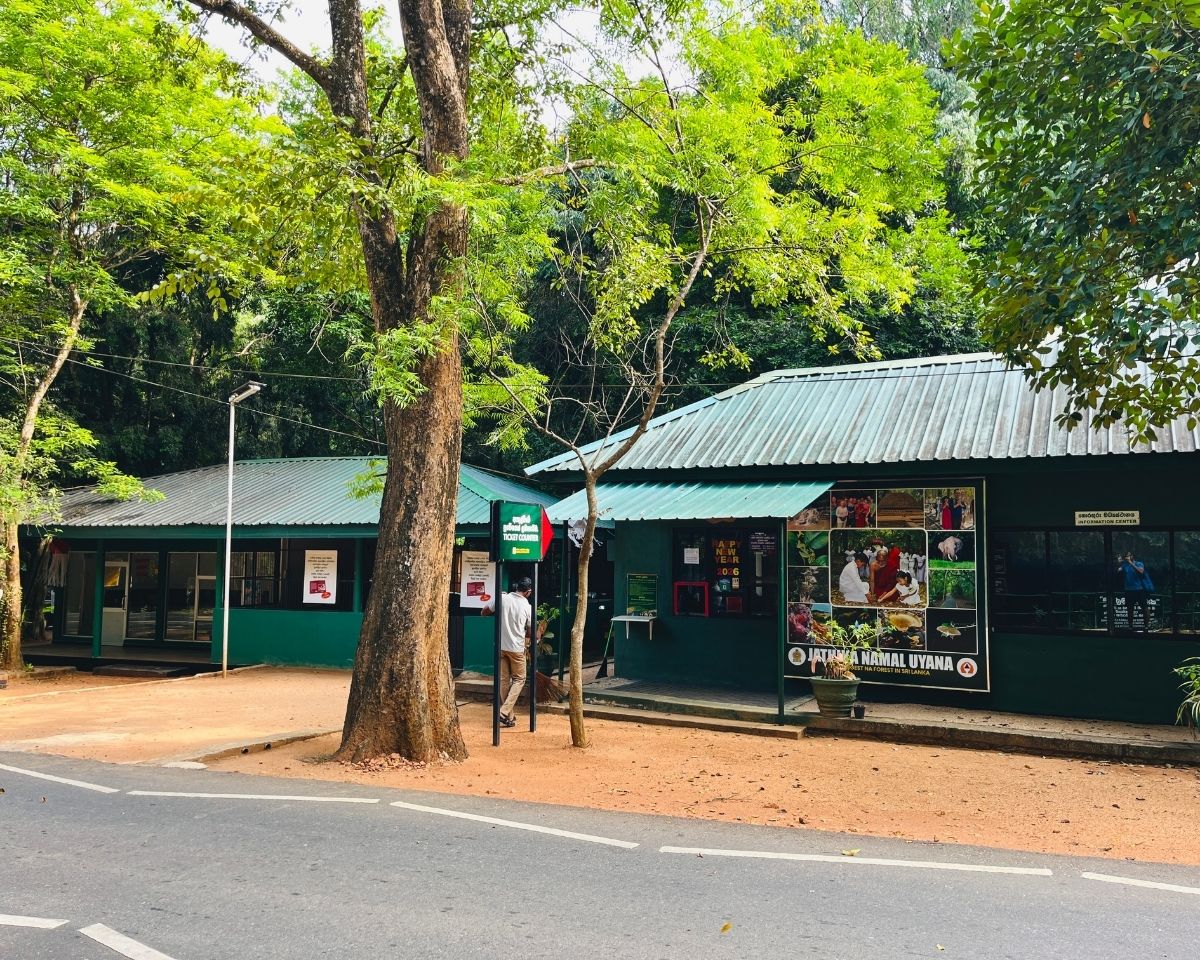
LKR 1,850 ($6.5 USD )
Tickets at entrance

! Fees are approximate and can vary based on factors such as season, group size, and additional services.
National Pink Quartz Mountain
Top Pick
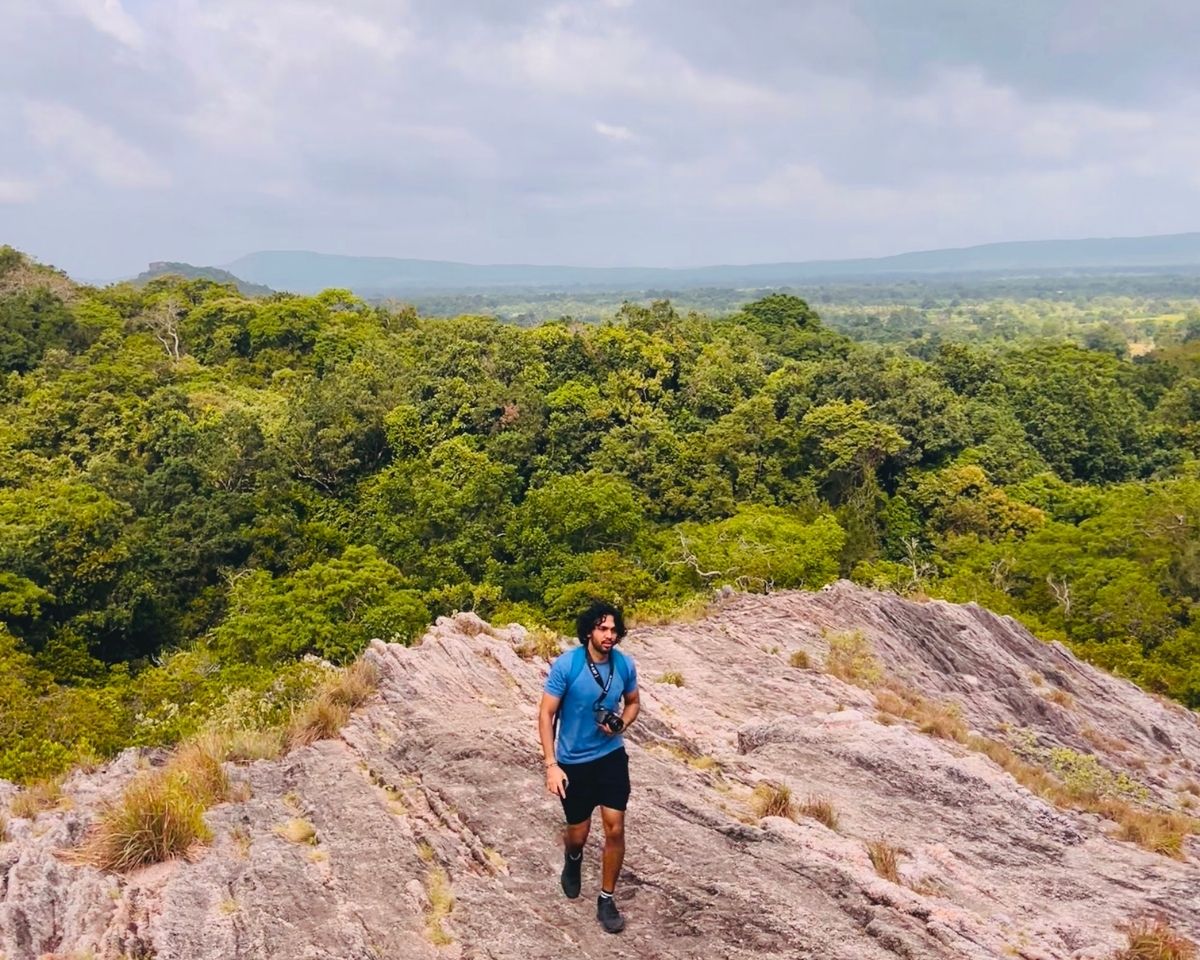
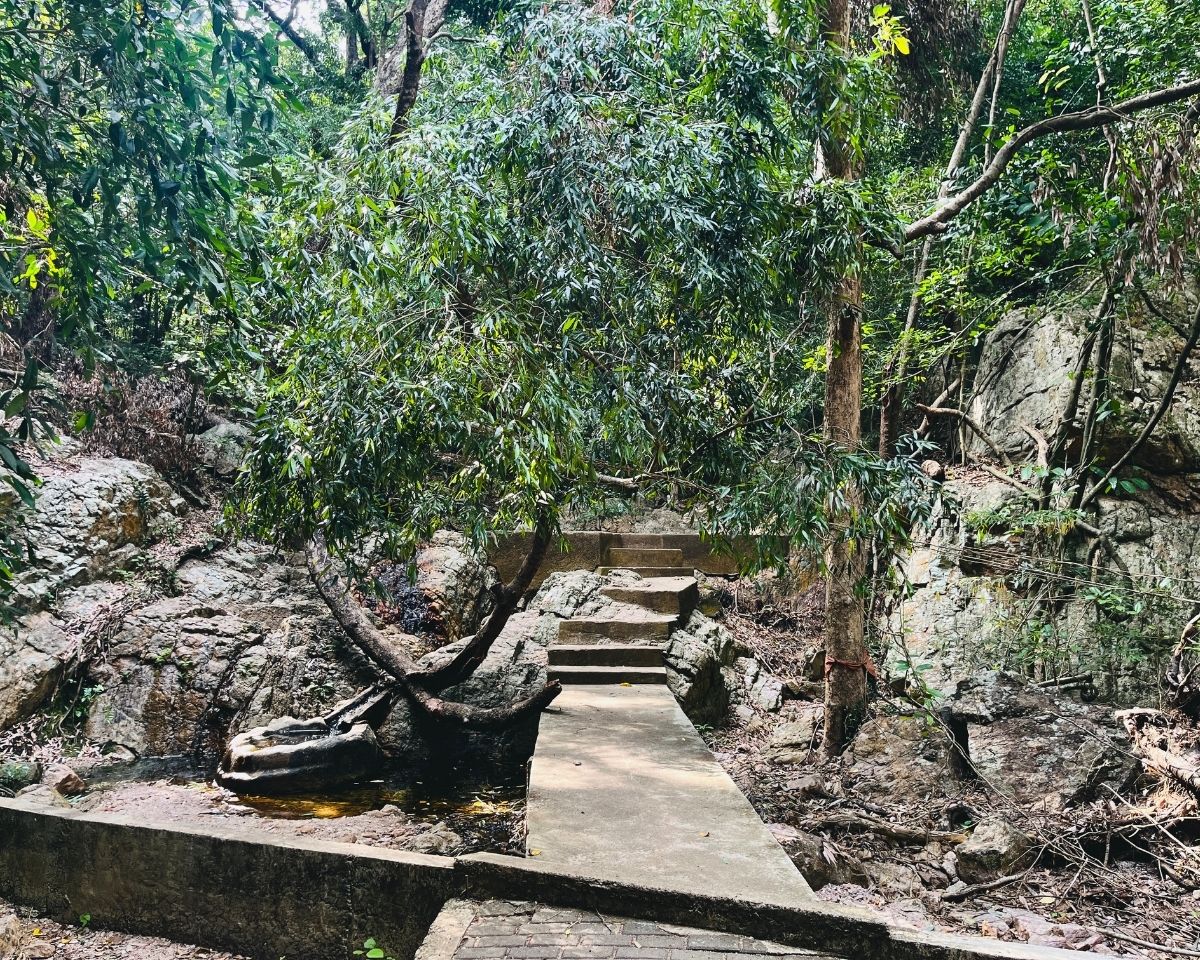
Deep in the serene countryside of Sri Lanka’s North Central Province rises a natural wonder unlike anywhere else in the island. The National Pink Quartz Mountain, also known locally as Jathika Namal Uyana Pink Quartz Range, is a breathtaking geological formation believed to be over 500 million years old. Its soft rose colored stone glows under sunlight, creating an otherworldly landscape that blends ancient geology with sacred history and rare biodiversity.

This remarkable quartz range is protected within the Namal Uyana forest reserve, a historic sanctuary once used by monks and ancient kings as a place of meditation and spiritual retreat. The area gained prominence during the reign of King Devanampiyatissa and was later preserved by King Mahinda IV in the 10th century CE, who declared the land a royal herbal garden. For centuries, the forest was guarded as a sacred natural monument, where rare plants thrived in untouched silence.

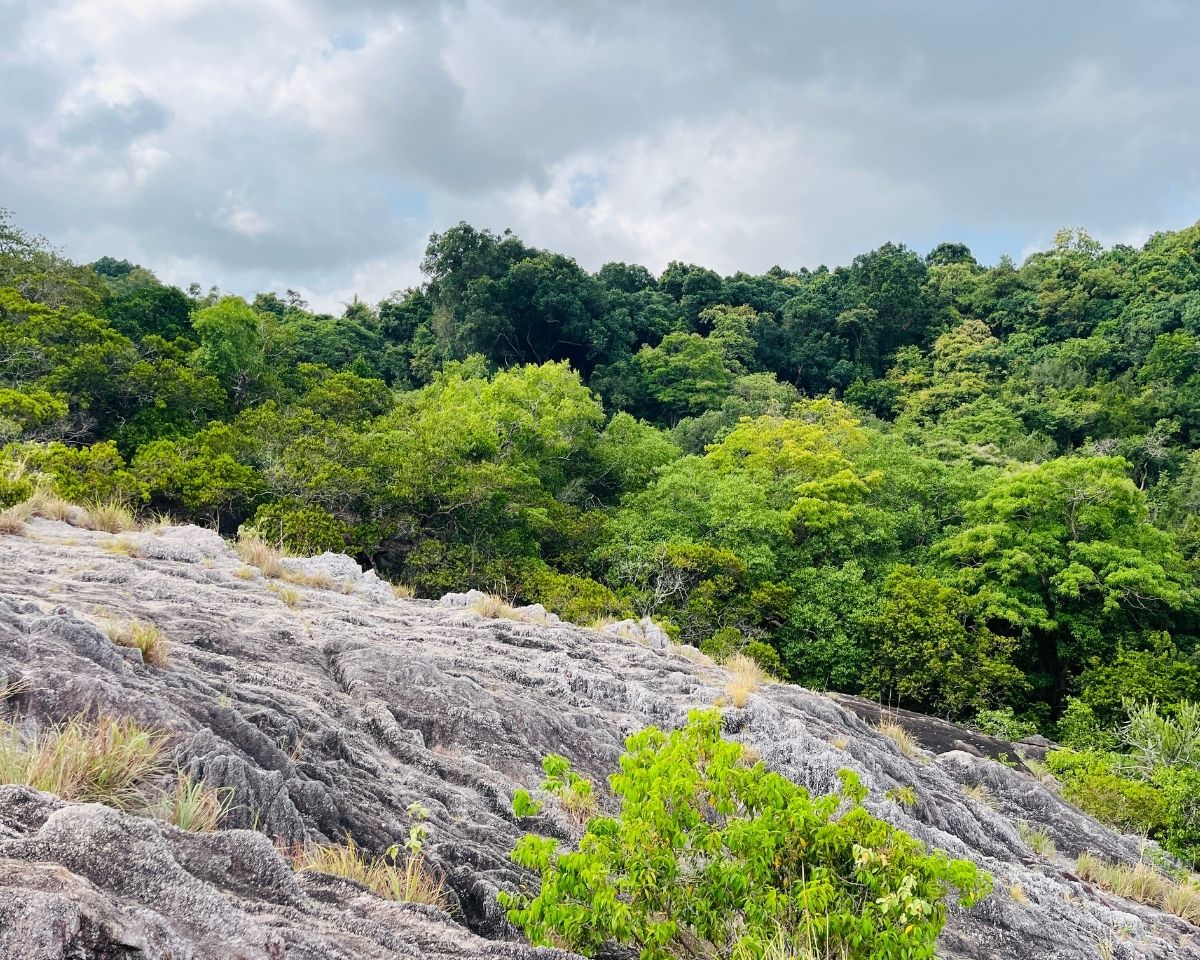
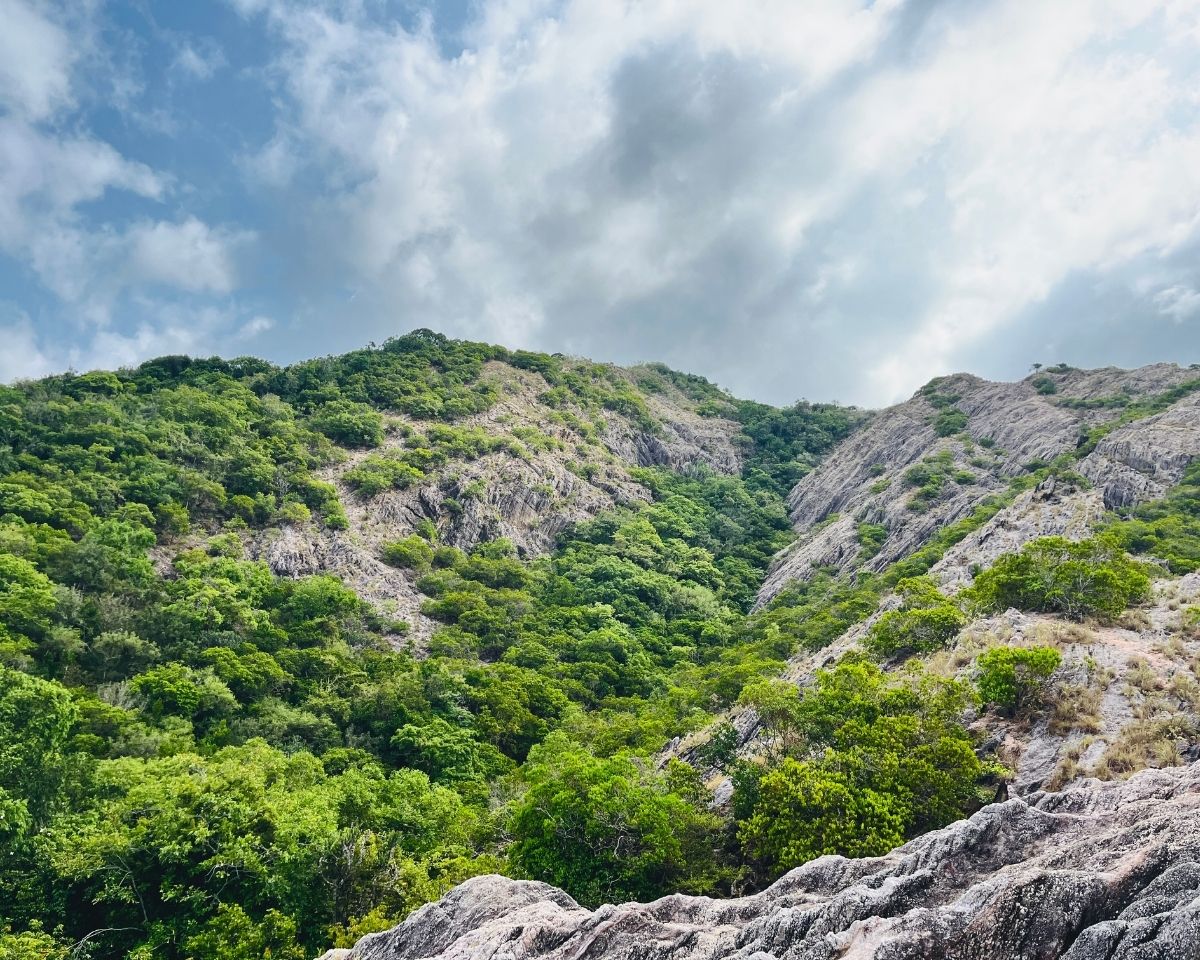
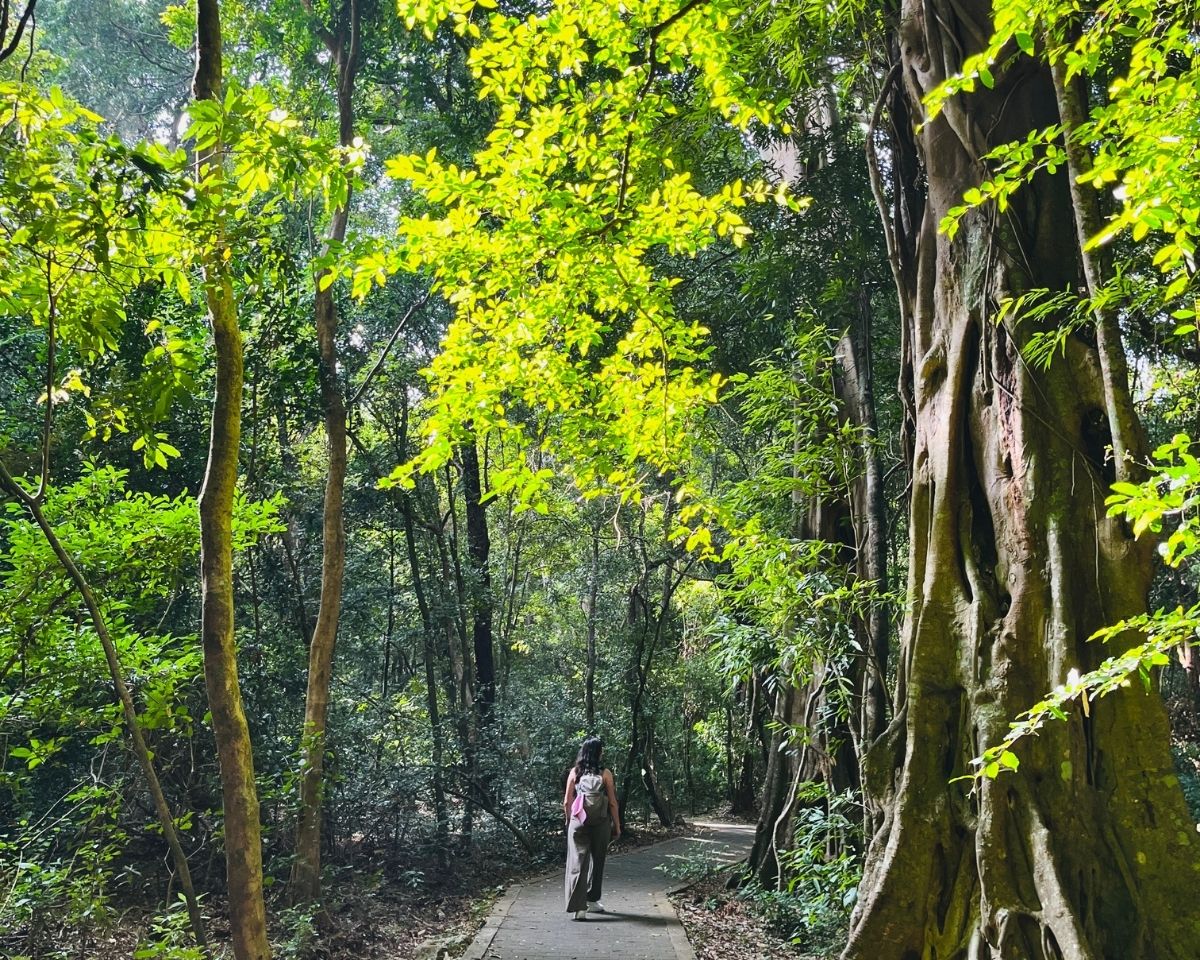
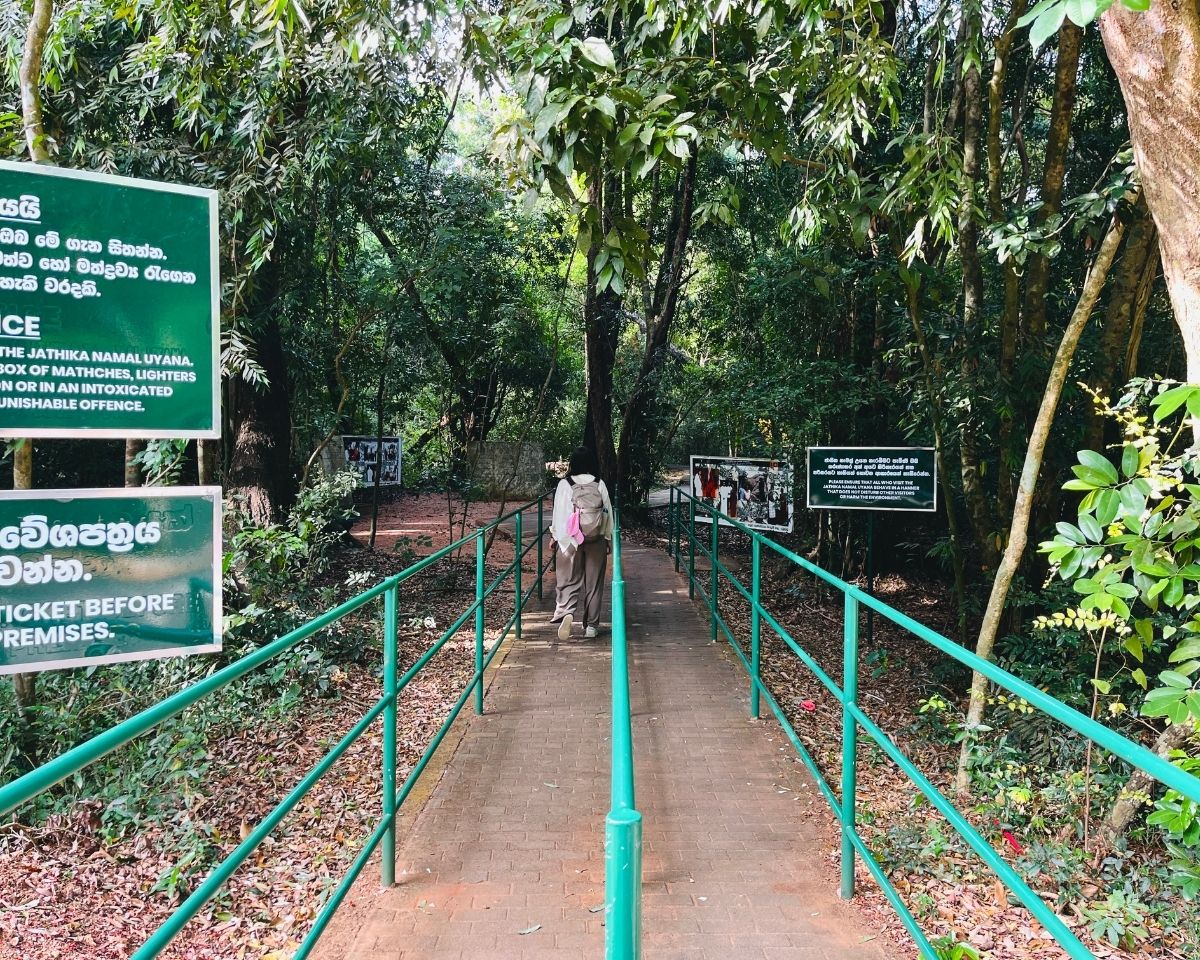
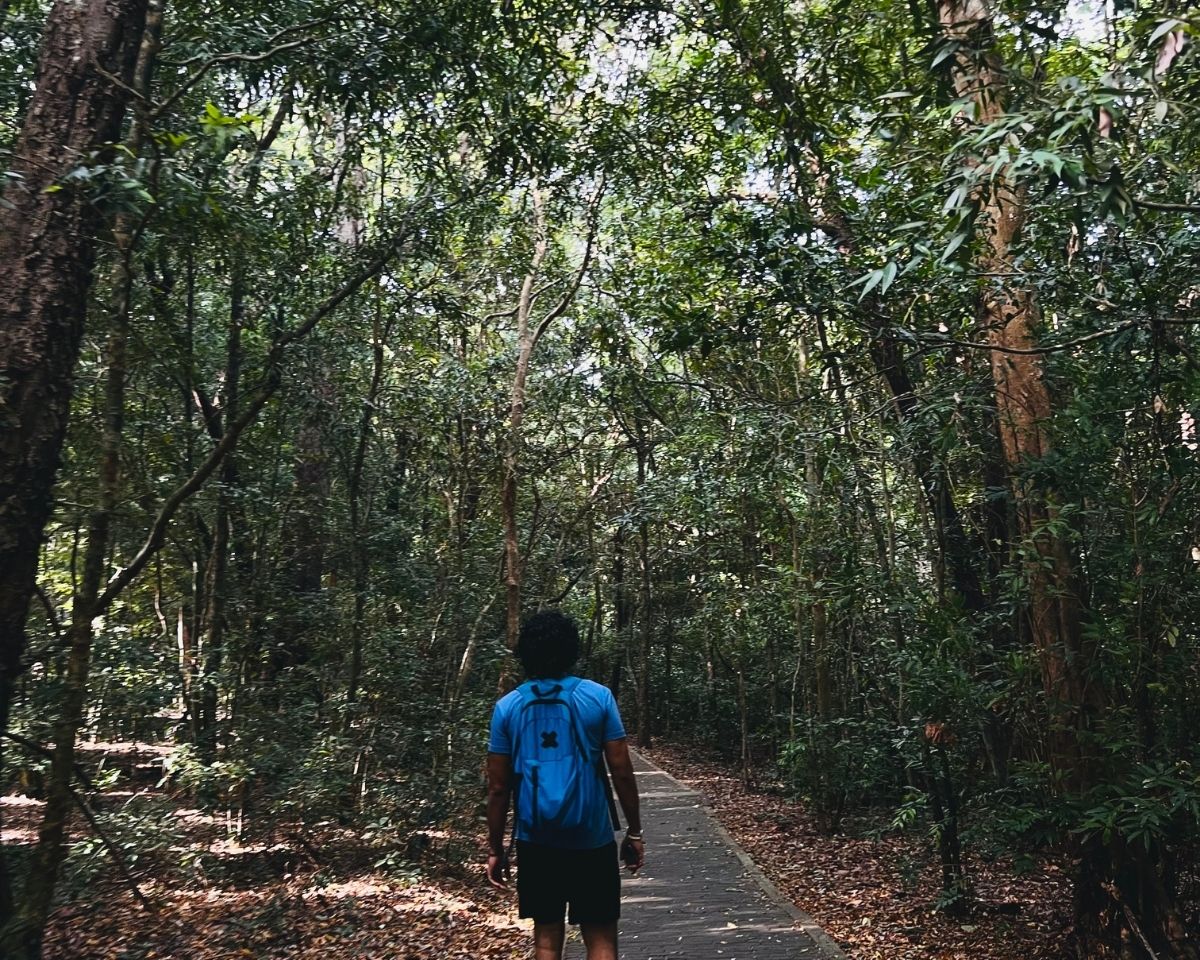
Walking through Namal Uyana, visitors first encounter vast groves of ironwood trees, known as Na trees, the national tree of Sri Lanka. This is believed to be the largest ironwood forest in South Asia, creating a shaded path that leads toward the famous quartz mountain. As you ascend its rocky slopes, the pale pink hues of the quartz shimmer in the light, shifting gently between rose and white shades depending on the angle of the sun.

The mountain itself is part of an ancient quartz ridge that runs through the area. Scientists regard it as one of the most unique mineral formations in Sri Lanka, noted for its purity and geologic age. Unlike ordinary rock formations, the mountain is made entirely of crystalline quartz, giving it a distinctive texture and a luminous, glassy appearance.

At the summit, the view opens into sweeping wilderness dotted with forest canopies, gentle hills, and protected grasslands. The silence of the landscape is profound, broken only by birdsong and the wind that moves through the ironwood trees below. Many visitors describe the site as peaceful and spiritually energizing, a place where nature and history converge in harmony.

The area also contains archaeological remains including ancient meditation paths, stone markers, and traces of monastic settlements. This blend of geology, culture, and ecology has led to the site being recognized as an important national heritage and conservation area.

Today, the National Pink Quartz Mountain stands as a symbol of Sri Lanka’s natural beauty and historical depth. It is a rare place where time seems to slow, allowing travelers to connect with the earth’s ancient past and the spiritual traditions that once flourished here. It is not just a mountain. It is a luminous chapter of nature’s story, preserved for generations to explore and admire.
Read More
Lake
Lake
Small village reservoir used for irrigation and daily agricultural activity. Calm water surrounded by fields and tree lines.
Scenery
Scenery
Paddy fields, scattered woodland, village views, and regular wetland birdlife. Simple and peaceful rural atmosphere.
History
History
Part of Sri Lanka’s traditional man made tank system. The original builder is unknown, but the lake has been maintained by local communities for many generations.
Map Icon
Location

MapView on Map
Pahala Eraula Lake
Top Pick
Pahala Eraula Lake, also known as Pahala Eraula Wewa, is a small man made reservoir located near Dambulla in Sri Lanka’s Central Province. It forms part of the traditional village tank system that has supported agriculture in the region for many generations. Like many rural reservoirs of this scale, its original builder and exact construction period are not recorded. Instead, the lake represents the long standing irrigation practices of Sri Lankan villages, where tanks were created, repaired, and maintained over centuries through local community effort.

The lake collects seasonal rainfall and channels water to nearby paddy fields, helping farmers cultivate throughout the year. The surrounding area is shaped by open fields, coconut trees, and patches of natural woodland. Early mornings often bring light mist across the water and occasional fishing activity from local residents. Birdlife is common along the lake edge, including herons, egrets, and other wetland species that rely on the reservoir as a feeding ground.

Although modest in size, Pahala Eraula Lake reflects the practical engineering traditions that allowed rural communities to thrive long before modern irrigation systems. The reservoir continues to play an active role in village life, supporting farming, fishing, and the broader landscape around it.
Read More
History
History
Anuradhapura period forest monastery with over 1,300 years of heritage. Contains stone foundations, inscriptions, meditation spaces, and the Black Water Pond at its center.
Scenery
Scenery
Dense forest, boulders, and shaded clearings surrounding ancient ruins. Wildlife and natural silence create a calm and preserved atmosphere.
Hike
Hike/Trek
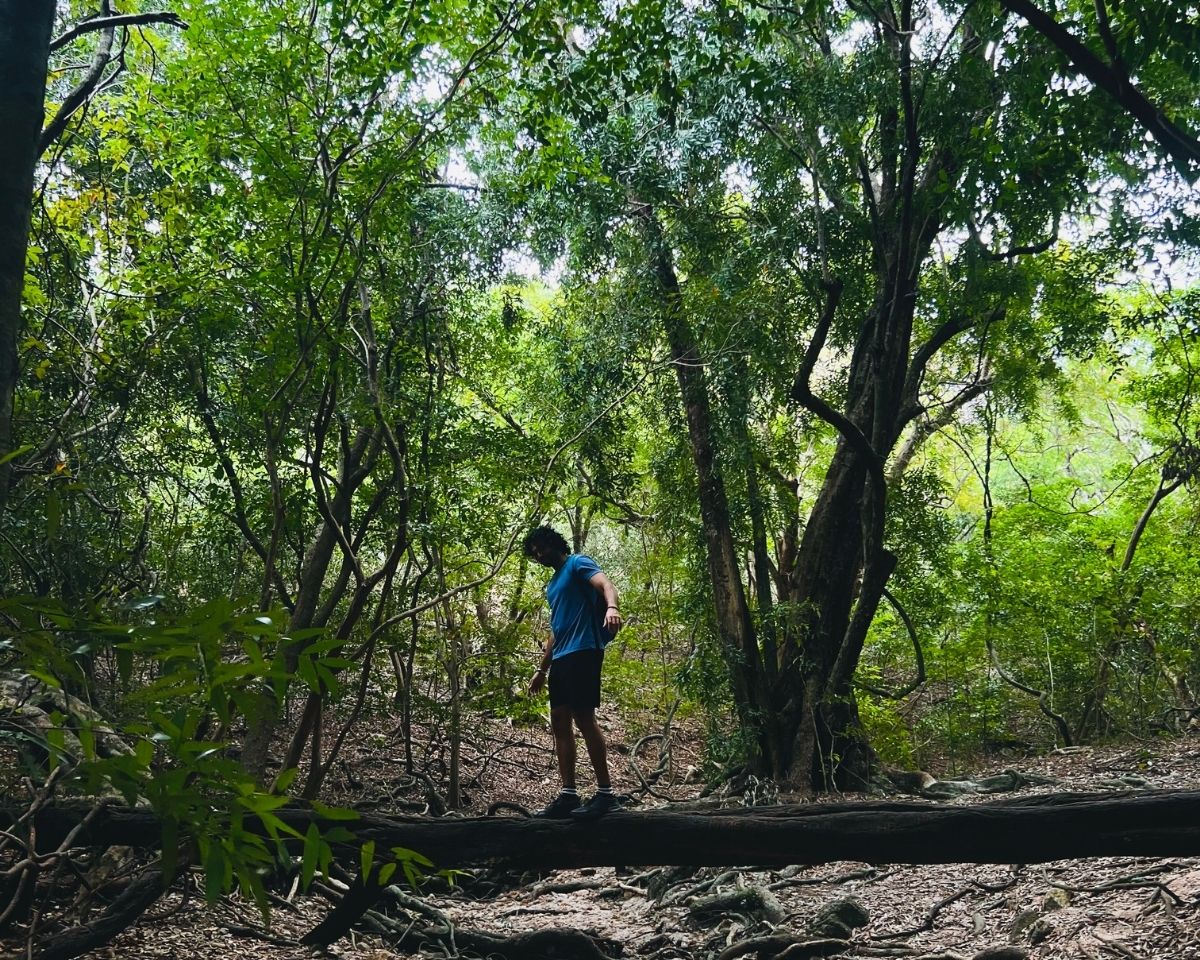
Easy forest walk with flat paths and short rocky sections. A relaxed route that moves through trees, ruins, and the central pond.
Map Icon
Location

MapView on Map
Kaludiya Pokuna
Top Pick
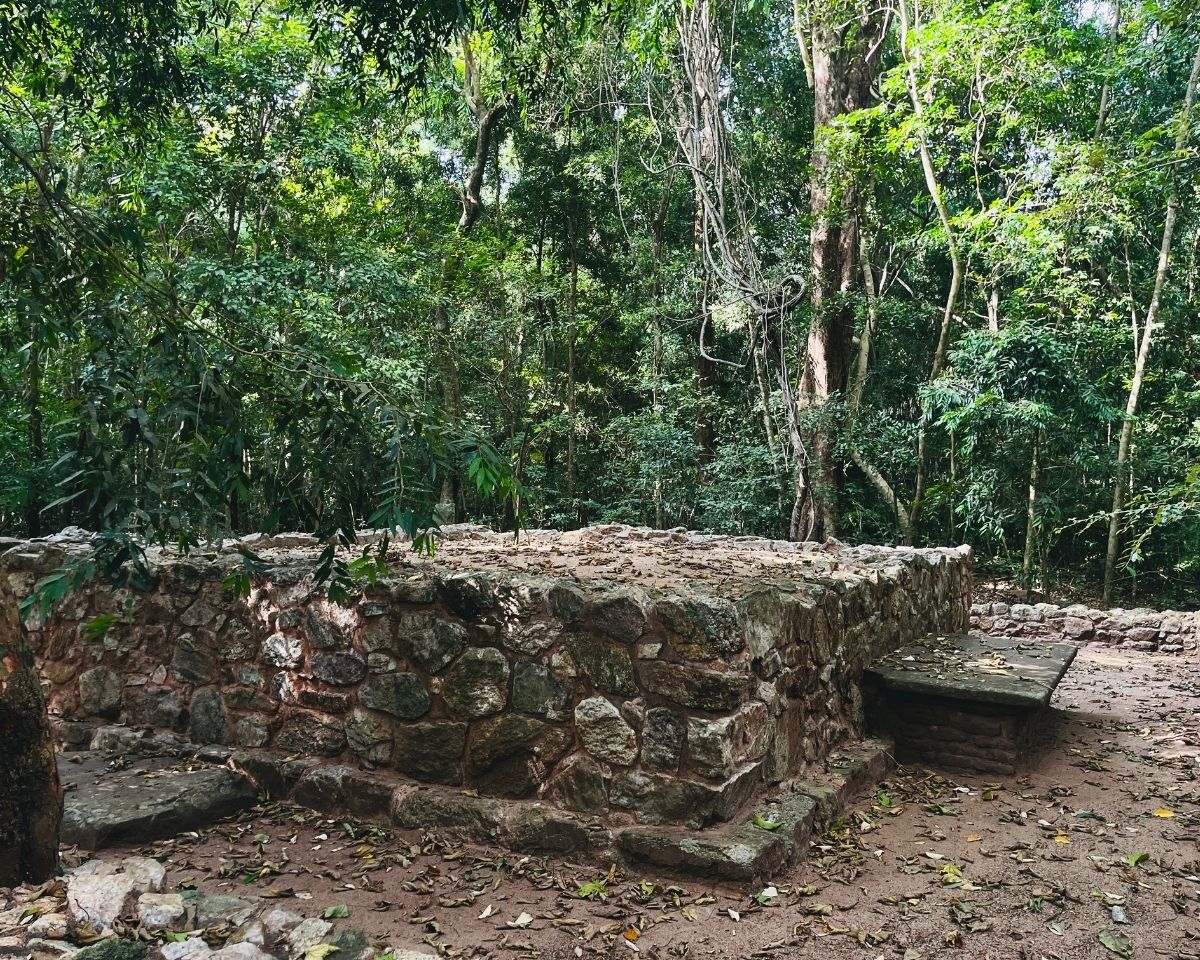
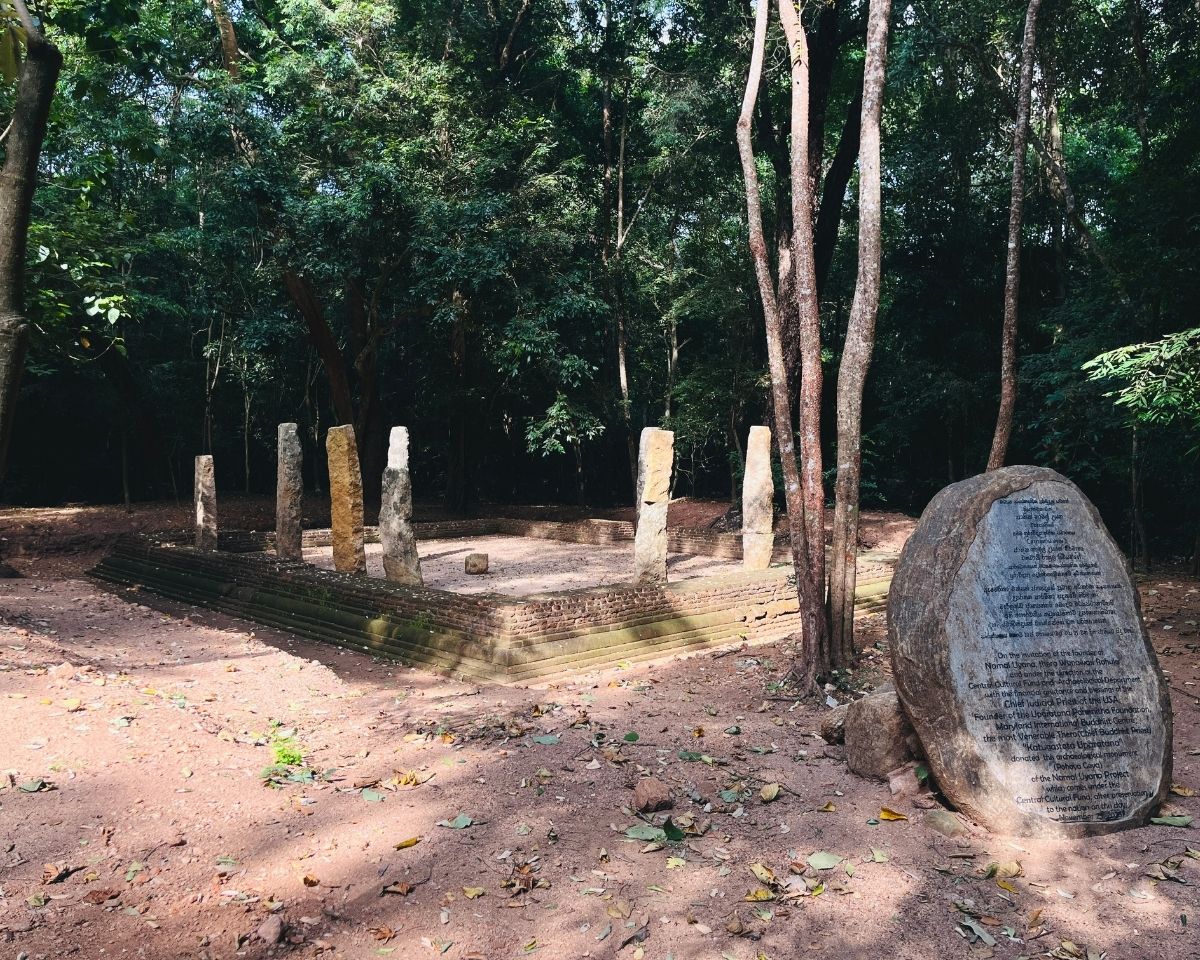
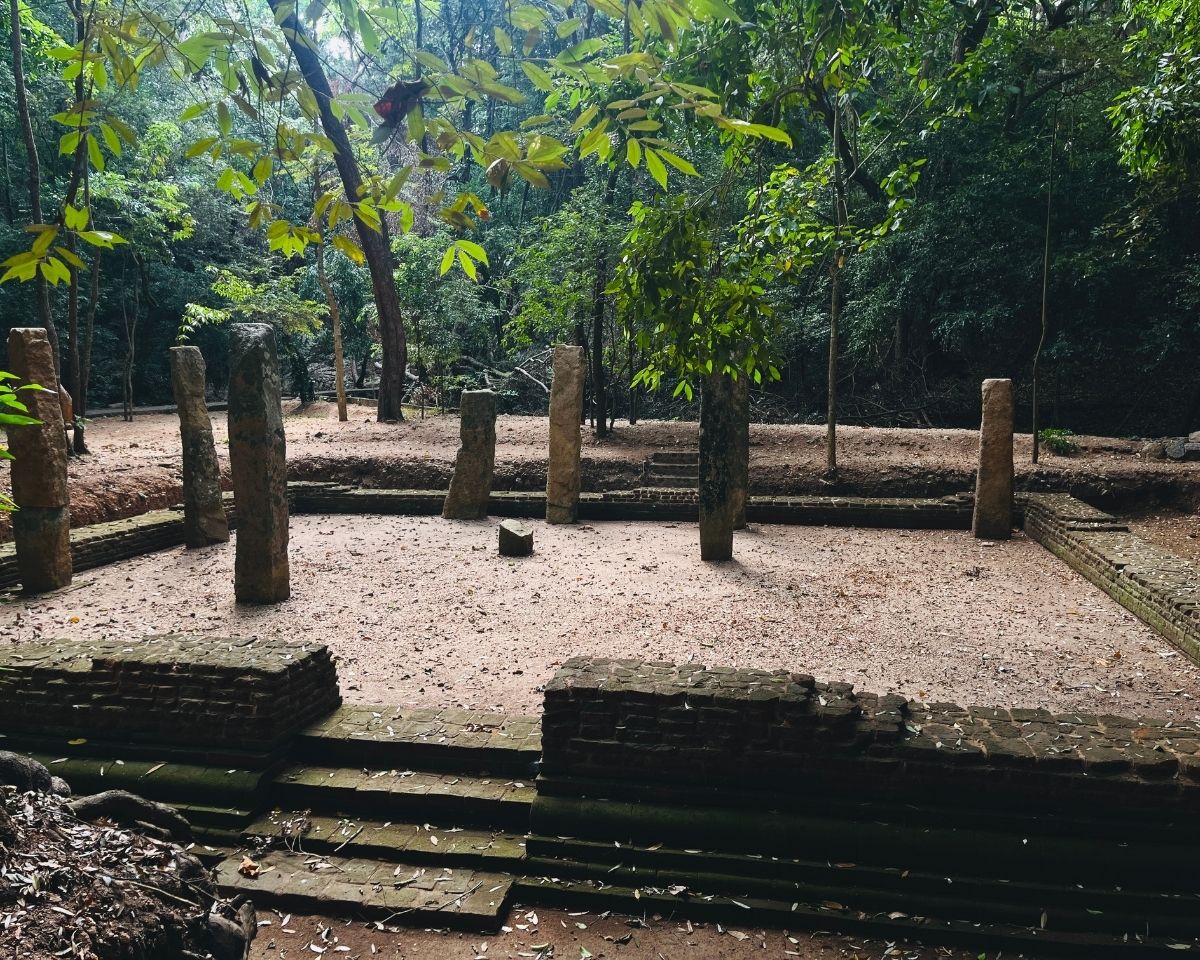
Kaludiya Pokuna, meaning Black Water Pond, is an ancient archaeological site and monastic complex located south of Dambulla, known for its forested surroundings, stone ruins, and quiet atmosphere. The site dates back to the Anuradhapura period, with evidence of monastic buildings, meditation cells, carved stone structures, and inscriptions associated with Buddhist monks who lived and practiced here more than 1,300 years ago.

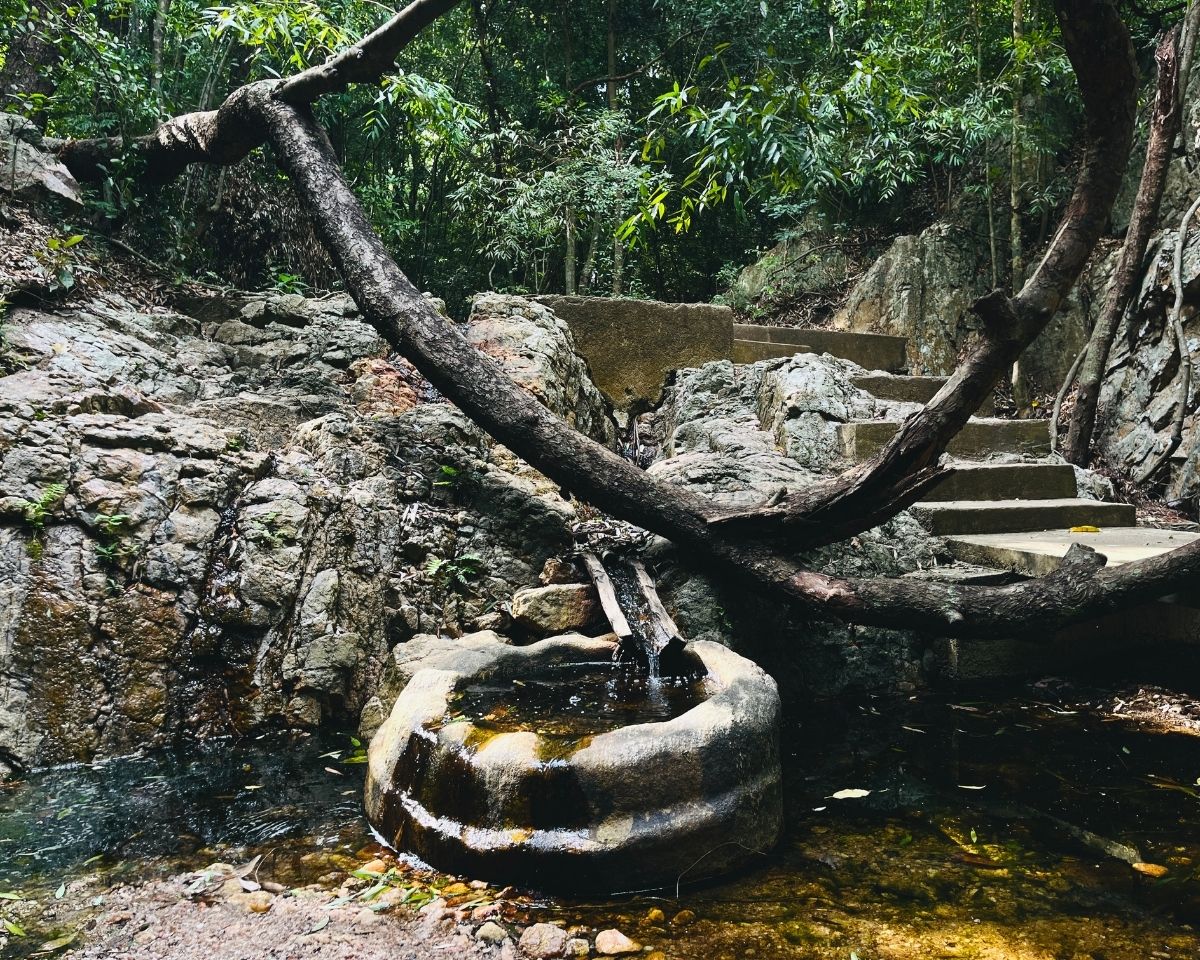
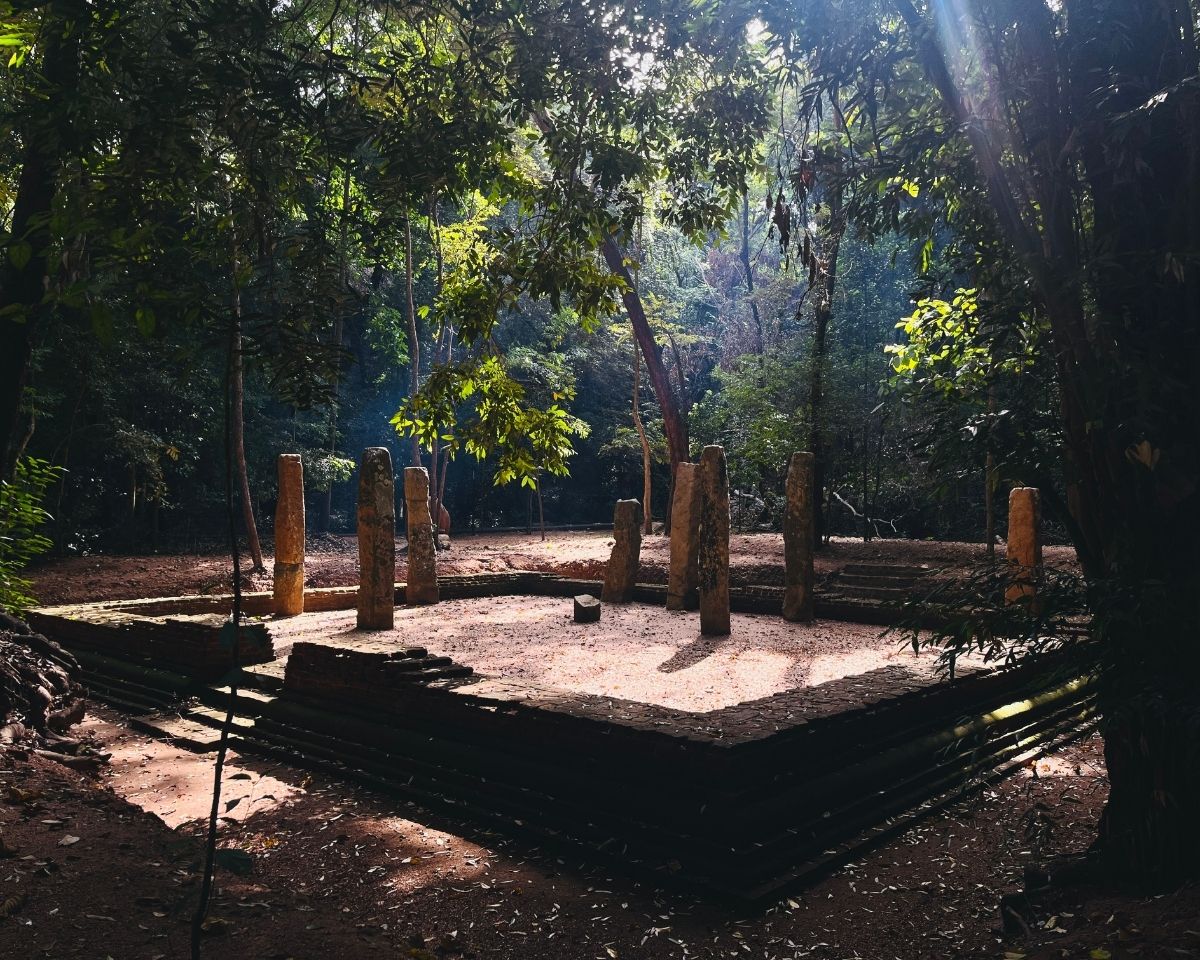
The name refers to the dark coloured pond found within the site. The still water, shaded by trees and rock formations, offered both practical and spiritual value to the ancient monastery. Around the pond and across the forest floor are stone foundations of old buildings, carved pillars, siripatul markings, and remnants of image houses that represent the architectural style of the era.

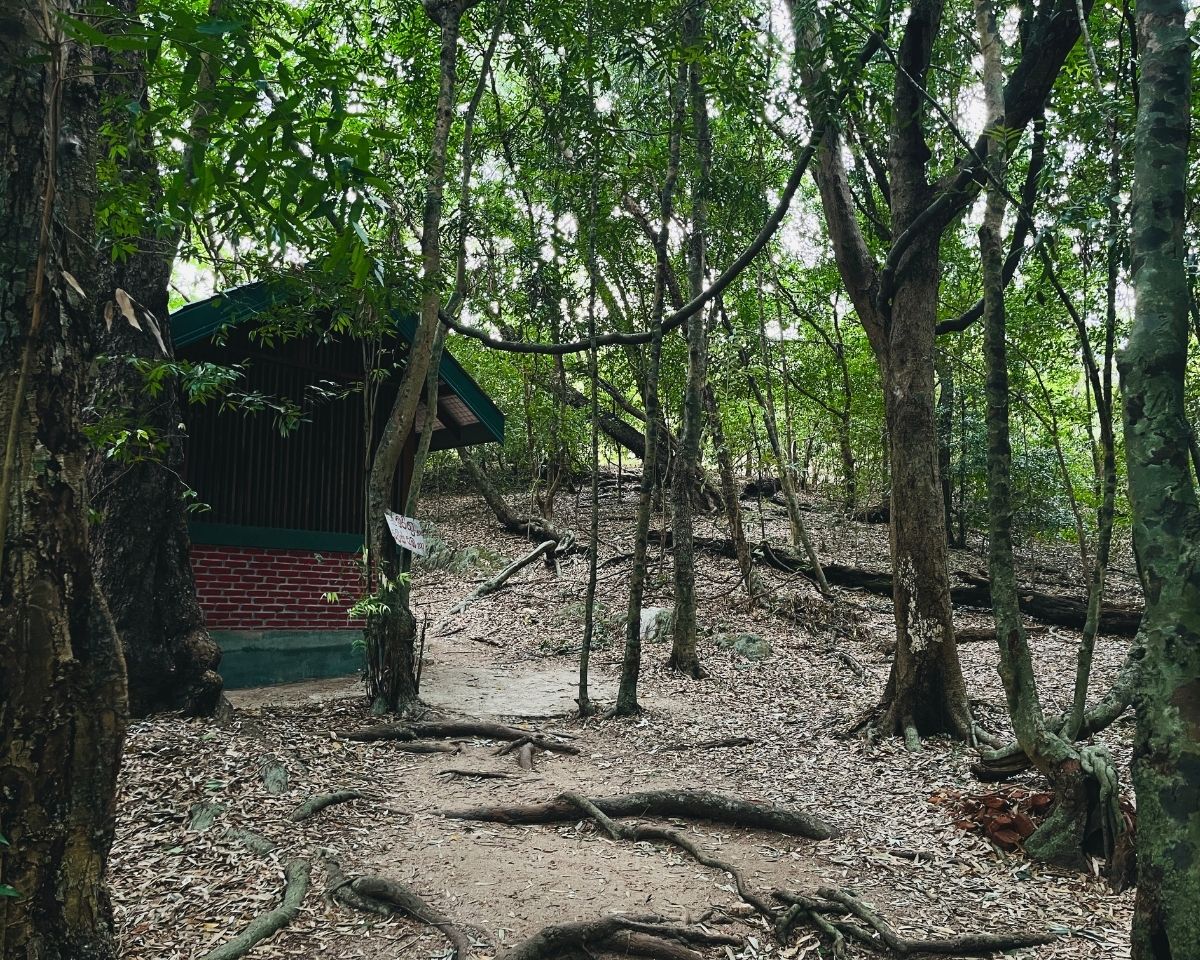
The entire area lies within a forest reserve, which adds to the atmosphere of seclusion. Footpaths run between tall trees, boulders, and quiet clearings where the ruins blend naturally into the landscape. The forest is home to monkeys, birds, butterflies, and occasional deer, making the site ideal for slow exploration and nature photography.

Kaludiya Pokuna remains quiet compared to larger archaeological sites, offering visitors a close look at the daily environment of ancient monks and the connection between early Buddhist practice and natural forest settings. The site is protected due to its archaeological importance and its role in preserving Sri Lanka’s early monastic heritage.
Read More
Lake
Lake
Large ancient irrigation tank forming a key part of the early Anuradhapura water management system.
Scenery
Scenery
Expansive open water, long earthen bunds, forested surroundings, and wide dry zone horizons.
History
History
Built in the 5th century CE by King Dhatusena and linked to the Yoda Ela canal supplying water to Anuradhapura.
Map Icon
Location

MapView on Map
Kala Wewa
Worth It
Kala Wewa is a vast ancient reservoir located close to Dambulla, though historically linked to the Anuradhapura period. It was built during the reign of King Dhatusena in the 5th century CE as part of a large scale irrigation system designed to support agriculture in Sri Lanka’s dry zone. Due to its location, Kala Wewa is often visited as part of the Dambulla and Sigiriya region rather than from Anuradhapura town.

The reservoir was formed by constructing a long earthen embankment across natural terrain, creating a massive body of stored water. Kala Wewa is especially significant for its connection to the Yoda Ela (Jaya Ganga), an ancient canal that carried water over long distances toward Anuradhapura with a remarkably gentle gradient. This system reflects an advanced understanding of water flow, terrain management, and long term planning at an early stage of Sri Lankan hydraulic engineering.

Today, Kala Wewa appears calm and expansive, with wide horizons, forested edges, and open water stretching across the landscape. The area supports birdlife, fishing, and agriculture, blending historical engineering with everyday rural life. Its quiet presence near Dambulla makes it a natural stop for travellers exploring the cultural triangle, offering space, stillness, and a sense of scale beyond temples and monuments.
Read More
Hike
Hike
Short and easy to moderate climb using village footpaths. Natural trails with rocky sections and shaded areas.
Scenery
Scenery
Views of paddy fields, forest patches, lakes and surrounding hills. Calm rural landscape with fresh morning mist and bird activity.
Map Icon
Location

MapView on Map
Galkoth Mountain
Worth It
Galkoth Mountain is a quiet, forest covered highland located near Dambulla, known for its natural scenery and rural surroundings. The mountain rises above nearby villages and farmland, offering a clear view of the landscape from its upper slopes. It is not a developed tourist site, but rather a natural feature used by locals for short hikes, daily travel routes, and religious visits to small shrines found around the area.

The mountain consists of rocky sections, forest patches, and footpaths created through regular village use. The environment is calm, with birds, shade trees, and occasional viewpoints overlooking paddy fields and distant hills. During early morning hours, mist often forms around the base, creating a cool and quiet atmosphere.

Galkoth Mountain does not have a recorded builder or historical construction period, as it is a natural formation. However, the surrounding region contains evidence of long term settlement, traditional farming activity, and local worship practices. Small shrines and stone markers found around the footpaths reflect its cultural use by nearby communities.

Today, the mountain is mostly visited by locals and travelers who prefer quieter natural locations around Dambulla. It offers simple outdoor exploration and a direct connection to the rural landscape of the Central Province.
Read More
Scenery
Buddhist Temple
Active cave temple used for daily worship. Features natural rock chambers adapted into shrines with statues and murals.
History
History
Dates back to early Buddhist monastic use. Expanded over centuries by kings and local devotees to create cave shrines and pathways.
Scenery
Scenery
Rock outcrops, light forest, and open views toward surrounding villages and farmland. Quiet natural setting.
Art & Culture
Art & Culture
Reclining Buddha, seated and standing statues, and traditional cave paintings showing scenes from the Buddha’s life and symbolic motifs.
Map Icon
Location

MapView on Map
Budugehinna Royal Temple
Worth It
Budugehinna Rajamaha Viharaya, translated as the Budugehinna Royal Temple, is commonly known as Punchi Dambulla or Little Dambulla, is a small but historically significant cave temple located in Sri Lanka’s North Central Province. The site features a series of natural rock caves that have been adapted into shrines, similar in style to the well known Dambulla Cave Temple but on a much smaller and quieter scale.

The temple’s history stretches back centuries, with early Buddhist monks using these caves as shelters for meditation. Over time, kings and local communities developed the site further by carving Buddha statues, preparing floors and walls for worship, and painting the rock surfaces with traditional Buddhist artwork. These additions give the temple a blend of ancient simplicity and cultural detail.

Inside the main cave shrine is a reclining Buddha statue accompanied by standing and seated figures, each shaped in the classical Sri Lankan artistic style. The ceiling and walls carry murals that depict scenes from the Buddha’s life, floral designs, and symbolic patterns. While not as extensive as the murals in larger cave temples, they retain clear detail and reflect the heritage of the region.

The temple grounds sit against a backdrop of natural rock formations and light forest cover. The surrounding landscape creates a quiet environment that is suitable for meditation or slow exploration. Stone steps lead to viewing points around the site, offering open views toward nearby villages and farmland.

Several smaller stupas, stone markers, and inscription sites can be found in the area, showing the long standing religious role of the temple and its importance to the local community. Punchi Dambulla remains active as a place of worship, preserving both its spiritual and cultural identity.

Today, the site is visited by travelers who prefer less crowded heritage locations and want to explore the traditional cave temple architecture of Sri Lanka without the busier atmosphere found at major destinations.
Read More
Scenery
Buddhist Temple
Active temple with a stupa, image house, and traditional Buddhist structures used for daily worship.
Art & Culture
Art & Culture
Buddha statues, classical murals, stonework, and traditional architectural features that reflect regional Buddhist heritage.
History
History
Centuries old site with origins in early monastic activity. Expanded and maintained by regional rulers and local communities.
Scenery
Scenery
Forest cover, rock formations, and open views of surrounding village landscapes.

Map Icon
Location

MapView on Map
Sri Wanasinha Royal Temple
Worth It
Sri Wanasinha Rajamaha Viharaya, translated as the Sri Wanasinha Royal Temple is a historic Buddhist temple located in the Central Province of Sri Lanka. The temple has roots that extend back several centuries, with evidence of early monastic activity and later expansions by regional rulers and local communities. Built on elevated ground with natural rock formations, the site carries both religious and archaeological value.

The temple complex features traditional architectural elements such as a stupa, image house, stone pathways, and carved structures that reflect classical Buddhist temple design in Sri Lanka. Inside the image house are Buddha statues crafted in the regional artistic style, along with murals painted in warm earthy tones. These works depict scenes from the Buddha’s life, symbolic patterns, and representations of local devotional practices.

The surrounding area is shaped by forest patches, open views, and quiet village landscapes. The environment adds to the temple’s calm atmosphere, making it a suitable place for meditation, religious observance, or a slow cultural visit. Small shrines, stone pillars, and historical markers found around the temple grounds point to its long standing role as a place of worship and community significance.

Sri Wanasinha Rajamaha Viharaya remains active today, hosting traditional rituals and serving as a local spiritual center. Its combination of heritage, architecture, and natural surroundings makes it a meaningful stop for visitors exploring the region’s cultural history.
Read More
History
History
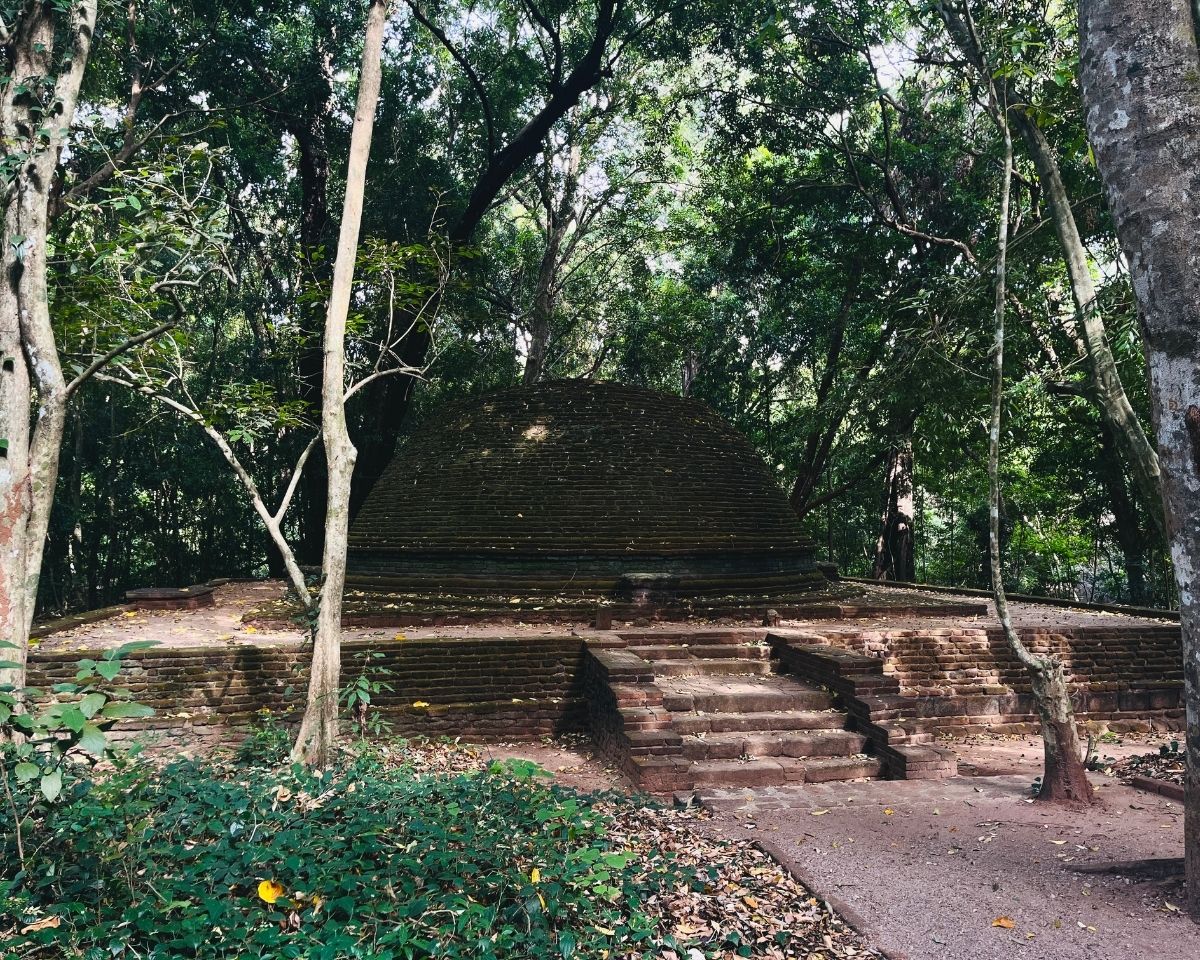
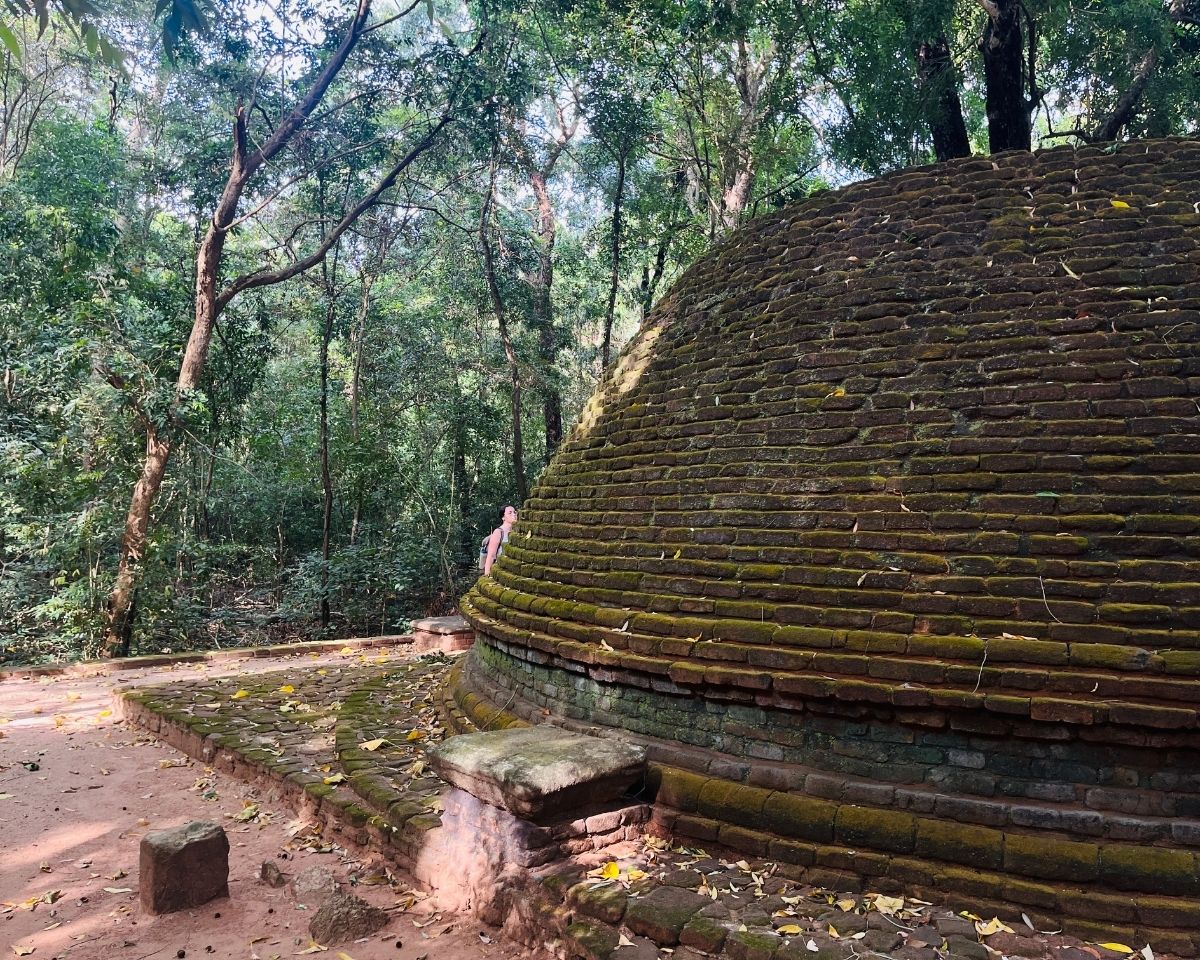
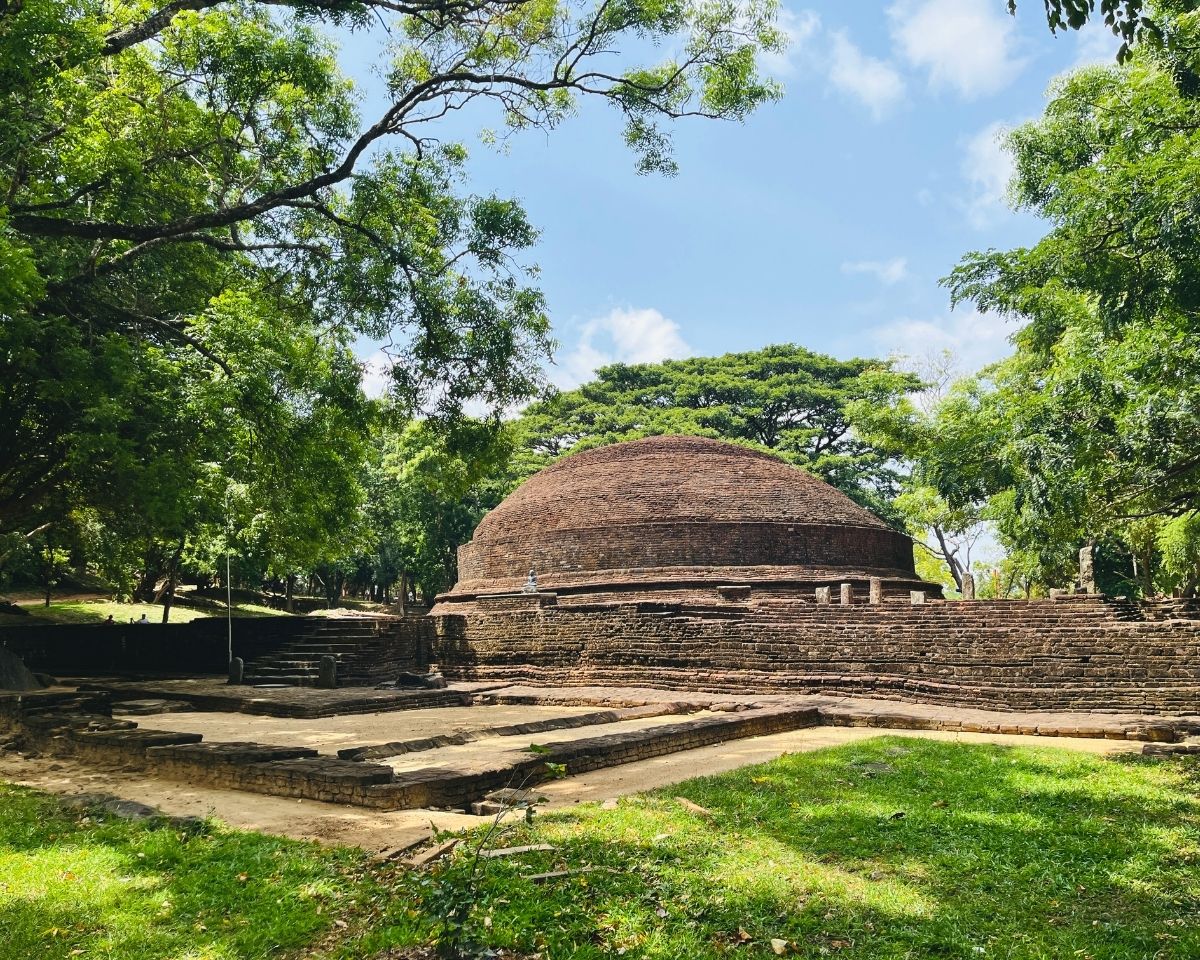
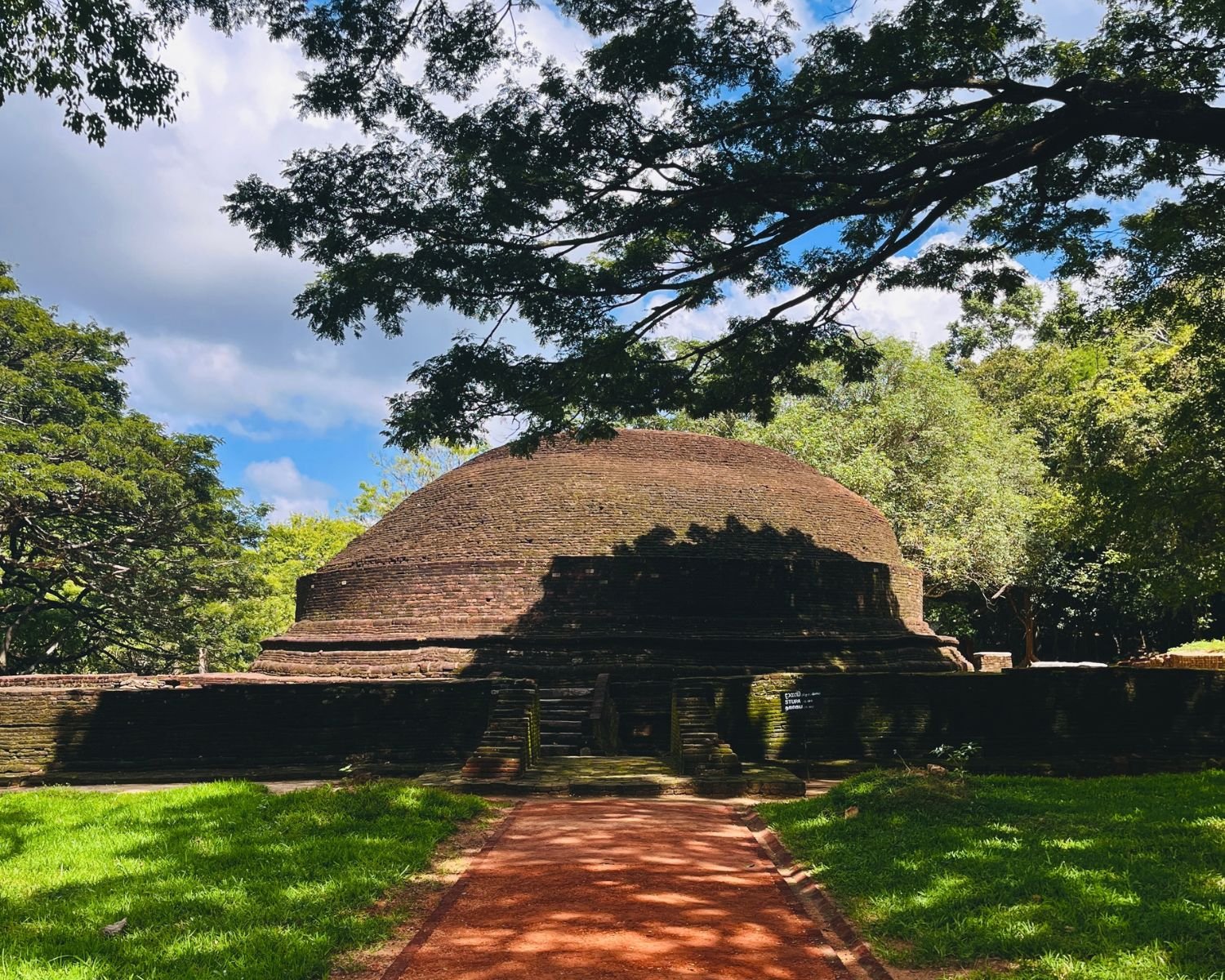
Early Buddhist stupa made of original brickwork. Likely connected to ancient monastic settlements around Dambulla.
Scenery
Scenery
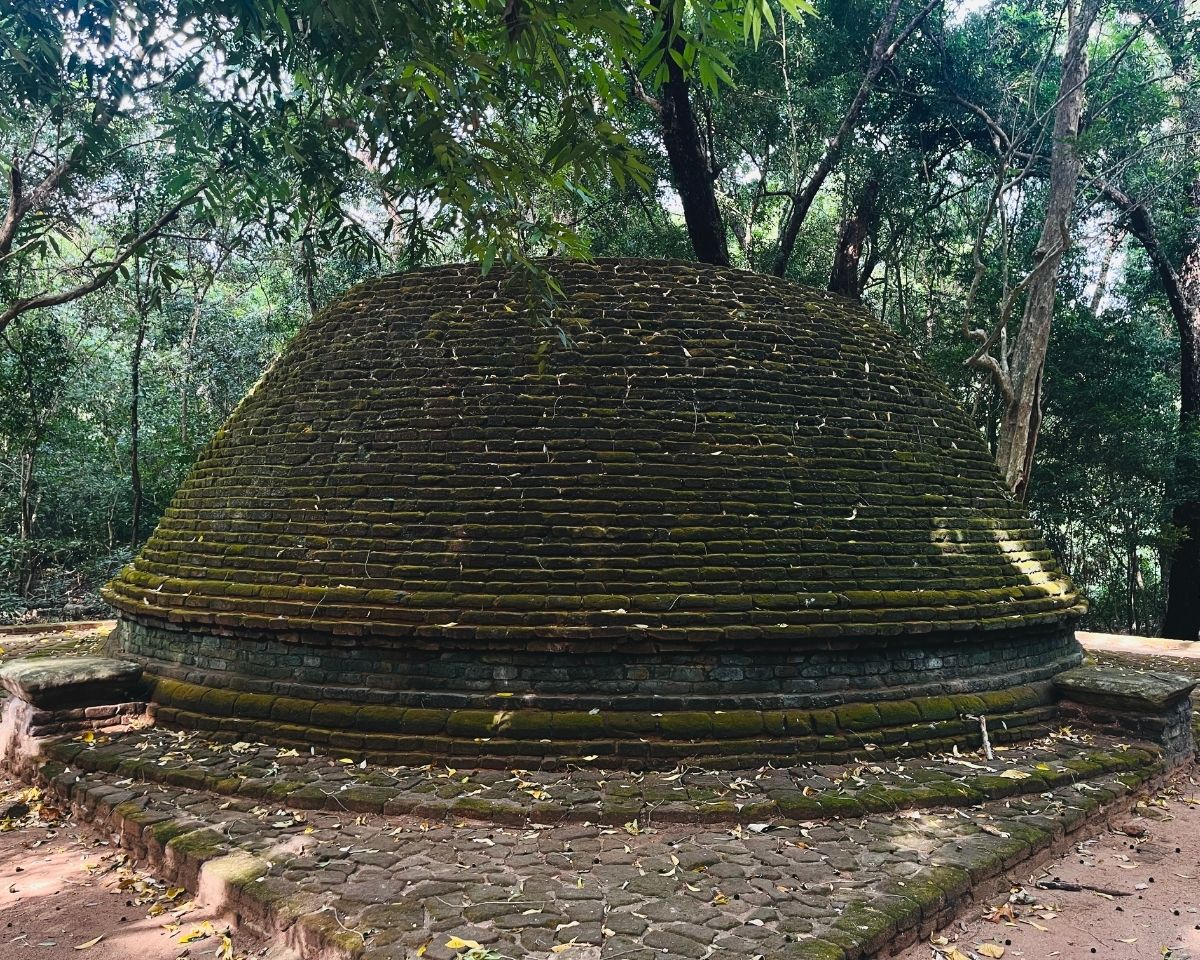
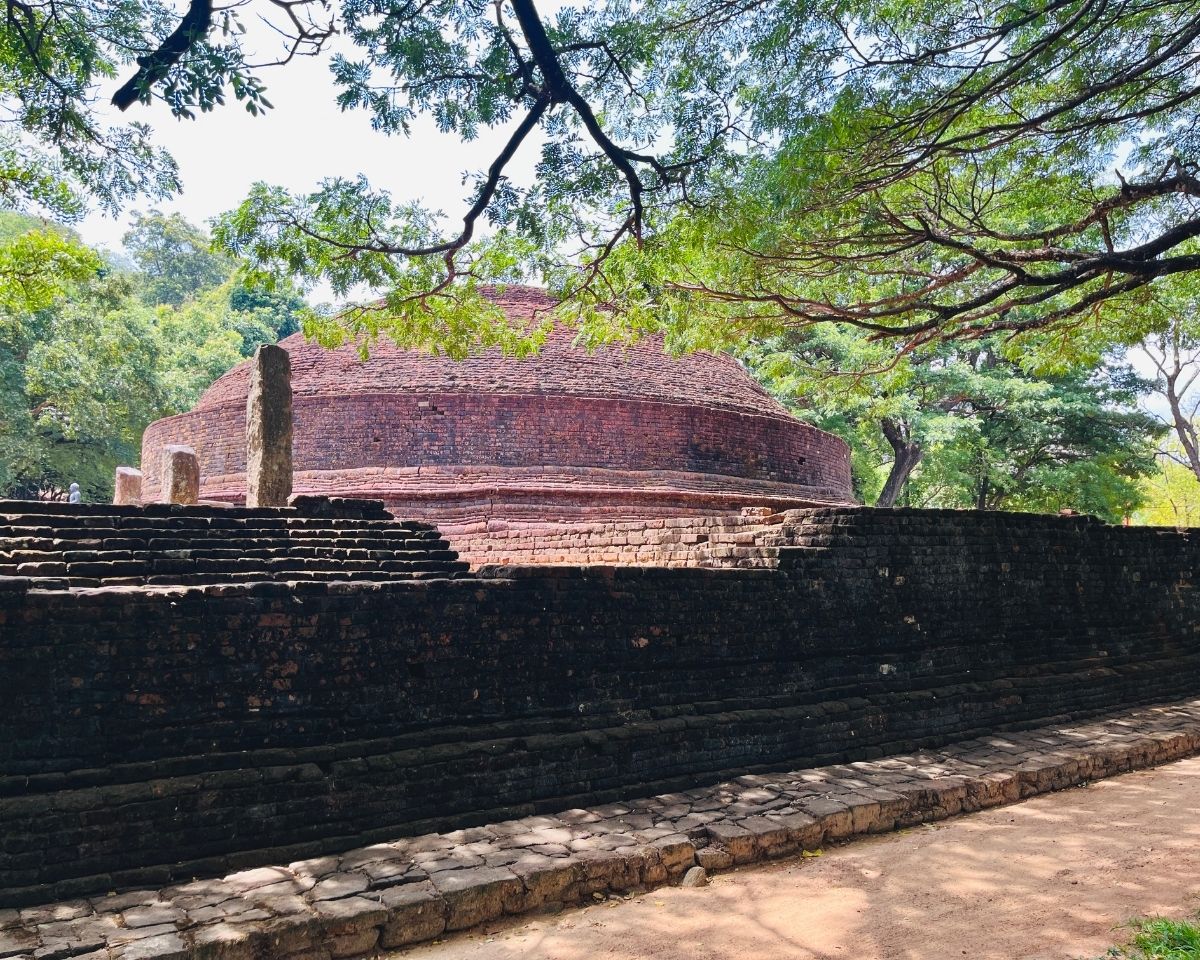
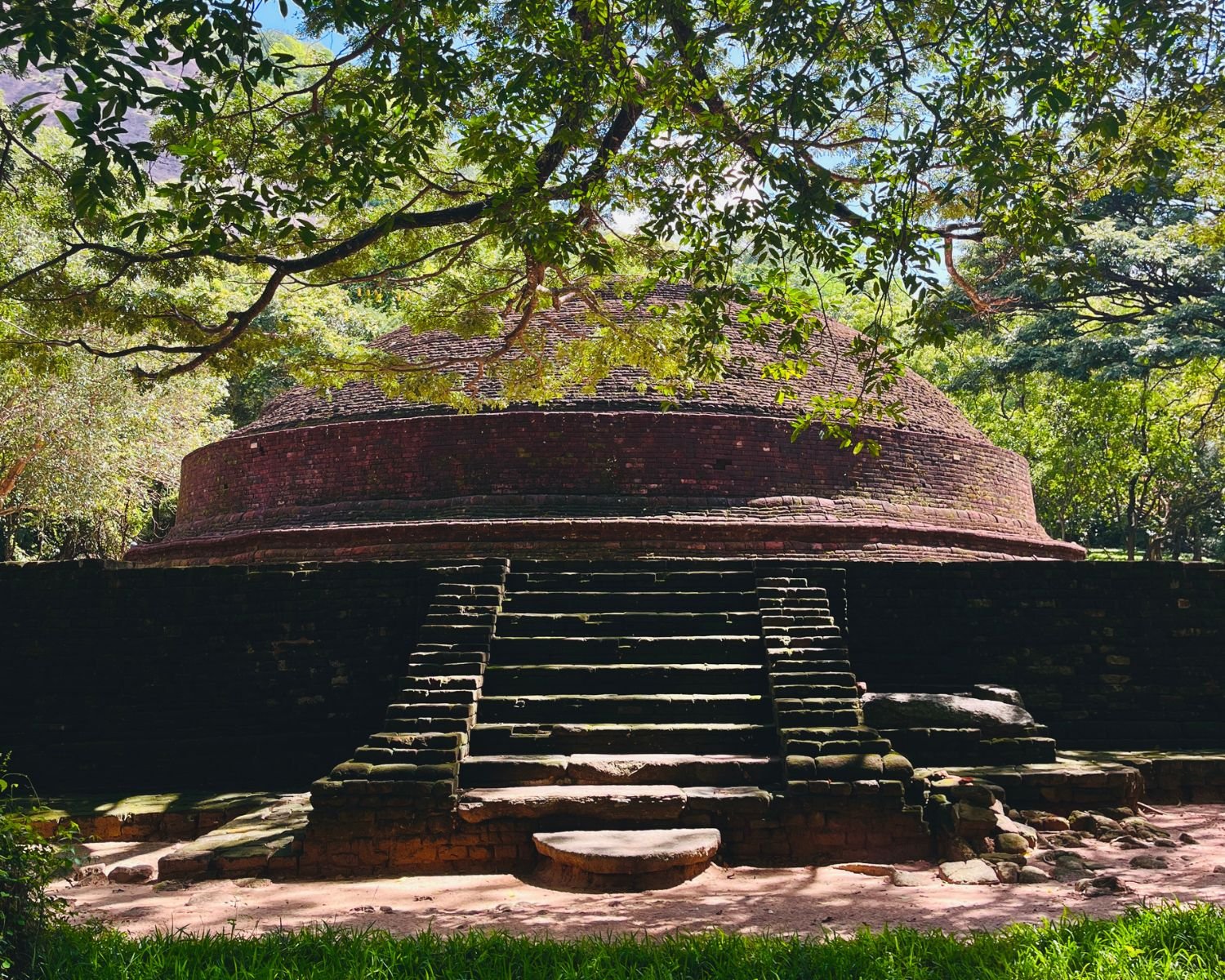
A quiet circular mound of weathered bricks nestled among trees and stone paths. Its natural, untouched look creates a peaceful stop on the way to the Cave Temple.
Map Icon
Location

MapView on Map
Dambulla Somawathi Stupa
Worth It
Just a short walk from the entrance of the Dambulla Cave Temple lies a quiet and often overlooked treasure, the Dambulla Somawathi Stupa. Unlike the grand white stupas seen across Sri Lanka, this ancient structure has never been reconstructed. It stands in its original circular form, made entirely of centuries old bricks that reveal the authentic craftsmanship of early Buddhist architecture. Weathered by time and left in its natural state, the stupa offers visitors a rare glimpse into the untouched spiritual heritage of the island.

Scholars believe that the Somawathi Stupa dates back many centuries and may have served as a key ritual site for monks who lived and meditated around the Dambulla rock massif. Its simple design reflects the early tradition of brick built stupas, created long before plaster coatings and modern renovations became common. The exposed bricks, now covered with shades of terracotta, brown, and soft moss, give the stupa a peaceful and ancient character.

The atmosphere around the stupa is calm and almost sacred. There are no crowds, no loud noises, and no modern structures interrupting the space. The circular mound blends seamlessly with the surrounding trees and stone pathways, creating a serene pause on the way to the main cave temple. Many visitors stop here to enjoy the silence, admire the early brickwork, or reflect for a few moments before continuing the climb.

Although small in size compared to major stupas, the Dambulla Somawathi Stupa carries historical significance. It reminds travelers that the Dambulla area was a thriving monastic center long before the cave temples earned their royal patronage. The stupa is believed to have been part of a broader network of meditative and ritual spaces that once supported large communities of monks.

Today, it stands untouched and humble, yet deeply meaningful. For those who appreciate ancient architecture, spiritual history, or quieter moments away from the main tourist pathway, this stupa offers a special and authentic experience. It is a gentle reminder of Sri Lanka’s oldest Buddhist traditions, preserved in their purest form.
Read More
History
History
Dates to around 700 to 400 BCE. Features organized stone chamber tombs with pottery, beads, and metal artifacts from early settlements.
Scenery
Scenery
Open rural landscape, quiet pathways, and scattered stone burial chambers surrounded by fields and low hills.
Art & Culture
Art & Culture
Megalithic stone tomb construction, prehistoric craftsmanship, pottery designs, and early burial traditions of ancient Sri Lankan communities.
Entrance Fee
Entrance Fee
LKR 300 ($1 USD )
Tickets at entrance

! Fees are approximate and can vary based on factors such as season, group size, and additional services.
Map Icon
Location

MapView on Map
Ibbankatuwa Megalithic Tombs
Worth It
The Ibbankatuwa Megalithic Tombs are one of Sri Lanka’s most important prehistoric archaeological sites, located a short distance from Dambulla. This ancient burial ground dates back to the Iron Age, around 700 to 400 BCE, making it one of the oldest well preserved human settlements and ritual sites in the country. The site contains a large cluster of megalithic stone tombs arranged in organized patterns, offering a rare look into the island’s early cultural and social practices.

Archaeologists have uncovered dozens of chambered graves built using large stone slabs, each forming a small rectangular or square burial enclosure. Excavations revealed pottery, beads, metal tools, and personal ornaments inside these chambers, indicating that the people who lived here practiced advanced burial rituals with respect and symbolic offerings. These findings provide clear evidence of a developed prehistoric community with social structure, craftsmanship, and established traditions.

The site is set in a quiet rural landscape surrounded by fields and low hills. Pathways run through the clusters of tombs, allowing visitors to walk among the stone chambers and observe their construction. Informational boards placed around the site explain the significance of the excavations, the items discovered, and the cultural background of the people who lived in the region more than 2,500 years ago.

Ibbankatuwa is especially valuable to Sri Lanka’s archaeological record because it connects prehistoric communities to later cultural developments in the Cultural Triangle. The site shows that early settlers in the region had their own burial customs long before the rise of kingdoms like Anuradhapura and Polonnaruwa.

Today, the Ibbankatuwa Megalithic Tombs remain a protected archaeological reserve and a key stop for visitors interested in history, anthropology, and early human civilization in Sri Lanka. The atmosphere is calm and educational, offering a direct look at the island’s deep past.
Read More
Scenery
Buddhist Site
Temple complex featuring the 12-meter granite Aukana Buddha statue, carved in the classical Abhaya Mudra pose.
History
History
Traditionally linked to King Dhatusena (5th century). Built during the Anuradhapura period and connected to Kala Wewa’s ancient irrigation landscape.
Art & Culture
Art & Culture
Expert stone carving, refined robe patterns, and exceptional proportions showcasing early Sinhalese sculpture mastery.
Scenery
Scenery
Open temple grounds, forest edges, calm rural surroundings.
Map Icon
Location

MapView on Map
Aukana Royal Temple
Worth It
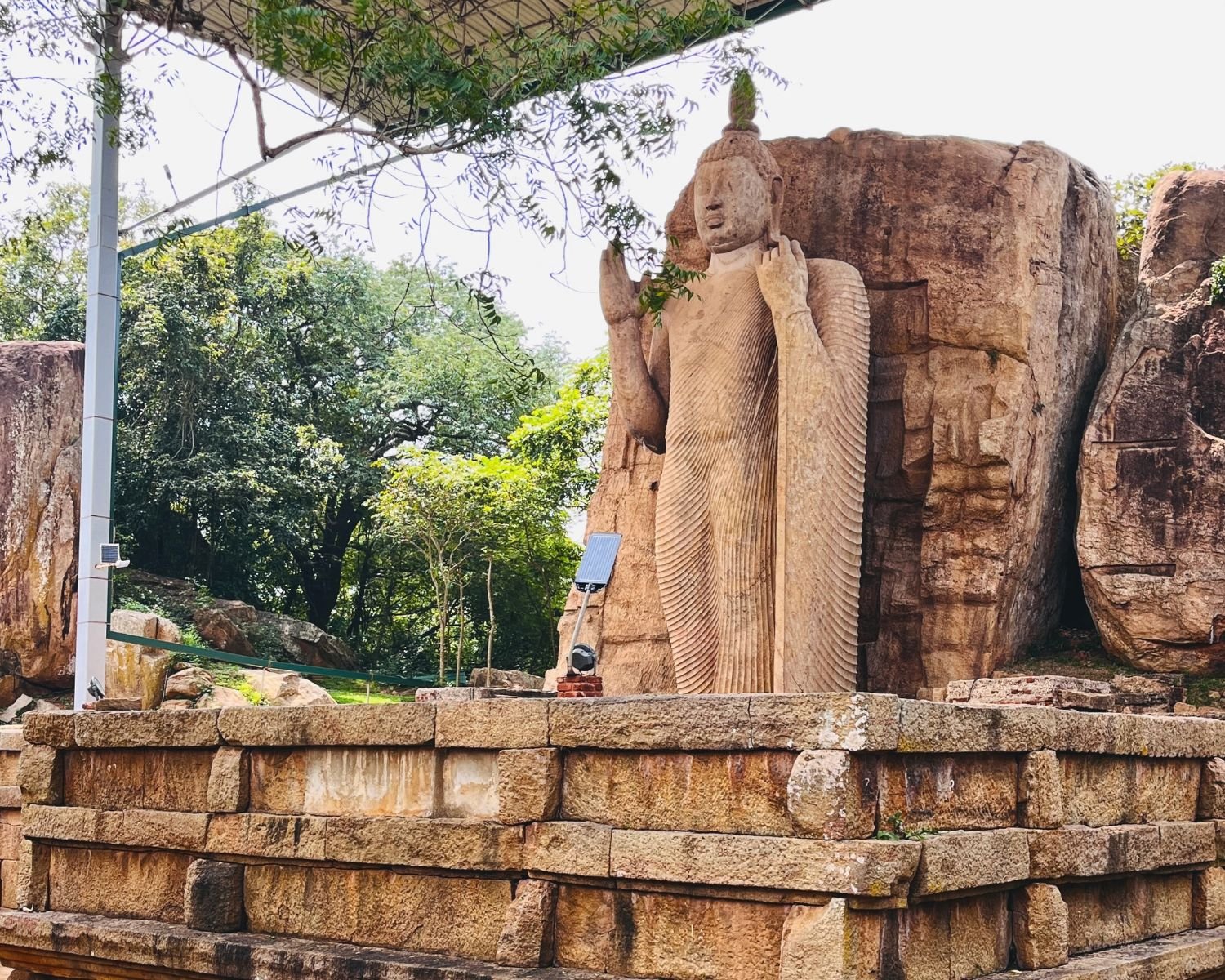
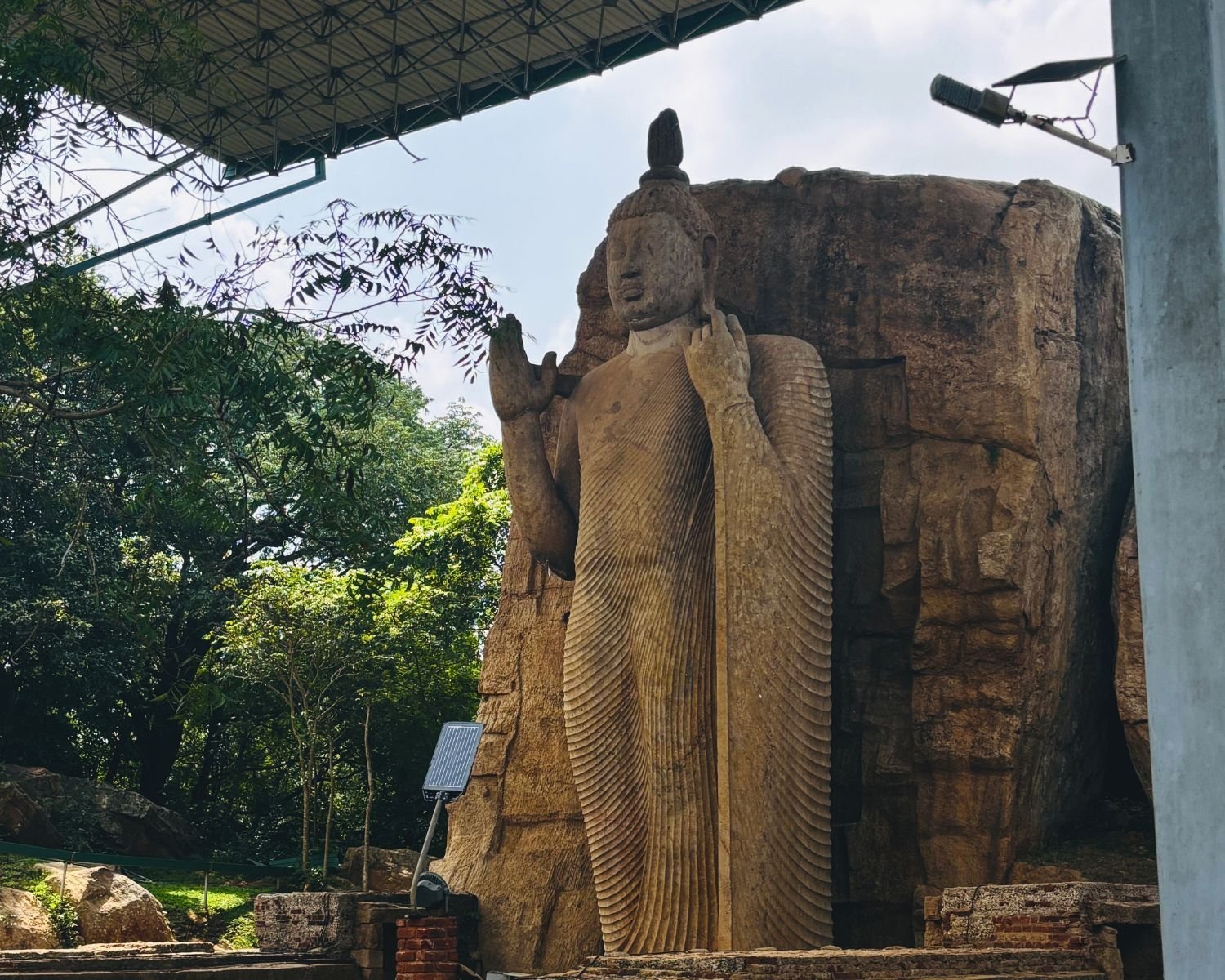
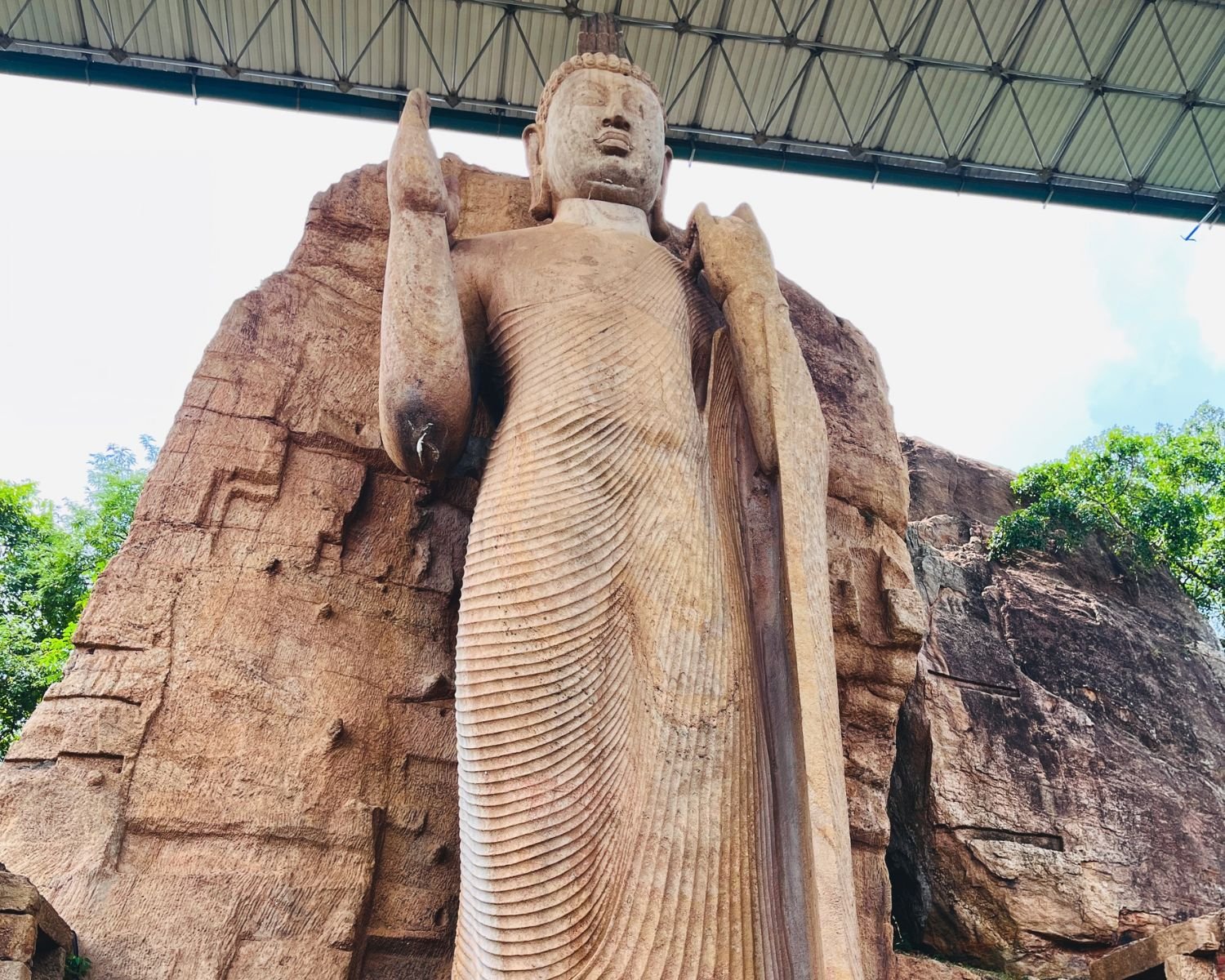
Aukana Rajamaha Viharaya (Royal Temple) is home to one of Sri Lanka’s most remarkable standing Buddha statues, known as the Aukana Buddha. Carved from a single granite rock face, the statue stands about 12 meters tall and is considered one of the finest examples of ancient Sinhalese stone sculpture. The temple complex is located near Kala Wewa, an important reservoir built during the ancient kingdom period. Aukana’s quiet surroundings and exceptional craftsmanship make it one of Sri Lanka’s most admired heritage sites.

The Aukana Buddha is traditionally believed to have been created during the reign of King Dhatusena in the 5th century, although some scholars suggest it may have been carved slightly later during the early Anuradhapura period. The statue displays the classic “Abhaya Mudra,” symbolizing fearlessness and protection. Its proportions, robe detailing, and the shallow rock niche behind the figure demonstrate a high level of artistry and technical skill.

The temple’s location beside Kala Wewa links the site to ancient irrigation culture, where spiritual life and engineering achievements existed side by side. Stone pathways, small shrines, and remnants of old structures complement the main statue, forming a simple but meaningful sacred environment. Aukana continues to be an active place of worship, attracting both pilgrims and travelers who come to admire the serene expression and perfect symmetry of the statue.

Today, Aukana Rajamaha Viharaya stands as a major cultural landmark, representing both the artistic brilliance and religious devotion of Sri Lanka’s early kingdoms.
Read More
Scenery
Buddhist Temple
Active temple complex with stupa, image houses, shrines, and archaeological fragments connected to the ancient Vijithapura fortress area.
History
History
Linked to the 2nd century BCE battle between King Dutugemunu and King Elara. The site has long been recognised as a memorial landscape tied to early Buddhist and historical events.
Art & Culture
Art & Culture
Stone pillars, stupas, shrines, traditional Buddhist worship areas, and cultural legends tied to the historic Vijithapura battle.
Scenery
Scenery
Rocky outcrops, forest patches, rural fields, and the broader Kala Wewa landscape. Quiet and naturally preserved environment.

Map Icon
Location

MapView on Map
Vijithapura Royal Temple
Optional
Vijithapura Rajamaha Viharaya is a historic Buddhist temple located near Kala Wewa in the North Central Province. The site is traditionally linked to the ancient fortress of Vijithapura, where one of the most significant battles in Sri Lankan history took place during the 2nd century BCE. According to historical chronicles, King Dutugemunu defeated King Elara’s forces at this location, paving the way for the unification of the island under a single ruler. The temple that stands today commemorates this era and preserves the cultural memory of the ancient stronghold.

Although the original fortress and early constructions have not survived, the modern temple complex contains archaeological remnants, stone pillars, and shrine areas believed to be associated with early monastic activity. The viharaya has been expanded over many centuries, with structures reflecting different historical periods. A large stupa, image houses, and devotional spaces mark the site, while nearby inscriptions and local traditions reinforce its connection to ancient Vijithapura.

The temple grounds are surrounded by rocky terrain, paddy fields, and forest patches, creating a calm and natural setting. Positioned close to Kala Wewa, the region reflects the blend of history, landscape, and irrigation culture typical of the North Central dry zone. Pilgrims and visitors come to the temple both for religious worship and to connect with one of the most legendary battle sites mentioned in Sri Lanka’s historical records.
Read More

Safaris

Animals
Animals
Known for majestic tusked male elephants and migratory birds.
Activities
Activities
Jeep safaris, kayaking, photography and tranquil sunset watching near the tank.
Scenery
Scenery
Vast tanks reflecting the sky, surrounded by forest and distant mountain views.
History
History
Encompasses the historic Kalawewa and Balaluwewa reservoirs built by King Dhatusena in the 5th century CE.
Map Icon
Location

MapView on Map
Kalawewa National Park
Top Pick
Located southwest of the Cultural Triangle, Kalawewa National Park is a beautiful stretch of wilderness built around the ancient Kalawewa and Balaluwewa reservoirs. These vast man-made lakes were constructed over 1,500 years ago, and today they still define the park’s landscape, spreading like mirrors beneath the open sky. The area is calm, scenic, and rich with wildlife, offering a quiet escape into the heart of Sri Lanka’s dry zone.

The park is especially known for its large herds of elephants, which move through the open plains and forests around the reservoirs. During the dry season, they gather along the water’s edge to drink, bathe, and feed on fresh grasses. Watching the elephants against the backdrop of the shining lakes and distant tree lines is one of the most memorable sights in the region. The park is also home to spotted deer, wild boar, monkeys, and many species of birds and reptiles.

The two reservoirs are surrounded by dry mixed forest and scrubland, with large kumbuk trees and occasional patches of open grass. The water levels change with the seasons, revealing wide shorelines where water birds gather in great numbers. Pelicans, painted storks, cormorants, and herons are often seen gliding across the surface or resting on fallen branches near the shallows.

A visit to Kalawewa National Park offers a different kind of beauty compared to the more popular reserves nearby. It feels more open and spacious, with broad views across the lakes and wide skies that seem to stretch endlessly. The reflection of clouds on the water, the soft movement of elephants in the distance, and the quiet hum of bird calls create a sense of calm that feels timeless.

Though it remains less visited than other parks, Kalawewa National Park holds a special charm. It brings together history, nature, and wildlife in a single landscape where ancient engineering meets the natural rhythms of the wild. For travelers seeking peaceful surroundings and an authentic connection with nature, Kalawewa is a place that leaves a lasting impression.
Read More
Animals
Animals
Famous for “The Gathering,” where hundreds of elephants congregate during the dry season. Also home to deer, monkeys, and many birds.
Activities
Activities
Jeep safaris and photography, especially during August–December elephant migrations.
Scenery
Scenery
Wide grasslands, tropical dry forest, and the calm Minneriya Tank at its heart.
History
History
Originates from the ancient Minneriya Reservoir built by King Mahasen (3rd century CE).
Map Icon
Location

MapView on Map
Minneriya National Park
Top Pick
Located north of Sigiriya, Minneriya National Park is one of Sri Lanka’s most celebrated wildlife destinations, famous for its large herds of elephants and rich natural diversity. The park spreads across dry lowlands, seasonal wetlands, and open forests, creating a unique ecosystem that supports a variety of wildlife and bird species.

Minneriya is especially renowned for the annual gathering of elephants, often called the “Gathering.” During the dry season, dozens and sometimes hundreds of elephants converge near the Minneriya Reservoir in search of water. Watching these majestic animals interact, feed, and move together is a spectacular experience that draws visitors from around the world. The park is also home to leopards, sloth bears, water buffalo, monkeys, and a wide range of birdlife, making it an important site for biodiversity.

The landscape of Minneriya is dominated by open grasslands, dry forests, and the sparkling waters of the reservoir. The park’s seasonal wetlands attract migratory birds, adding color and life to the serene environment. Visitors often explore the area on guided safaris or nature walks, spotting wildlife in their natural habitat and witnessing the rhythm of life in the dry zone.

Minneriya National Park is not just about wildlife; it is also a place of natural beauty and calm. The reservoir reflects the sky and surrounding forests, and the wide open spaces allow for uninterrupted views of elephants and other animals as they move freely. Early mornings and late afternoons are especially magical, with soft light and cool air enhancing the atmosphere.

For travelers seeking adventure, wildlife encounters, or peaceful natural scenery, Minneriya National Park offers an unforgettable experience. It provides a glimpse into Sri Lanka’s rich ecological heritage and the vital role that these landscapes play in supporting both wildlife and human communities.
Read More